UN warns against technology used to read citizens’ minds

Read the original at The Straits Times ↗
The Straits Times · collected 2026-10-09 · by The Straits Times

Quick Summary

On October 8, the UN secretary-general warned about potential abuses of neurotechnologies that could allow governments to access and manipulate citizens' minds, threatening fundamental human rights such as privacy and freedom of thought. The report suggests that without proper regulation, these technologies might be misused in criminal justice systems, leading to issues like arbitrary detentions and mental state alterations. To address these risks, the UN recommends strict regulations and requiring explicit consent for using neurotechnology in legal contexts.
Written locally by qwen2.5:14b on 2026-10-09, using this article's own text rather than the other coverage of the same event (that is the story summary below).

AI analysis runs on qwen2.5:14b, locally

Story summary

On October 8, Antonio Guterres, the secretary-general of the United Nations, warned for the first time about the dangers posed by neurotechnologies that could allow governments to access and manipulate citizens' brains. These technologies raise concerns over potential abuses in criminal justice settings, such as extracting information from suspects or predicting future crimes. The UN Human Rights Office's report highlights risks including arbitrary detentions and privacy infringements. It recommends establishing regulations consistent with international law and treating thoughts as "highly sensitive personal data," requiring explicit consent for their use.

Written for “Mind Reading Technology Warning” on 2026-10-09, grounded in this article and the 0 other(s) covering the same event.
Why this leaning score
The model judged this article politically coded and scored it -0.50, but all 4 of its quote(s) are attributed speech - words the article quotes from someone, not the article's own narration, so the score is not published.
Written under an earlier scoring contract, which gave a paragraph rather than checkable quotes. Re-analysing this article replaces it.
Leaning score withheld for article 67373: attributed speech only · logged 2026-10-09

Signals How these are calculated →

Claims extracted
28
claim-shaped sentences
Uncertain
18%
5 of 28 hedged
Leaning
withheld
no quote in the article backed the model's score
Correction & hedging signals
59.3
corrections and hedging in what we collected; not a measure of accuracy
Outlets on this story
1
Technology
Narrative spread
1
articles carrying this framing
Analyzed 2026-10-09 · how these are computed

Story

📰 Mind Reading Technology Warning
Technology · 1 article(s) covering the same event.

How this is being covered How these are calculated →

Article leaning vs. publisher reliability
Source leaning vs. consistency

Compared with similar articles

This article reads unscored and hedges 18% of its claims. Each row says how that neighbour differs.
Washington Examiner
⚖️ leaning not scored 🔴 3% hedged 1 of 33 📰 publisher trust 72
“The articles discuss different aspects of advanced technology and its implications; one focuses on President Trump's term 'super intelligence' while the other is about a UN warning regarding neurotechnologies.”
Toronto Star
⚖️ Leans left 🔴 50% hedged 1 of 2 📰 publisher trust 63
“The articles describe different concerns related to AI and neurotechnology from distinct sources (NYC council hearing vs UN secretary-general).”

Publisher

The Straits Times · 2297 article(s) · 3 correction(s) detected
Running correction rate · 3 correction(s)
2026-10-04
Tennessee prison chief resigns after failed execution
2026-10-03
US prison chief resigns after failed execution of death row inmate Christa Pike
2026-09-13
Russia hits Ukrainian-Polish border area, Kyiv says

Who wrote this

The Straits Times
1558 article(s) here · 1 carrying a prediction
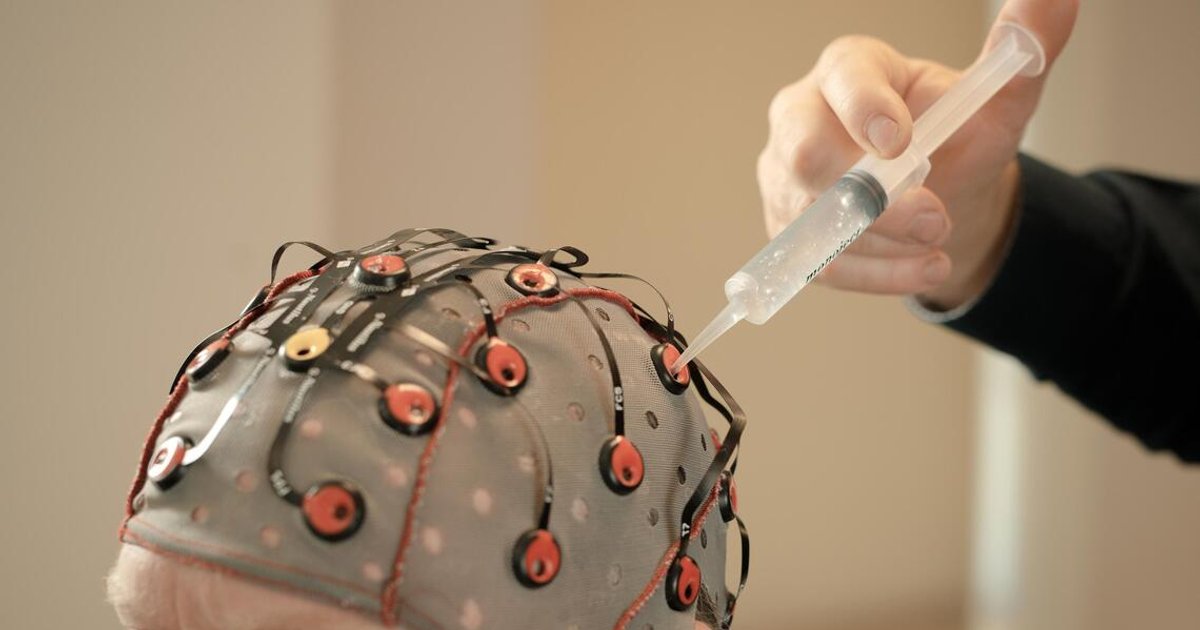
🔮 The scenarios sound like science fiction: police officers accessing data contained in suspects’ brains to forcefully extract information, or to predict if offenders might plan to commit future crimes.
🔮 “Claude’s ability to end these interactions will remain the primary enforcement mechanism,” the policy states.
🔮 The donations will cover AI tools and compute credits for the administration’s Genesis mission, an initiative intended to boost research using the technology and support more than 15 federal agencies, according to the White House.
🔮 New York City man shot in car with child present by ICE agents, mayor says AI generated NEW YORK – US Immigration and Customs Enforcement agents shot and wounded a man on Oct 8 in his car with a child present in the vehicle in the Bronx borough of New York City, according to the mayor, city police and eyewitness accounts.
🔮 Cury has avoided identifying with either the political left or right, instead campaigning under the slogan "Centered on what matters" • Also among the top five finishers, Ronaldo Caiado endorsed Bolsonaro earlier this week, while Renan Santos said he will not endorse either of the two candidates •
🔮 New York City man shot in car with child present by ICE agents, mayor says NEW YORK, Oct 8 - US Immigration and Customs Enforcement agents shot and wounded a man on Thursday in his car with a child present in the vehicle in the Bronx borough of New York City, according to the mayor, city police and eyewitness accounts.
🔮 “It’s very difficult to hold special vaccination clinics, alert the public, stop transmission and conduct other response activities without preparation,” she said, adding that some health departments may use the money to identify where immunisation rates need the biggest boost.
🔮 In May, Aimee Bock, who is not a Somali immigrant and led the Minnesota non-profit group involved in the scandal, was sentenced to 41 years in prison after she was convicted last year of being the ringleader of the scheme.
🔮 Spirit Airlines halted operations in May.
🔮 While You Were Sleeping: 5 stories you might have missed, Oct 9, 2026 US freezes Microsoft, Adobe, Infosys green-card applications The Trump administration froze on Oct 8 some green-card filings by Microsoft, Adobe and major IT outsourcers and opened probes into nine top universities, widening a visa crackdown it says targets fraud and protects American jobs.
Also by The Straits Times
Nothing else under this byline is closely related to this article, so these are simply their most recent.
All 1558 articles by The Straits Times →

Topics

California Chile the Technical University of Munich the UN Human Rights Office the United Nations

Subjects

Indian NORP · 2× Antonio Guterres PERSON · 1× California GPE · 1× Chile GPE · 1× Jeremy Laurence PERSON · 1× Jonathan Moens PERSON · 1× Marcello Ienca PERSON · 1× the Technical University of Munich ORG · 1× the UN Human Rights Office ORG · 1× the United Nations ORG · 1×

Narrative

To address such threats, the report lists a number of recommendations, including establishing regulations consistent with international law, recognising thoughts as “highly sensitive personal data” and requiring explicit consent for the use of neurotechnology in criminal justice settings.
framing: assertive · carried by 1 article(s) · first seen 2026-10-09
🔮 The scenarios sound like science fiction: police officers accessing data contained in suspects’ brains to forcefully extract information, or to predict if offenders might plan to commit future crimes.
2026-10-09 · The Straits Times
UN warns against technology used to read citizens’ minds · assertive framing

Claims (28 extracted, 5 hedged)

UN warns against technology used to read citizens’ minds Jonathan Moens AI generated asserted
AI → warn → minds
The scenarios sound like science fiction: police officers accessing data contained in suspects’ brains to forcefully extract information, or to predict if offenders might plan to commit future crimes. uncertain
offenders → sound → crimes
But the secretary-general of the United Nations warned on Oct 8 for the first time that neurotechnologies are advancing so rapidly that governments’ ability to access and manipulate people’s brains could one day pose a threat to fundamental human rights. uncertain
ability → warn → rights
The abuse of future technologies, Secretary-General Antonio Guterres warned, could lead to arbitrary detentions, the alteration of people’s mental states and infringements on privacy. uncertain
Guterres → warn → privacy
“Neurotechnology, including new and emerging forms, raises profound human rights challenges when applied to the administration of justice,” the secretary-general wrote. asserted
general → include → justice
“Its expansion beyond clinical settings into investigative, judicial and correctional contexts introduces significant risks, alongside potential benefits.” asserted
expansion → introduce → benefits
To address such threats, the report lists a number of recommendations, including establishing regulations consistent with international law, recognising thoughts as “highly sensitive personal data” and requiring explicit consent for the use of neurotechnology in criminal justice settings. asserted
report → address → settings
Human rights officials said the document was an important step towards raising global awareness of the issue and that it could help countries develop laws to prevent the abuse of such technology. uncertain
it → say → technology
“This gives states an opportunity to establish clear rules to regulate the use of neurotechnology, based on human rights, before they become routine in investigations, courts and prisons,” said Jeremy Laurence, a spokesperson for the UN Human Rights Office. asserted
Laurence → give → Office
The report, some rights activists said, broadens the traditional understanding of freedom of thought, which has largely focused on freedom of expression, to include keeping one’s innermost ideas private. asserted
which → say → ideas
“It’s no longer just about the classical ways through which freedom of thought is evoked,” said Marcello Ienca, a professor of ethics and neuroscience at the Technical University of Munich. asserted
Ienca → ’ → Munich
The UN’s interest comes amid a growing global push to protect brain data. asserted
interest → come → data
Chile in 2012 enshrined protections for brain activity in its constitution. asserted
Chile → enshrine → constitution
And several states, including California, Colorado and Montana, have passed laws protecting neural data. asserted
states → include → data
Similar measures have been proposed in Argentina, Brazil, Colombia and Mexico. asserted
measures → propose → Argentina
But while some countries are working to protect citizens’ neural data, others are already attempting to access it. asserted
others → work → it
In India, the police have for two decades used a technology called Brain Electrical Oscillation Signature – or BEOS – to determine whether a suspect may have been involved in a crime. uncertain
suspect → use → crime
The scientific basis for this technology, which reads brain waves, is scant. asserted
which → read → waves
Results from BEOS tests are inadmissible as evidence in Indian courts, but the technology has been applied in hundreds of high-stakes cases, including those of murder, rape and terrorism. asserted
technology → apply → murder
BEOS has not been validated by the international scientific community. asserted
BEOS → validate → community
And a committee established by the Indian government to review BEOS concluded in 2008 that it was “sub-optimal”. asserted
it → establish → 2008
Not all neurotechnologies are being developed as tools of the state. asserted
neurotechnologies → develop → state
Many have been brought to the consumer market as wearable health and wellness gadgets that can help users monitor their stress, sleep and focus. asserted
users → bring → stress
But those too, experts warned, are subject to few regulations. asserted
experts → warn → regulations
The Neurorights Foundation analyzed the privacy policies of 30 consumer neurotechnology companies in 2024 and found that most did not have limits on how they used customers’ brain data. asserted
they → analyze → data
More than half of those companies, the foundation said, explicitly allowed user data to be shared with third parties. asserted
data → say → parties
Neurotechnologies have also become powerful clinical tools for patients who have suffered severe brain or spinal cord injuries. asserted
who → become → injuries
Brain-computer interfaces have helped paralysed patients to write sentences by imagining handwriting, as well as to move robotic limbs and to play chess online just by thinking. asserted
interfaces → help → chess

💬Give feedback
🕘History 🎫Support