SHAMELESS BRANDING ASIDE, “Trump Accounts,” the new program that gives every baby in America access to some savings, is generally benign, and maybe even useful.
asserted
that → give → savings
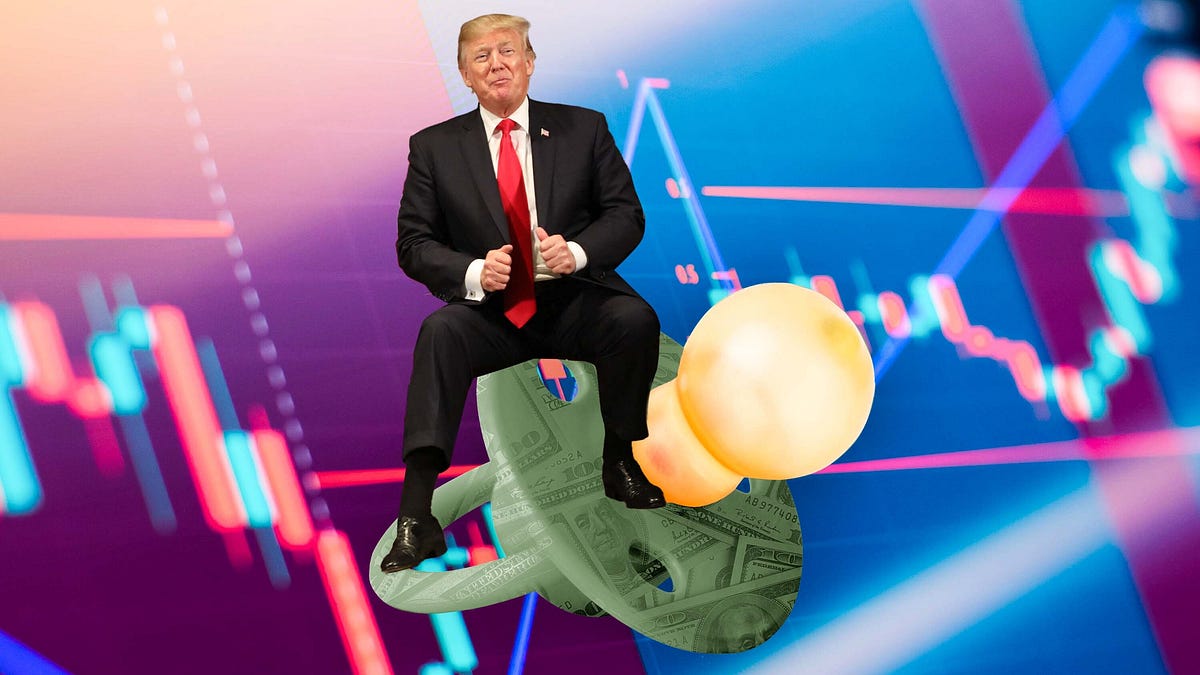
But Donald Trump being Donald Trump, he can’t help but taint an otherwise inoffensive concept with a bit of good old-fashioned corruption.
asserted
he → help → corruption
In this case, our president is helping rich donors offload overvalued stocks onto children, who are forced to hold the stocks for five years whether they want to or not.
asserted
they → help → years
There’s a host of reasons why this could prove problematic.
uncertain
this → ’ → reasons
But before we get to that, it’s worth explaining what Trump Accounts are and what they’re supposed to do.
asserted
they → get → what
Last year’s “One Big Beautiful Bill” created a new category of tax-deferred savings accounts that would be available to every child in America.
asserted
that → create → America
For newborns at least, the federal government would seed those accounts with an initial $1,000.
asserted
government → seed → 1,000
Versions of this proposal had been kicking around D.C. for some time, usually called something like “child saving accounts” or “baby bonds.”
asserted
Versions → kick → accounts
When our Eponym-in-Chief decided to slap his own name on the program, that of course polarized some Dems against it.
asserted
that → decide → it
But the basic concept has carried bipartisan support in the past, finding champions in lawmakers as far apart as Sens. Cory Booker (D-N.J.) and Ted Cruz (R-Texas).
asserted
concept → carry → Booker
The bleeding-heart left generally likes the idea of “baby bonds” because they make it possible for even the poorest kids to have a little bit of savings, which those kids could draw on in adulthood to buy a house, pay tuition, or fund whatever other purposes their richer counterparts might use a regular individual retirement account for.1
“The idea was to add wealth to the social contract,” explained Ray Boshara, a senior policy adviser at the Aspen Institute.
uncertain
Boshara → bleed → Institute
Meanwhile, the rock-ribbed right liked that the accounts were universal—that is, not specifically targeted to poor moochers and takers, and instead available to everyone.
asserted
that → like → everyone
Republicans have also argued that giving children a taste of the stock market might make them more financially literate and pro-business—and, crucially, more hostile to lefty ideas like corporate tax hikes.
uncertain
them → argue → hikes
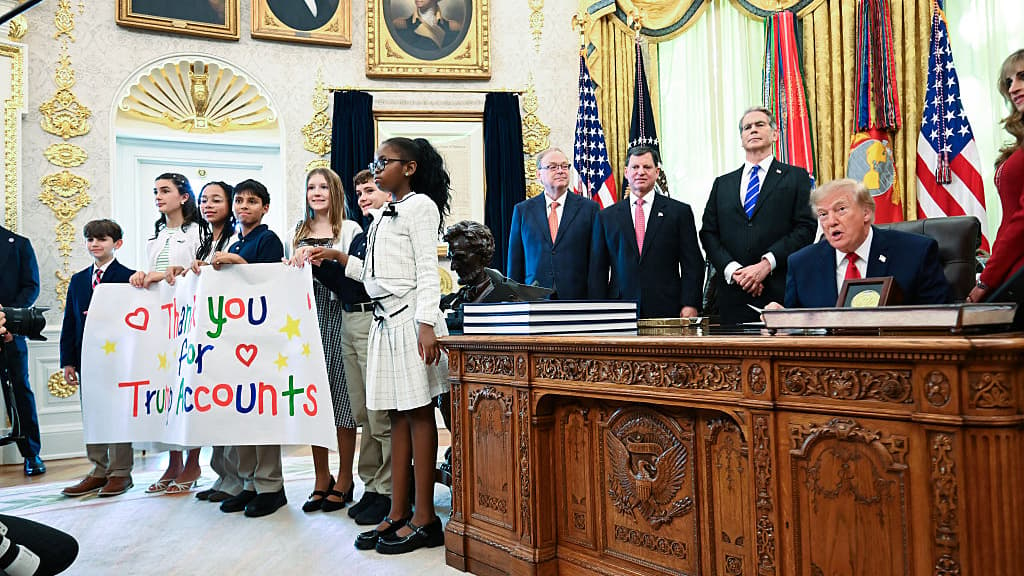
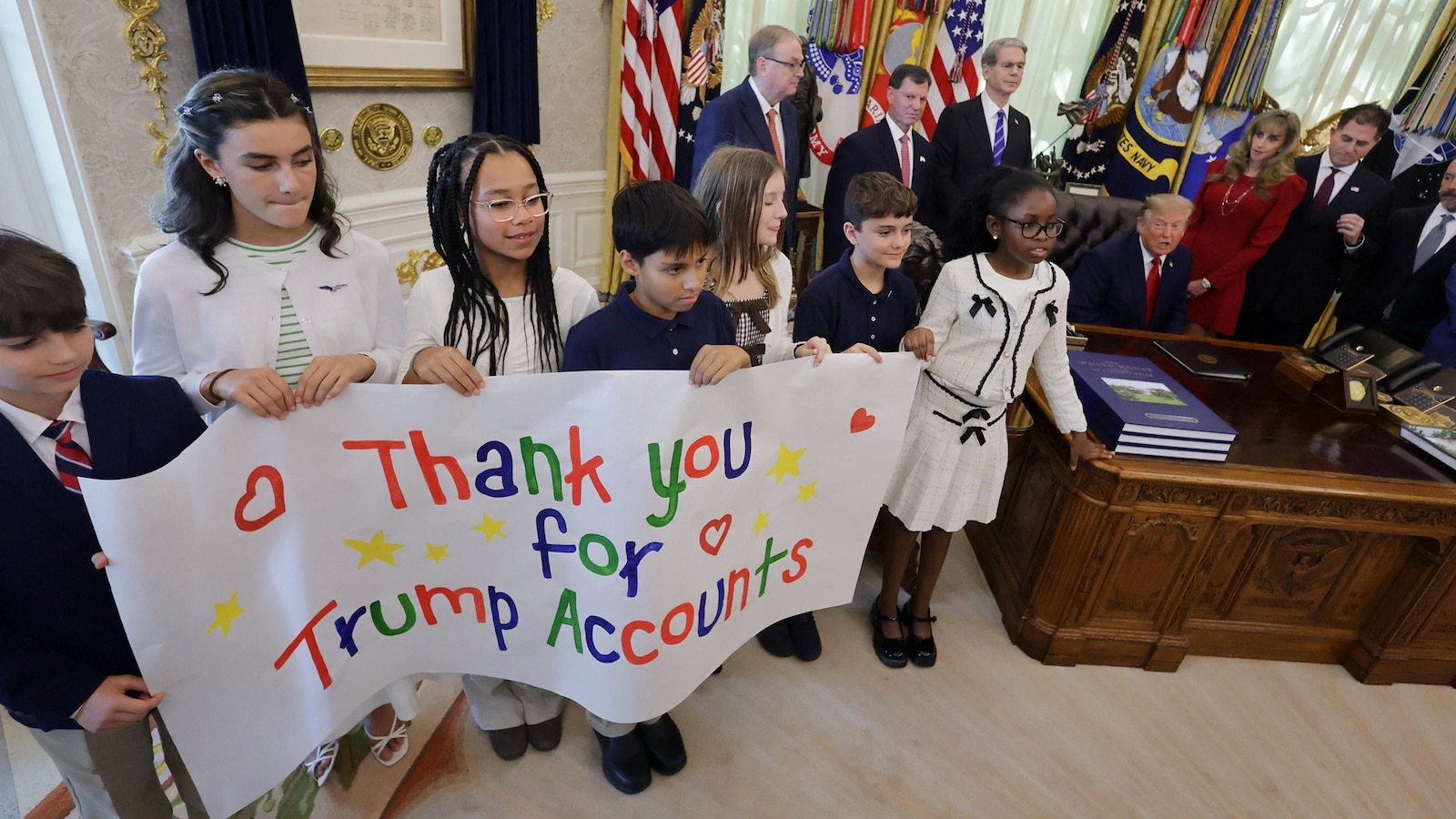
“We are creating a whole new generation of capitalists,” Cruz declared during an Oval Office event this week celebrating the Trump Accounts rollout.
asserted
Cruz → create → rollout
Trump likewise said that his namesake program would keep impressionable young tots from falling for “communism.”
asserted
program → say → communism
The main one was that families had to opt in.
asserted
families → have → ?
That meant wealthier parents were more likely to benefit from the program than lower-income ones, which could, in turn, worsen the wealth gap.
uncertain
which → mean → gap
That’s because richer families have more financial flexibility (not to mention tax advisers giving them guidance) to open accounts, claim the $1,000 from Uncle Sam, and continue socking money away.
uncertain
families → ’ → money
This has long been the case with 529 plans, a tax-advantaged way to help pay for educational expenses that is disproportionately used by higher-income families.3
asserted
that → help → expenses
To its credit, the Trump administration fixed that recently, by auto-enrolling every eligible child in America.
asserted
administration → fix → America
As a result, virtually overnight, the number of kids enrolled in Trump Accounts shot up from fewer than 8 million (the group whose parents were savvy enough to sign up) to now more than 70 million.
asserted
parents → enrol → million
Families still have to do a bit of work4 to “claim” their $1,000 seed money from Uncle Sam, which every U.S.-citizen baby born in 2025 through 2028 is eligible for.
uncertain
baby → have → 2028
Upgrade Today at 30% OFF & Join Our Member-Only Livestream with Pete Buttigieg
The midterms are coming.
asserted
midterms → upgrade → Buttigieg
Get the reporting, analysis, and conversations you won’t get anywhere else.
asserted
you → get → reporting
📺 Hear what others don’t: access member-only shows including our October 18 livestream featuring Pete Buttigieg with Sarah, Tim, and JVL—live from Charlotte
SOON AFTER CONGRESS created Trump Accounts, philanthropists and employers began pledging contributions to kids around the country.
asserted
philanthropists → hear → country
Dell Technologies founder Michael Dell and his wife, Susan, for instance, made a $6.25 billion commitment last December; the money was originally set to go to 25 million American children under age 10 living in zip codes with median family incomes below $150,000 (the cutoff was later changed to $118,000).
asserted
cutoff → make → 118,000
Investors Ray Dalio and Brad Gerstner have made commitments, too.
asserted
Dalio → make → commitments
Are pledges like this motivated by pure altruism, or are they an effort to ingratiate donors with Trump?
asserted
they → motivate → Trump
But whatever the motivation, at least the kids were getting some cash, invested in a plain-vanilla index fund.
asserted
kids → get → fund
But last week, the Trump administration changed the ways that these benefactors could benefact.
uncertain
benefactors → change → ways
Now, instead of giving cash, donors can give shares of individual stocks, so long as they give the stock grants to groups of at least 5,000 kids in a given age group and geographic area.
asserted
they → give → group
Moreover, the recipients cannot refuse the gift.
asserted
recipients → refuse → gift
Already at least one high-profile donor, SpaceX president and COO Gwynne Shotwell, has announced she will give corporate shares of the Elon Musk–helmed company to millions of American kids.
asserted
she → announce → kids
The administration argues that this policy change will encourage many more donations, since lots of patriotic rich people out there might be sitting on mountains of appreciated stocks that they don’t know what to do with.
uncertain
they → argue → what
When Congress created Trump Accounts, it very clearly said account holders can invest only in low-cost, low-risk index funds.5 Not individual stocks.
asserted
holders → create → funds.5
Lawmakers presumably included this limitation because part of the stated goal of the program is financial literacy, and good financial advisers generally recommend broad, diversified index funds.
asserted
advisers → include → funds
Beyond that, kids (or their families) have no way to refuse these grants of stock.
asserted
kids → have → stock
Treasury has requested comments for how families could “disclaim” the entirety of their auto-enrolled Trump Account, but it has neither provided a way to disclaim individual donations or stock contributions nor requested comments on doing so.
uncertain
it → request → comments
Bottom line: As of now, a donor can, with Treasury’s approval, stash a stock in your kid’s account and there’s no way for you to decline it—even if the gift doesn’t align with your values, and even if it creates other ethical concerns.
asserted
it → stash → concerns
For example, maybe for religious or moral reasons you don’t want your child to be a shareholder in a company that manufactures weapons, runs casinos, or is helmed by a possible neo-Nazi.
asserted
that → want → Nazi
…and 43 more, not listed.
 The Aporia