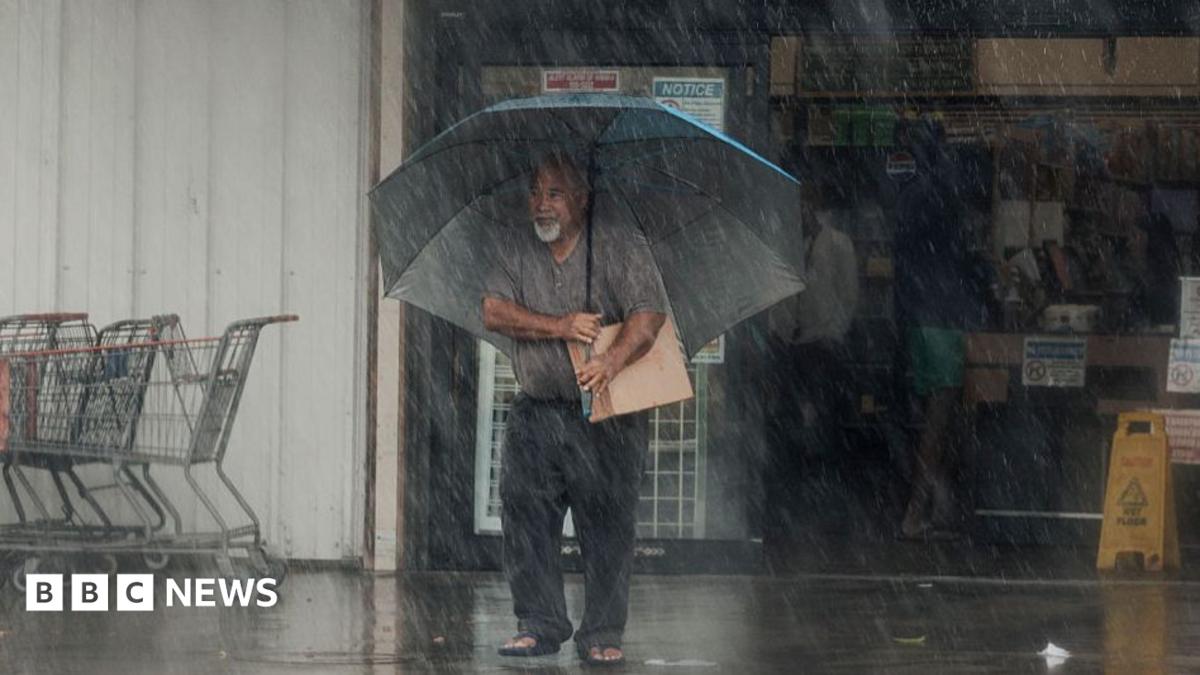
The article discusses whether the UK will experience widespread snow this autumn and winter due to El Niño and changes in the polar vortex. It clarifies that while El Niño increases the likelihood of wet and stormy conditions early in the season, it could also potentially disrupt the polar vortex later on, possibly leading to colder weather but with no certainty. The polar vortex is explained as a stratospheric wind pattern that can weaken or shift, sometimes influencing surface-level cold spells, though this connection is not always clear or consistent.
Written locally by qwen2.5:14b on 2026-10-08,
using this article's own text rather than the other coverage of the
same event (that is the story summary below).
Story summary
In late winter, El Niño can disrupt the polar vortex, potentially increasing the likelihood of cold and snowy conditions in the UK. However, for autumn, El Niño typically brings wet, mild weather with a higher chance of storms rather than snow. The polar vortex is a strong wind current encircling the North Pole in winter, around 10-30 miles above Earth's surface, influencing lower-altitude weather patterns through changes in the jet stream. Despite predictions and rumors about widespread snowfall this autumn and winter due to these factors, experts emphasize that such outcomes are not guaranteed and remain uncertain.
Written for “Winter Weather Patterns Uk” on 2026-10-09,
grounded in this article and the 0 other(s) covering the same event.
Why this leaning score
This article does not take a side on a contested political
question, so it has no leaning score. That is an
answer rather than a gap: a match report or a rescue can be warmly
or critically written without being left or right, and scoring it
anyway is how approval of a subject gets recorded as a political
position.
No political leaning scored for article 67175 · logged 2026-10-08
- Published
Widespread snow driven by a polar vortex is rumoured to be heading for the UK this autumn and winter.
asserted
snow → publish → UK
Headlines have been suggesting it is down to the effects of El Niño but the truth is much more complicated.
asserted
truth → suggest → Niño
For the rest of the autumn, El Niño actually increases the chance of wet, mild and potentially stormy weather for the UK.
asserted
Niño → increase → UK
Later in winter it could shift the odds towards cold and snow, something that can be influenced by changes in the polar vortex but none of this is certain.
uncertain
none → shift → this
The polar vortex is a ring of strong westerly winds encircling the North Pole every winter, around 10-30 miles (16-48km) above the Earth's surface.
asserted
vortex → encircle → surface
It forms because the air high above the Pole becomes extremely cold and dense in winter.
asserted
air → form → winter
The contrast with warmer air further south drives the very strong stratospheric winds that make up the polar vortex.
asserted
that → drive → vortex
This is all going on high up in the stratosphere, far above the troposphere - where our weather actually happens.
asserted
weather → go → troposphere
A strong polar vortex tends to encourage a strong polar jet stream in the troposphere.
asserted
vortex → tend → troposphere
This drives areas of low pressure from west to east, bringing mild air from the Atlantic across the UK with spells of wind and rain.
asserted
This → drive → wind
The coldest air is essentially locked away to the north of us.
asserted
air → lock → us
Sometimes, however, the polar vortex can wobble, weaken or even reverse direction.
asserted
vortex → wobble → direction
Over a period of days and weeks this can work its way down through the atmosphere influencing our jet stream, causing it to weaken, become more bendy or reverse.
asserted
it → work → stream
It can deliver colder northerly or easterly winds which can bring the UK its coldest winter weather
However, it does not always translate into changes in weather patterns at the Earth's surface.
asserted
it → deliver → surface
Equally, periods of a meandering jet stream and cold winter weather often occur without significant changes in the polar vortex.
asserted
periods → meander → vortex
What does El Niño have to do with it?
asserted
Niño → have → it
El Niño - the naturally-occurring climate phenomenon in the Pacific Ocean - is continuing to grow and by some measures is already the strongest on record.
asserted
Niño → occur → record
The heat released from the warm Pacific Ocean into the atmosphere impacts weather patterns around the globe.
asserted
heat → release → globe
In autumn it increases the chance of wet and stormy weather in the UK - something that is reflected in the forecasts for this season.
asserted
that → increase → season
In late winter, the waves of energy released by El Niño can move upwards through the atmosphere making it more likely that the polar vortex becomes disrupted, increasing the chance of ice and snow.
asserted
vortex → release → ice
The so-called Big Freeze of 2009/2010 was, at the time, the coldest winter in three decades - and coincided with an El Niño.
However, 2006/2007 was also an El Niño winter and was unseasonably warm.
asserted
2006/2007 → call → Niño
The so-called Beast from the East in 2018 actually occurred during a La Niña year, effectively the opposite of El Niño.
asserted
Beast → call → Niño
So while El Niño is already having big impacts on global weather, and may influence the polar vortex later in winter, snow and ice in the UK is far from guaranteed.
uncertain
snow → have → UK
Current forecasts suggest no significant cold or snow is likely in the near future.
asserted
cold → suggest → future
You can read the latest outlook for the next month here.
asserted
You → read → month
 The Aporia