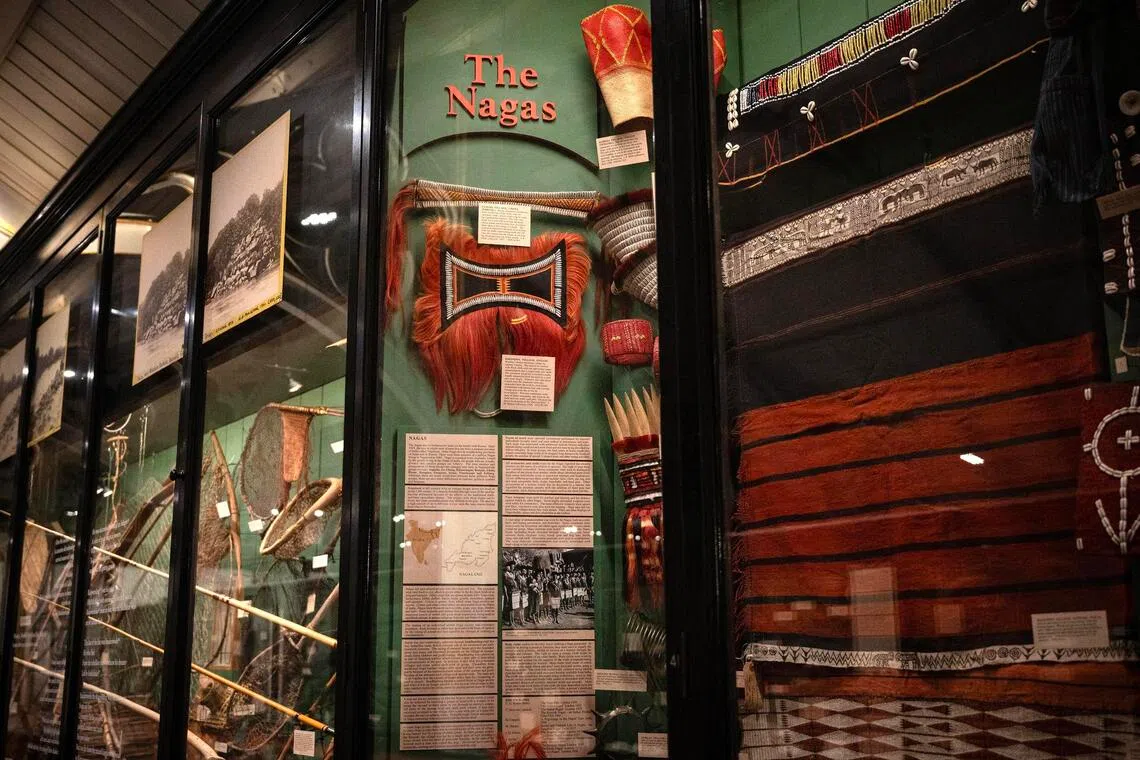
Oxford University museum to return human remains to Naga people in India

The Straits Times · collected 2026-09-07 · by The Straits Times
Read the original at The Straits Times ↗

Summary

Oxford University's Pitt Rivers Museum will return 39 human remains to the Naga people in north-east India by agreement with the Forum for Naga Reconciliation (FNR). The remains were collected by British colonial administrators in the early 20th century and had been on public display until 2020. The repatriation is part of a wider international movement to return artefacts and human remains acquired during the colonial era, following similar moves by London's Horniman Museum and the University of Edinburgh. One specimen was excluded from the agreement due to lack of clear provenance as Naga.
Written by the local model on 2026-09-07, using this article's own text rather than the other coverage of the same event (that is the story summary below).

Signals How these are calculated →

Claims extracted
13
claim-shaped sentences
Uncertain
0%
0 of 13 hedged
Leaning
withheld
no quote in the article backed the model's score
Publisher trust
94.6
red-flag proxy, not a credibility rating
Outlets on this story
1
World
Narrative spread
1
articles carrying this framing
Analyzed 2026-09-07 · how these are computed

AI analysis (generated at analysis time, not now)

Story summary

Oxford University's Pitt Rivers Museum will return 39 human remains to the Naga community in north-east India, which were taken during Britain's colonial era. The museum collected these remains in the early 20th century as part of its extensive collection of Naga artefacts, and some were even displayed publicly until 2020. The decision to repatriate was made after Oxford University approved a request from the Forum for Naga Reconciliation (FNR), with the museum's director stating that the remains "have been away from their homeland for far too long." The return of these remains is seen as significant not only because it brings the ancestral remains back to their home, but also because it allows memories to be restored to where they belong.


Written for “Oxford Returns Native Remains” on 2026-09-07, grounded in this article and the 0 other(s) covering the same event.
Why this leaning score
The model judged this article politically coded and scored it +0.35, but every quote it verified points left, so the score is not published.
Written under an earlier scoring contract, which gave a paragraph rather than checkable quotes. Re-analysing this article replaces it.
Leaning score withheld for article 6703: score contradicts its own evidence · logged 2026-09-07

Story

📰 Oxford Returns Native Remains
World · 1 article(s) covering the same event. This is the one the site leads with.

How this is being covered How these are calculated →

Article leaning vs. publisher reliability
Source leaning vs. consistency

Compared with similar articles

Nothing to compare against. No article is close enough to this one for the pipeline to have linked or judged the pair.

Publisher

The Straits Times · 216 article(s) · 0 correction(s) detected
No corrections detected for this publisher. That may mean careful reporting, or simply that nothing has been checked.

Who wrote this

The Straits Times
145 article(s) here · 1 carrying a prediction
🔮 "We feel it is important that going forward there is some support that would help us to build back stronger."
🔮 Katz said the military campaign would target the “senior leadership and mechanisms” of the Palestinian Authority, which is based in the West Bank city of Ramallah, as well as “all terror infrastructure” in the territory.
🔮 “I would say that if Gaza continues the way it is now, or does not move into implementing... the plan that we have under the comprehensive plan, the two-state solution will become practically impossible,” he said.
🔮 In France, where opinion polls suggest the far-right National Rally could win next year's presidential election, Finance Minister Roland Lescure said the outcome of the election in Saxony-Anhalt was a "very, very worrying signal".
🔮 Two former members of a violent far-right group will face trial on murder and attempted murder charges.
2026-09-07 · assertive framing · Trial opens in Paris for murder of Argentina rugby star
🔮 Brazil's opposition is set to take to the streets on Independence Day on Monday, as right-wing presidential hopeful Senator Flavio Bolsonaro seeks to capitalize on a crisis engulfing the country's Supreme Court to bolster his campaign against President Luiz Inacio Lula da Silva ahead of next month's election.
🔮 AI could pose ‘existential’ risk to humanity, UN rights chief warns AI generated
🔮 The U.S. and Saudi Arabia reached an agreement on civil nuclear power cooperation in July that would let Riyadh enrich uranium and build nuclear reactors using U.S. technology.
🔮 Oxford University’s Pitt Rivers Museum will return the remains of 39 people taken during Britain’s colonial era to the Naga community in north-east India, the museum said on Sept 7.
🔮 Israeli rubble-clearing in Gaza could erase ‘atrocity crimes’ evidence: UN expert
Also by The Straits Times
Nothing else under this byline is closely related to this article, so these are simply their most recent.
All 145 articles by The Straits Times →

Topics

British India LONDON Naga Oxford University

Subjects

Naga NORP · 6× British NORP · 3× LONDON GPE · 3× Britain GPE · 2× FNR ORG · 2× India GPE · 2× Oxford University ORG · 2× Pitt Rivers Museum ORG · 2× Oxford University’s ORG · 1× the Forum for Naga Reconciliation ORG · 1×

Narrative

“Repatriation, for the Nagas, is not simply about bones and ancestral remains finding their way back to the land but importantly about memory returning to where it belongs,” the FNR and other Naga organisations said in a statement, welcoming the agreement.
framing: assertive · carried by 1 article(s) · first seen 2026-09-07
🔮 Oxford University’s Pitt Rivers Museum will return the remains of 39 people taken during Britain’s colonial era to the Naga community in north-east India, the museum said on Sept 7.
2026-09-07 · The Straits Times
Oxford University museum to return human remains to Naga people in India · assertive framing

Claims (13 extracted, 0 hedged)

Oxford University museum to return human remains to Naga people in India AI generated asserted
museum → return → India
Oxford University’s Pitt Rivers Museum will return the remains of 39 people taken during Britain’s colonial era to the Naga community in north-east India, the museum said on Sept 7. asserted
museum → return → Sept
The museum, which holds the world’s largest collection of Naga artefacts, confirmed it was preparing the repatriation after the university approved a restitution request by the Forum for Naga Reconciliation (FNR). asserted
university → hold → Reconciliation
The remains “have been away from their homeland for far too long”, museum director Laura Van Broekhoven said in a statement. asserted
Broekhoven → say → statement
The human remains were collected in the early 20th century by British colonial administrators, and some remained on public display until 2020. asserted
some → collect → 2020
“Repatriation, for the Nagas, is not simply about bones and ancestral remains finding their way back to the land but importantly about memory returning to where it belongs,” the FNR and other Naga organisations said in a statement, welcoming the agreement. asserted
FNR → find → agreement
The request covered 40 sets of human remains, Pitt Rivers Museum said. asserted
Museum → cover → remains
Oxford University approved the return of 39 of them on July 13, concluding that one specimen “does not have a clear provenance as Naga”. asserted
specimen → approve → Naga
The museum said it was “working closely” with the Naga community to agree on a date for a handover ceremony, which has not been set yet. asserted
which → say → ceremony
The agreement forms part of a wider international movement to repatriate artefacts and human remains acquired by Western institutions during the colonial era. asserted
agreement → form → era
In 2022, London’s Horniman Museum returned 72 artefacts to Nigeria, including 12 Benin bronze artefacts, and earlier in 2026 the University of Edinburgh returned the skulls of six people to a Native American group. asserted
University → return → group
Greece has for decades demanded the return from Britain of the Parthenon Marbles, saying they were looted in the early 19th century by Lord Elgin, British ambassador to the Ottoman Empire. asserted
they → demand → Empire
London insists they were legally acquired and successive British governments have noted that the decision rests with the British Museum, where they are kept. asserted
they → insist → Museum
💬 Give feedback
🕘 History 🎫 Support