Oxford study suggests animals may have evolved 200 million years earlier

Read the original at Times of India ↗
Times of India · collected 2026-10-08 · by TOI World Desk

Quick Summary

A new study by the University of Oxford proposes that animals may have evolved between 700 to 800 million years ago, approximately 200 million years earlier than previously indicated by fossil evidence. By examining fossil deposits in Mongolia and other ancient geological formations, researchers found no animal fossils despite excellent preservation conditions, suggesting that the lack of early animal fossils does not mean animals did not exist at those times. This challenges current understanding and could push back estimates of when complex life began on Earth.
Written locally by qwen2.5:14b on 2026-10-08, using this article's own text rather than the other coverage of the same event (that is the story summary below).

AI analysis runs on qwen2.5:14b, locally

Story summary

A new study by the University of Oxford suggests that animal life may have originated 200 million years earlier than previously thought, placing it between 700 million and 800 million years ago, according to research published in Science Advances. This estimate challenges existing fossil evidence which indicates the oldest definitive animal fossils date back only to around 574 million years ago. The study incorporates older geological data from sites like the Weng’an Biota in China, a deposit dating back roughly 590 million years, known for preserving microscopic organisms but lacking clear signs of early animals. This research proposes that primitive forms of animal life could have evolved long before major fossil records began, even preceding severe ice ages on Earth. The findings suggest a significant reevaluation of when and how the animal kingdom first emerged on our planet.

Written for “Evolution of Animals Studied” on 2026-10-08, grounded in this article and the 0 other(s) covering the same event.

Signals How these are calculated →

Claims extracted
30
claim-shaped sentences
Uncertain
20%
6 of 30 hedged
Leaning
not political
takes no side on a contested political question
Correction & hedging signals
59.0
corrections and hedging in what we collected; not a measure of accuracy
Outlets on this story
1
Science
Narrative spread
1
articles carrying this framing
Analyzed 2026-10-08 · how these are computed

Story

📰 Evolution of Animals Studied
Science · 1 article(s) covering the same event.

How this is being covered How these are calculated →

Article leaning vs. publisher reliability
Source leaning vs. consistency

Compared with similar articles

Nothing to compare against. No article is close enough to this one for the pipeline to have linked or judged the pair.

Publisher

Times of India · 2039 article(s) · 2 correction(s) detected
Running correction rate · 2 correction(s)
2026-10-05
NASA spacecraft gains 3.5 km/s speed from Earth’s gravity assist without major engine burn
2026-10-04
Tennessee prison chief Frank Strada resigns after Christa Pike's botched execution

Who wrote this

TOI World Desk
817 article(s) here · 1 carrying a prediction
🔮 FBI search uncovered gold and cash The scale of the alleged operation became clearer after the FBI searched Rush's residence on May 19, 2026.
🔮 The animal kingdom may have started its journey on a much earlier Earth than scientists once thought.
🔮 What started as an extracurricular commitment soon became a space where he could develop his leadership skills, meet fellow students and find new ways to serve his community.
🔮 The initial focus was largely on manufacturing and related fields, including courses that could lead to jobs in skilled trades and industrial occupations.
🔮 A national forest could allow activities such as timber cutting and grazing, while a national park would give greater priority to protecting the landscape and natural resources.
🔮 A 10-year-old California boy asked his father if they could have a roller coaster in their backyard.
🔮 In February 2016, Serena Williams traded the tennis court for a construction site in Jamaica, joining charity partners, local workers and volunteers to help build the Salt Marsh Basic School in Trelawny.
🔮 Two years after Daniel Robson emerged in the Canadian media scene as an expert in extremism, terrorism, and cybercrime, several Canadian outlets said Robson might not be a real person and probably an AI persona.
🔮 Burns initially thought restoring the ranch would be straightforward, but after about a decade he decided he needed to understand the landscape before trying to change it.
🔮 US President Donald Trump sought to clarify his controversial remarks about Iran attacking Los Angeles and San Diego at a Texas campaign rally on Wednesday, saying the US would “not let that happen” as he campaigned for Republican candidates ahead of the midterm elections.
Wire or desk byline, not an individual reporter.
Also by TOI World Desk
Nothing else under this byline is closely related to this article, so these are simply their most recent.
All 817 articles by TOI World Desk →

Topics

China Mongolia Namibia Science Advances the University of Oxford

Subjects

Mongolia GPE · 2× Australia GPE · 1× China GPE · 1× Ediacaran NORP · 1× Namibia GPE · 1× Norway GPE · 1× Science Advances ORG · 1× South China GPE · 1× Weng’an GPE · 1× the University of Oxford ORG · 1×

Narrative

With the older geological evidence incorporated into the calculations, the estimated origin of animals shifted backwards by around 200 million years, placing it between 800 million and 700 million years ago.
framing: assertive · carried by 1 article(s) · first seen 2026-10-08
🔮 The animal kingdom may have started its journey on a much earlier Earth than scientists once thought.
2026-10-08 · Times of India
Oxford study suggests animals may have evolved 200 million years earlier · assertive framing

Claims (30 extracted, 6 hedged)

The animal kingdom may have started its journey on a much earlier Earth than scientists once thought. uncertain
scientists → start → Earth
Long before recognisable creatures appeared in the fossil record, and perhaps before the planet was plunged into some of its most severe ice ages, primitive animals may already have been quietly evolving in ancient seas. uncertain
animals → appear → seas
A new study led by the University of Oxford suggests that animal life could have originated between 700 million and 800 million years ago, potentially 200 million years earlier than the clearest fossil evidence indicates. uncertain
evidence → lead → Oxford
Published in Science Advances, the research challenges one of the assumptions that has shaped recent estimates of when animals first emerged. asserted
animals → publish → estimates
The fossil record gives scientists an incomplete picture of early animal life. asserted
record → give → life
The oldest definitive animal fossils date to around 574 million years ago, just before the dramatic diversification associated with the Cambrian Period. asserted
fossils → date → Period
One important site in this debate is the Weng’an Biota in China, a roughly 590-million-year-old deposit famous for preserving microscopic organisms in remarkable detail. asserted
site → preserve → detail
Because none of the fossils found there can be confidently identified as animals, scientists have used the site as a possible upper limit for animal origins. asserted
scientists → find → origins
The reasoning seemed straightforward: if conditions were good enough to preserve delicate microscopic life, surely animals would have been preserved too if they had existed. asserted
they → seem → life
What Mongolia revealed Researchers examined the Kheseen Biota in Mongolia, a fossil deposit more than 40 million years younger than Weng’an. asserted
Researchers → reveal → Weng’an
By the time these rocks formed, animals were already known to have existed elsewhere, including in Namibia and South China. asserted
animals → form → Namibia
The team examined more than 140 samples, including material from previously undocumented locations, using scanning electron microscopy. asserted
team → examine → microscopy
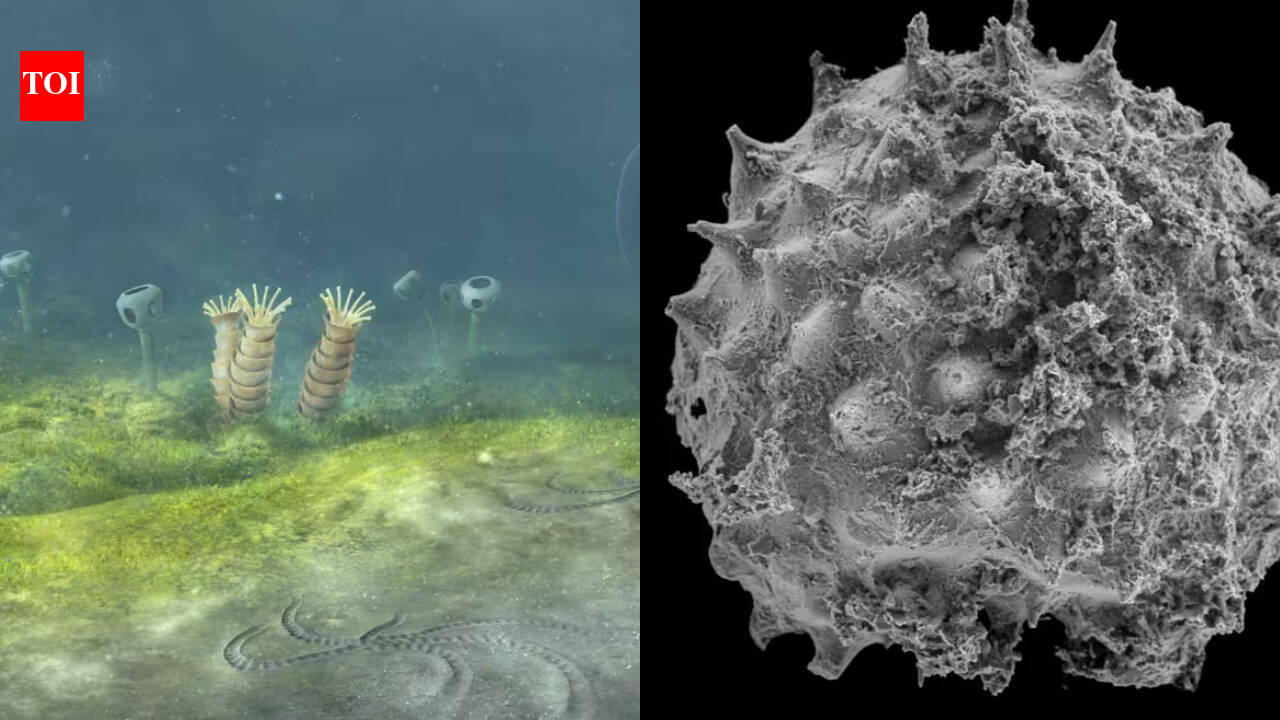
The exceptionally preserved fossils included previously unknown acritarchs, tiny spherical organisms with spines and branching projections, as well as embryo-like fossils containing internal cells. asserted
fossils → preserve → cells
Yet, despite the extraordinary preservation, there were still no fossils that could confidently be identified as animals. uncertain
that → be → animals
That matters because it shows that even a fossil deposit formed during a period when animals definitely existed can contain no recognisable animal remains. asserted
animals → matter → remains
The absence of animal fossils at Weng’an, therefore, cannot by itself establish that animals had not yet evolved. asserted
animals → establish → itself
Pushing the molecular clock back Instead of relying primarily on the younger Ediacaran deposits, the researchers turned to much older geological formations. asserted
researchers → push → formations
These included Norway’s Svanbergfjellet Formation, Australia’s Bitter Springs Group and Arizona’s Chuar Group, dating from roughly 850 million to 730 million years ago. asserted
These → include → Formation
All three contain abundant and exceptionally preserved fossils and have geological characteristics capable of preserving early life. asserted
three → contain → life
Yet no definitive animal fossils have been found there. asserted
fossils → find → ?
The researchers used these formations as older constraints in molecular clock analyses. asserted
researchers → use → analyses
The technique compares genetic differences among living organisms and combines them with known fossil dates and estimated evolutionary rates to calculate when their ancient ancestors may have existed. uncertain
ancestors → compare → dates
With the older geological evidence incorporated into the calculations, the estimated origin of animals shifted backwards by around 200 million years, placing it between 800 million and 700 million years ago. asserted
origin → incorporate → it
Chemical biomarkers preserved in ancient rocks have been interpreted as evidence consistent with sponges living at least 650 million years ago, well before the oldest definitive large animal fossils. asserted
biomarkers → preserve → fossils
If animals really did emerge between 700 million and 800 million years ago, they would have lived through a radically different planet. asserted
they → emerge → planet
The Cryogenian Period began around 720 million years ago and included episodes of extreme global glaciation commonly known as Snowball Earth. asserted
Period → begin → Earth
That raises a provocative possibility: animal life may have existed before these frozen episodes, or perhaps even endured them. uncertain
life → raise → them
An evolutionary mystery remains The study does not provide an exact birth date for the animal kingdom. asserted
study → remain → kingdom
Instead, it highlights the limitations of using fossil absence as evidence of evolutionary absence, particularly when dealing with tiny, soft-bodied organisms that were unlikely to fossilise easily. asserted
that → highlight → organisms
Researchers will need to consider not only conventional body fossils but also traces of animal activity and chemical biomarkers. asserted
Researchers → need → activity

💬Give feedback
🕘History 🎫Support