Republicans won a cost-of-living election in 2024, beating a Democratic Party that much of the country blamed for high prices.
asserted
much → win → prices
Voters were broadly correct in assessing that blame: The Biden administration, with the backing of Congressional Democrats, shoveled trillions of dollars out the door under the auspices of COVID-19 “relief” — ignoring warnings from some of its own ideologically allied economists that the results would be hugely inflationary.
asserted
results → assess → economists
If it hadn’t been for dissenting votes cast by two Democratic senators, that inflation orgy would have swelled by trillions more.
asserted
orgy → dissent → trillions
Both of those senators, West Virginia’s Joe Manchin and Arizona’s Kyrsten Sinema, are now ex-senators, having been harassed and hounded out of the party by irate leftists.
asserted
Both → harass → leftists
Moderating forces and faces within Democratic politics are getting aggressively marginalized.
asserted
forces → moderate → politics
The guardrails are being pried away.
asserted
guardrails → pry → ?
Republicans’ downfall this November may well come back to the same core problem: People are feeling the pinch of paying too much for practically everything.
uncertain
People → come → everything
Having failed to solve the problem they were elected to alleviate, arguably exacerbating it in a few ways, frustrated voters once again appear poised to channel that dissatisfaction at the ballot box.
asserted
voters → fail → box
The challenge, of course, is that the only viable alternative to the party currently in power is the party this same electorate just threw out of power, which should have practically zero credibility on matters of “affordability.”
asserted
which → throw → affordability
Not only did Democrats use their last bite at the policy apple to blow out the budget and send prices soaring, but they also voted in lockstep last year against the One Big Beautiful Bill Act, also known as the working families tax cuts.
asserted
they → use → cuts
That legislation, passed exclusively by Republicans, prevented a multitrillion-dollar, across-the-board tax hike, which was set to automatically kick into place.
asserted
which → pass → place
Democrats unanimously opposed preventing those bruising tax increases, while also unanimously opposing GOP-championed tax relief on earnings derived from tips and overtime pay — not typically the sort of thing that would benefit “millionaires and billionaires.”
asserted
that → oppose → millionaires
It’s a neat trick to fuel historic inflation with staggering government spending, then vote against protecting people of all income groups against the largest tax increase in U.S. history, then turn around and insist that you’re the party of affordability.
asserted
you → ’ → affordability
It’s worth noting that after being swept into office with “affordability” sloganeering last year, the supposedly “centrist” Gov. Abigail Spanberger (D-VA) immediately set her sights on priorities such as imposing sanctuary policies to shield criminal illegal immigrants, and an unconstitutional power grab to turn one of the most proportional and representative congressional maps in the country into a lopsided partisan gerrymander.
asserted
Spanberger → ’ → gerrymander
But given voters’ penchant to lurch back and forth in disillusionment, this dynamic stands to benefit the very people who were just chucked out of power as culprits and villains.
asserted
who → give → culprits
Voters have short memories.
asserted
Voters → have → memories
Voters want results.
asserted
Voters → want → results
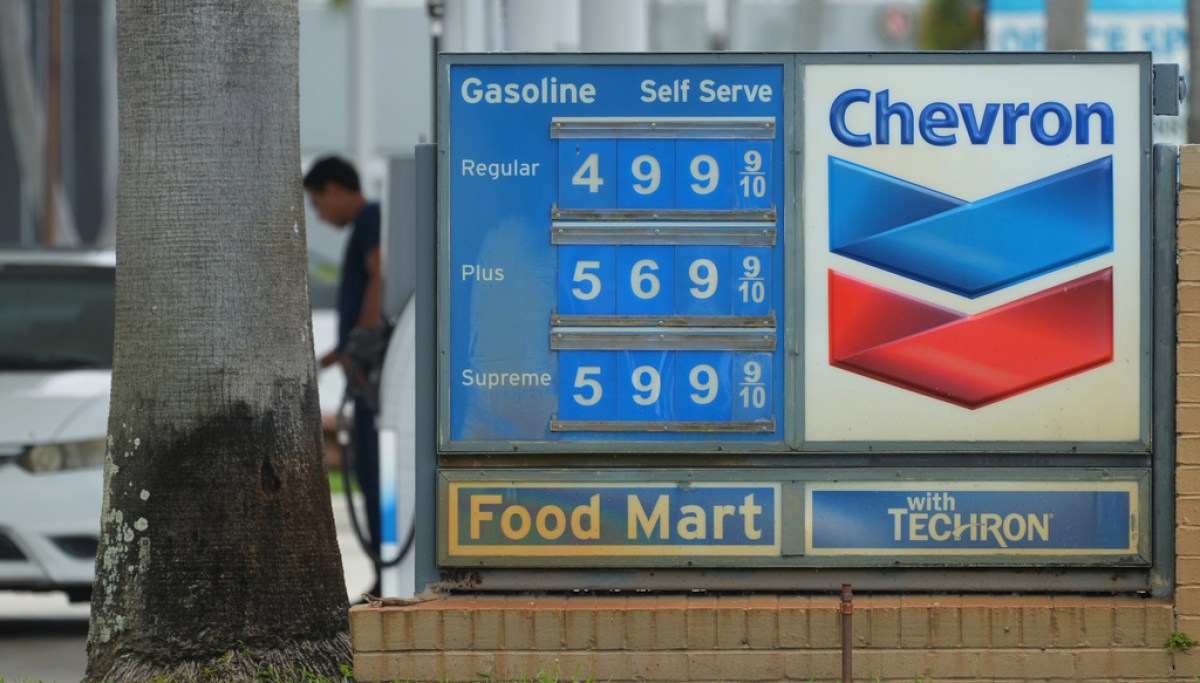
A staple of Democrats’ messaging this cycle is tapping into anger over elevated gas and diesel prices.
asserted
staple → tap → prices
It would be politically insane not to do so, of course.
asserted
It → do → course
But as the opposition party holds press conferences and cuts commercials in front of gas stations, voters ought to remember that higher energy costs are their stated policy goal.
asserted
costs → hold → stations
They’re bellyaching about prices as a means to regain power, but the policies they pursue with said power are often explicitly anti-energy.
asserted
they → bellyache → power
In their oft-stated zeal to crush fossil fuels, energy costs “necessarily skyrocket,” as one very prominent Democrat once put it.
asserted
Democrat → state → it
But it’s for a good cause, you see, as are all the expensive mandates and costly taxpayer subsidies attached to the party’s so-called “green” agenda.
asserted
mandates → ’ → agenda
Based on desired outcomes, they should be positively thrilled about high gas prices.
asserted
they → base → prices
For now, though, they’re acting indignant and empathetic to attain power.
asserted
they → act → power
For their part, Republicans, starting with the president, should have been consistently seeding the message that their policies are oriented around American energy dominance and that the pain inflicted by the Iran conflict is both temporary and a necessary short-term consequence of eliminating the nuclear threat from a “death to America” regime that’s been attacking our people for decades.
asserted
that → start → decades
When that task is complete, and the regime is being suffocated right now, American energy dominance is the priority.
asserted
dominance → suffocate → ?
That’s its actual policy.
asserted
That → ’ → ?
More to the point: How, exactly, will the politicians who caused an affordability crisis last time they ran Washington fix the problem in the future?
asserted
they → cause → future
Raising taxes and spending, and variants of that stale formula, is more or less their entire economic plan, always.
asserted
Raising → raise → formula
In an interview with CBS News last weekend, Sen. Mark Kelly (D-AZ), who’s rumored to have higher political ambitions, was asked to explain Democrats’ plan to lower costs.
asserted
who → rumor → costs
He barely got a sentence into his answer before extolling the virtues of hiking taxes — only on “the rich,” naturally — to fund other proposals.
asserted
He → get → proposals
Also, these tax schemes never seem to play out as marketed to the public.
asserted
schemes → seem → public
It targets “mansions,” so it’s got to be “fair,” right?
asserted
it → target → mansions
LA’s “mansion tax,” sold to Angelenos as a way to tax the rich and boost housing, has instead blocked the building of 9,100 homes, wiped out 16,650 full-time construction jobs and cost $452 million in revenue.
asserted
tax → sell → revenue
A damning new report says the tax, officially known as United to House LA, or ULA — has had a negative impact on the city’s high-end and multi-family real estate markets and collected less than half what it was expected to generate to tackle the city’s housing crisis.
asserted
it → say → crisis
The ULA was expected to raise about $900 million a year, or $2.7 billion over its first three years.
asserted
ULA → expect → years
Instead, it brought in about $1.2 billion.
asserted
it → bring → billion
Despite its nickname, LA’s “mansion tax” applies far beyond luxury homes.
asserted
tax → apply → homes
Apartment buildings, offices, warehouses and vacant land can all trigger the tax if they sell above the thresholds.
asserted
they → trigger → thresholds
…and 13 more, not listed.
 The Aporia