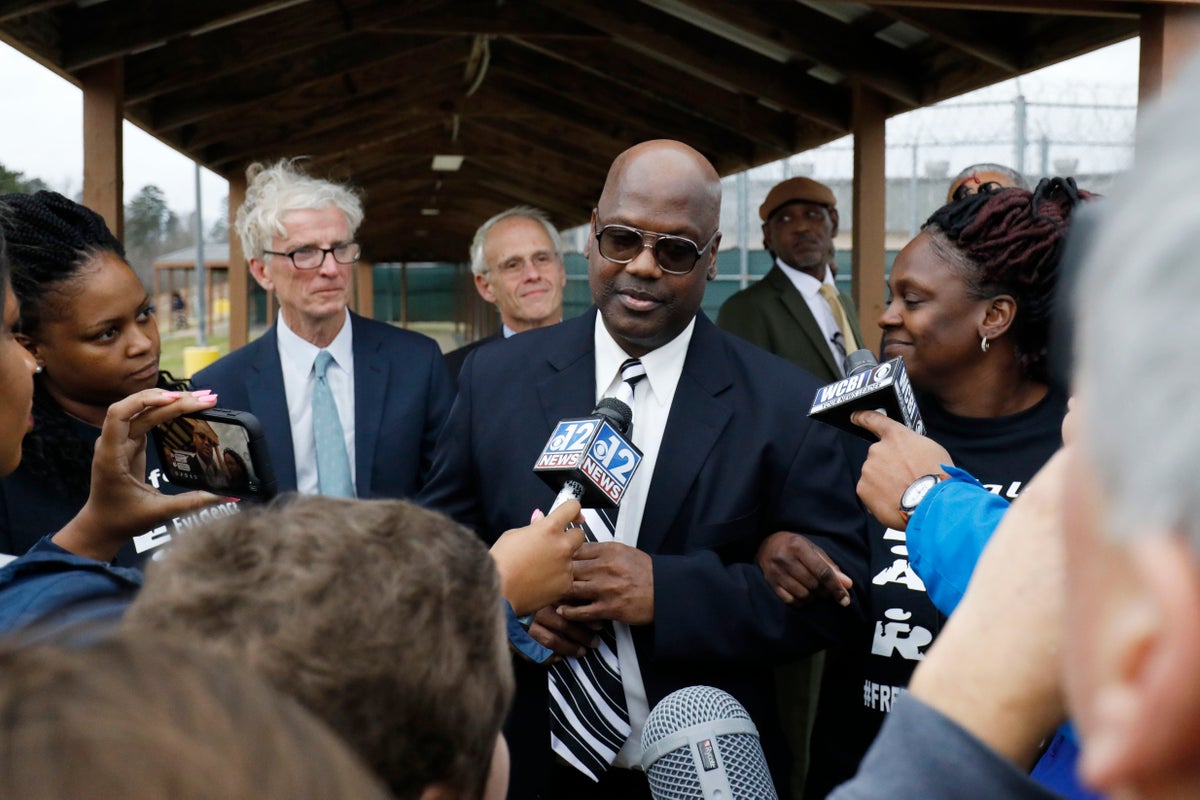
Curtis Flowers, a Black man who spent more than two decades in prison and was on Mississippi’s death row until his conviction was overturned by the U.S. Supreme Court, has died at age 56. He passed away at home Wednesday after being released from prison in December 2019 following a six-month delay post-conviction ruling. Flowers was convicted six times for the murder of four people in Winona, Mississippi, in 1996; his case gained national attention due to racial bias issues in jury selection processes. The Supreme Court decision in 2019 highlighted discriminatory practices by prosecutors that disproportionately excluded Black jurors from serving on his trial juries.
Written locally by qwen2.5:14b on 2026-10-08,
using this article's own text rather than the other coverage of the
same event (that is the story summary below).
Curtis Flowers, a Black man who spent more than 22 years in prison and was on death row in Mississippi before the U.S. Supreme Court threw out his conviction and death sentence, has died.
asserted
Court → spend → conviction
Flowers' family confirmed that he died Wednesday at his home in Mississippi, attorney Rob McDuff told The Associated Press Thursday.
asserted
McDuff → confirm → Press
No cause of death was given, said McDuff, who was part of Flowers' legal team.
asserted
who → give → team
Flowers was 26 when he was arrested several months after the July 1996 shooting deaths of four people inside a Winona, Mississippi, furniture store.
asserted
he → arrest → store
At the time, prosecutors described him as a disgruntled former employee who sought revenge against the store’s owner because she fired him and withheld most of his pay to cover the cost of merchandise he damaged.
asserted
he → describe → merchandise
Nearly $300 was found missing after the killings.
asserted
300 → find → killings
Flowers was tried in the killings six times.
asserted
Flowers → try → killings
Justice Brett Kavanaugh wrote in the high court's 7-2 decision in 2019 that the removal of Black prospective jurors deprived Flowers of a fair trial.
asserted
removal → write → trial
During the sixth trial in 2010, Flowers was sentenced to death.
asserted
Flowers → sentence → death
There were 11 white jurors and one Black juror who considered the case after District Attorney Doug Evans struck five Black prospective jurors.
asserted
Evans → be → jurors
Flowers remained in prison for six months after the Supreme Court ruling because he was still under indictment.
asserted
he → remain → indictment
He finally was released in December 2019 after a judge set bond.
asserted
judge → release → bond
Mississippi dropped charges against Flowers in September 2020.
asserted
Mississippi → drop → September
“Today, I am finally free from the injustice that left me locked in a box for nearly twenty three years,” Flowers said in a statement.
asserted
Flowers → leave → statement
“I’ve been asked if I ever thought this day would come.
asserted
day → ask → ?
I have been blessed with a family that never gave up on me and with them by my side, I knew it would.”
asserted
it → bless → side
The legal team that represented Flowers for more than two decades said Thursday in a statement that each member feels “privileged to have called him a client.”
asserted
member → represent → him
“Later, in the years after his release and exoneration, we felt equally honored to call him a friend,” the legal team said.
asserted
team → feel → him
“No matter where he was — on death row, at home on his parents’ porch with his feet up, singing in church, or fishing in a local pond — Curtis shared his light.”
asserted
Curtis → sing → light
The trials stretched back more than 20 years.
asserted
trials → stretch → years
The records showed Evans’ “relentless, determined effort to rid the jury of black individuals,” with the goal of an all-white jury, Kavanaugh wrote.
asserted
Kavanaugh → show → jury
In the earlier trials, three convictions were tossed out, including one when the prosecutor improperly excluded African Americans from the jury.
asserted
prosecutor → toss → jury
In the second trial, the judge chided Evans for striking a juror based on race.
asserted
judge → chide → race
Two other trials ended when jurors couldn’t reach unanimous verdicts.
asserted
jurors → end → verdicts
Kavanaugh noted that Evans had removed 41 of the 42 prospective black jurors over the six trials.
asserted
Evans → note → trials
Flowers filed a lawsuit in 2021 against Evans and three investigators who worked with the district attorney.
asserted
who → file → attorney
The suit claimed Evans and the investigators engaged in misconduct, including “pressuring witnesses to fabricate claims about seeing Mr. Flowers in particular locations on the day of the murders” and ignoring other possible suspects.
uncertain
Evans → claim → suspects
Earlier that year, a judge ordered the state of Mississippi to pay Flowers $500,000 for wrongful imprisonment — the maximum under a state law that allows up to $50,000 a year for 10 years.
asserted
that → order → years
Evans retired in 2023 after more than 30 years as district attorney.
asserted
Evans → retire → attorney
His jury selection tactics had been scrutinized for years.
asserted
tactics → scrutinize → years
Flowers' name is “etched into U.S. Supreme Court jurisprudence — about what it means to fight for a fair trial free from racial bias in the selection of jurors,” Flowers' legal team said.
asserted
team → etch → jurors
“And also for that, but for so many other reasons, his name is etched into our memories, too — professional and personal.
asserted
name → etch → memories
We will miss him.”
asserted
We → miss → him
He reported from Detroit.
asserted
He → report → Detroit
 The Aporia