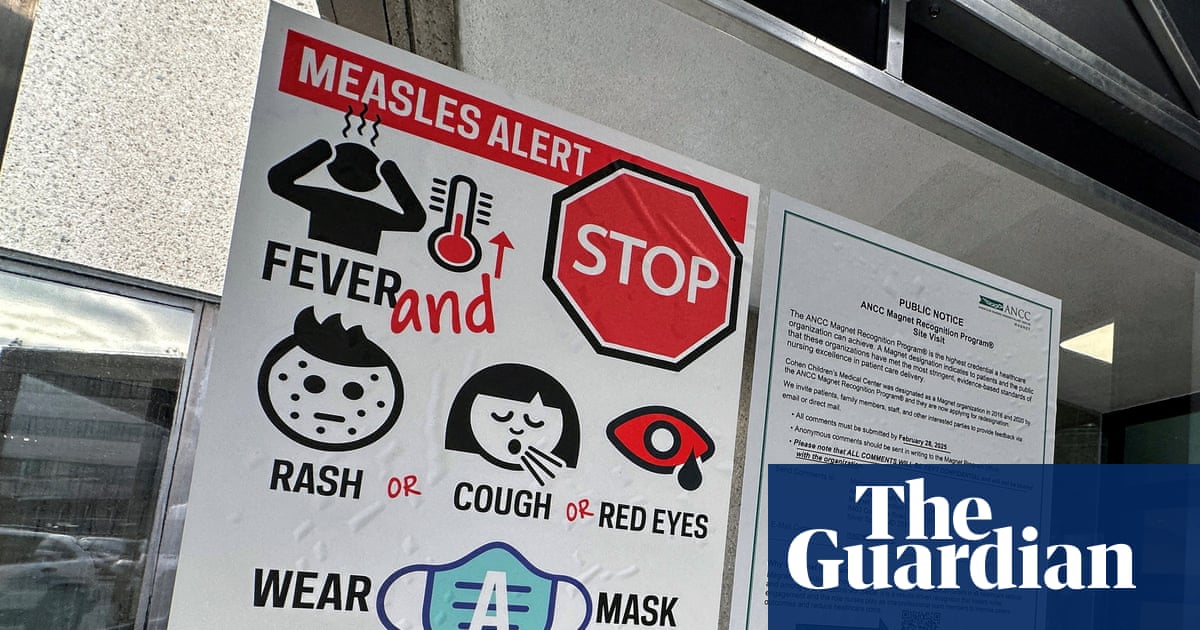
New York state's Amish community has been facing heavy government fines for allowing students to attend Amish schools without proof of vaccination.
asserted
students → face → vaccination
Now the Amish are asking the Supreme Court to intervene.
asserted
Amish → ask → Court
From 1966 to 2019, unvaccinated students were allowed to attend school in New York with a medical exemption issued by a physician, or if they "hold genuine and sincere religious beliefs" opposed to vaccination.
asserted
beliefs → allow → vaccination
But in 2018 and through 2019, a measles outbreak—the largest in nearly 20 years—spread among the state's Orthodox Jewish communities.
asserted
outbreak → spread → communities
Through effective disease control practices, the outbreak was contained with zero associated deaths.
asserted
outbreak → contain → deaths
Rattled, officials amended the state's legal code in June 2019 to remove all religious exemptions to school vaccine mandates.
asserted
officials → rattle → mandates
The legislator who introduced the bill, Jeffrey Dinowitz (D–Bronx), attributed the outbreak to "misinformation and irresponsible rhetoric."
asserted
who → introduce → misinformation
But instead of scaling up information campaigns, he chose to crack down on religious freedom.
asserted
he → scale → freedom
In 2022, the government issued $118,000 in fines targeting three rural Amish schoolhouses—all of which are privately run, privately funded, and exclusively attended by members of the local Amish community—for failing to comply with the mandate.
asserted
all → issue → mandate
"Positions vary," says Cory Anderson, a Penn State expert on Amish health—and an Amish man himself.
asserted
Anderson → vary → health
"But there is hesitation toward integrating unfamiliar and invasive medical practices."
A group of Amish plaintiffs responded with Miller v. McDonald.
asserted
group → be → McDonald
Their suit argues that the 2019 expansion of New York's vaccine mandates violates their First Amendment right to the free exercise of their religion.
asserted
expansion → argue → religion
Under precedent set by Employment Division v. Smith (1990), a law may burden religious exercise only if meets the "rational basis" test and if it is "neutral and generally applicable."
uncertain
it → set → test
The Amish argue that the expanded mandate is not neutral because "the State targeted religious adherents by eliminating [the] long-standing religious exemption while leaving the medical exemption process in place."
asserted
State → argue → place
Federal courts disagreed.
asserted
courts → disagree → ?
In 2024, the District Court for the Western District of New York ruled that the law "is neutral on its face, neither targeting religious belief nor singling it out for particularly harsh treatment."
asserted
law → rule → treatment
In 2025, the 2nd Circuit Court of Appeals affirmed the lower court's ruling.
asserted
Court → affirm → ruling
While courts have historically relied on Smith to measure violations of the Free Exercise Clause, the Supreme Court has recently begun to adopt a broader interpretation of the clause, expanding parental religious rights.
asserted
Court → rely → rights
The Supreme Court recommended that the appellate court reconsider its rejection of the Amish petitioners, in light of Mahmoud v. Taylor.
asserted
court → recommend → Taylor
In that 2025 case, the Court ruled that parents have a constitutional right to opt their children out of certain educational programs that conflict with their religious beliefs.
asserted
that → rule → beliefs
First Liberty counsel Hiram Sasser, who is co-representing the Amish plaintiffs, tells Reason that this re-evaluation was needed because "Mahmoud revived an older case, [Wisconsin v. Yoder], that specifically involved the Amish and preserving their way of life as protected by the First and Fourteenth Amendments."
asserted
that → represent → Amendments
In this 1972 decision, the Court determined that requiring all youth to attend high school unduly limited the Amish community's free exercise of their religion.
asserted
requiring → determine → religion
The 2nd Circuit reassessed Miller in June, but it determined that Mahmoud was not applicable because the vaccine requirement "does not regulate what children are taught [and] does not require them to affirm any belief."
asserted
children → reassess → belief
With June's decision bearing down, the Amish schools are now appealing for a second time.
asserted
schools → bear → time
"Only the Supreme Court can save them now," Sasser says.
asserted
Sasser → save → them
"Presently, forty-five states have legislation allowing school-age children to be exempt from mandatory vaccination laws for religious reasons," Sasser notes.
asserted
Sasser → have → reasons
"For many populations, public health needs to be a resource that can educate, not a hard top-down approach," says Anderson, the Amish health expert.
asserted
Anderson → need → populations
In 2014, a measles outbreak in Ohio swept through Amish groups there.
asserted
outbreak → sweep → groups
In response, local health authorities worked closely with the Amish community and found the group surprisingly willing to cooperate, taking vaccines and isolating themselves when infected.
asserted
group → work → themselves
Praising that 2014 success, Anderson writes in STAT, "Successful outreach requires making effort to understand how religious adherents think, acknowledging their concerns, and humbly recognizing that medical knowledge is shaped by more than mere empiricism."
asserted
knowledge → praise → empiricism
The New York government has not made that effort.
asserted
government → make → effort
The Supreme Court has until November 2 to decide if it will hear the case again.
asserted
it → have → case
If it declines, the state's regulations will prevail, and many of the Amish will leave.
asserted
many → decline → Amish
 The Aporia