In short:
One Nation is proposing a radical change to the superannuation system that would allow Australians who rent or pay a mortgage to divert a portion of their super payments as salary for up to three years.
asserted
who → propose → years
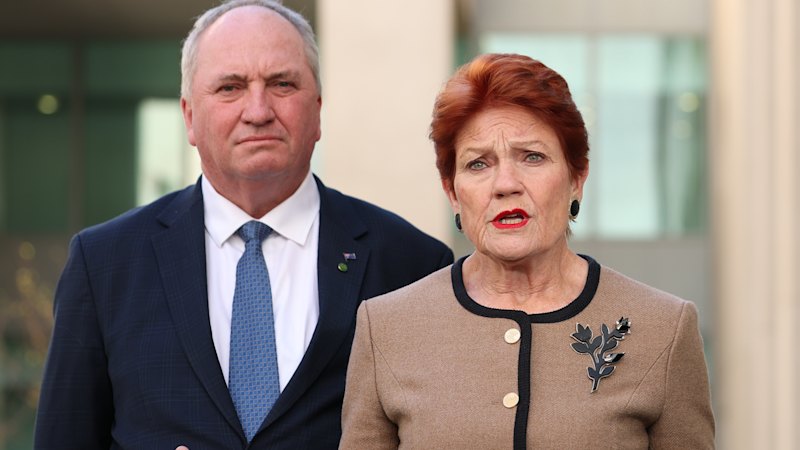
One Nation leader Pauline Hanson says the change will give Australians who opt in "breathing room" to deal with the cost-of-living crisis.
asserted
who → say → crisis
The peak body super funds body says the plan is "economically disastrous" and will drive up inflation while making retirees poorer.
asserted
retirees → say → inflation
Pauline Hansonhas insisted One Nation's proposed superannuation early access policy would have a "neutral" impact on inflation, despite warnings it would create a sugar hit for Australians while making the cost-of-living crisis worse in the long term.
asserted
crisis → insist → term
Under the proposal, Australians who pay rent or a mortgage would be given a choice to divert a portion of their superannuation to their take-home pay for up to three years.
asserted
who → pay → years
The full 12 per cent compulsory super contribution would still be paid by employers, but 3 per cent would be paid directly to the person by the super fund if they opted in.
asserted
they → pay → fund
The payments would also remain subject to the concessional tax rate of 15 per cent, rather than the higher personal income tax rate.
asserted
payments → remain → rate
Senator Hanson said the average full-time worker earning about $90,500 would get an extra $2,300 in their pocket each year.
asserted
worker → say → pocket
That works out to about $44 a week, which she said would provide "breathing room".
asserted
she → work → room
"For a working couple earning $168,000 between them, it is about $4,300 a year after tax, or $82 a week, back in the family budget," she said.
asserted
she → work → budget
Judo Bank chief economic advisor Warren Hogan said the proposal would provide short-term relief for Australians, but raise the cost of living over the long term.
asserted
proposal → say → term
"There is no example in recorded history of us effectively getting our cost-of-living issues under control with more spending,"he said.
asserted
us → be → spending,"he
"It ultimately makes the problem worse.
asserted
problem → make → ?
We need to bring demand in the economy down to take pressure off the supply side in our economy to allow price pressures to ease.
asserted
pressures → need → economy
"
The Reserve Bank has increased interest rates three consecutive times this year in an attempt to curb inflation.
asserted
Bank → increase → inflation
One Nation insists policy will not be inflationary
asserted
policy → insist → ?
Mr Joyce insisted the inflationary impact would be "incredibly small".
asserted
impact → insist → ?
"If someone was paying, for instance, $600 a week for rent and they get assistance, guess what?
asserted
they → pay → what
They are still paying $600 a week in rent," he said.
asserted
he → pay → rent
Asked what people would do with the additional cash in that scenario, he indicated they would invest it, similar to how it is treated within a super fund.
asserted
it → ask → fund
He also pushed back on suggestions people would immediately spend the extra cash as it came into their accounts.
asserted
it → push → accounts
"It's like saying, well, if you've got all this money in the bank, you just go out and spend it that evening.
asserted
you → say → it
People don't do that," he said.
asserted
he → do → that
But Mr Hogan said under the guardrails set out by One Nation, the policy would stimulate spending.
asserted
policy → say → spending
"An initiative like this will put money in people's pockets at an average of $50 or $60 a week, and that money multiplied over half the population, probably, will be a significant stimulus and make the inflation problem worse," he said.
asserted
he → put → population
Mr Joyce argued although the scheme would be open to anyone paying a mortgage or rent, which is about 7 million people, it was likely only those experiencing hardship would access it.
asserted
those → argue → it
"We're not going to have 7 million people in rental stress or housing stress," he said.
asserted
he → go → stress
Plan would erode retirement nest egg
asserted
Plan → erode → egg
Health Minister Mark Butler labelled the proposal an "absolutely terrible plan" and pointed to the Morrison government's experiment allowing people to access more of their super during the COVID-19 pandemic, which left some with a depleted nest egg.
"It's going to make a huge difference, a bad difference to their retirement decades down the track," he said.
asserted
he → label → track
Analysis from the Super Members Council showed a typical 30-year-old full-time worker who withdraws superannuation under the early access policy would be about $25,000 worse off at retirement.
asserted
who → show → retirement
Over the full three years, that person would get about $6,900 in their pocket, but miss out on more than $18,000 in compounding interest.
asserted
person → get → interest
Senator Hanson said she would prefer Australians to access their super early if they were "on the cusp of losing their home" or "out on the street".
asserted
they → say → street
"I would rather see them get that help and assistance they need now, not later in life," she said.
asserted
she → see → life
Australians are already allowed to access their superannuation before retirement for several reasons, including financial or medical hardship.
asserted
Australians → allow → hardship
Deputy Liberal leader Jane Hume dismissed the proposal as nothing more than a "headline" and said One Nation had questions to answer about how the policy would interact with a person's super balance or their concessional caps.
"This so far is nothing more than a headline.
asserted
This → dismiss → headline
It hasn't really been explained," she said.
asserted
she → explain → ?
"Are we turning our superannuation funds into banks?"
asserted
we → turn → banks
Asked whether One Nation should spell out to people that taking money out of their super now would affect their balance in the future, Mr Joyce said, "people are competent enough to work that out for themselves".
asserted
people → ask → themselves
"People aren't stupid," he said.
asserted
he → say → ?
"There's no point telling a family they'll be better off in retirement if they can't afford the mortgage or their rent payment today.
asserted
they → be → mortgage
…and 3 more, not listed.
 The Aporia