Story summary
Ramesh Reddy, a 44-year-old farmer from Kolar district in Karnataka, India, invested 320,000 rupees into his tomato farm this June, including a loan of 250,000 rupees at 24% annual interest. When the irrigation well dried up, Reddy lost everything within three weeks as the plants turned brown and could not be salvaged. With no funds left for the next crop or to repay his debts, he is considering a job as a security guard in Bengaluru.
The weak monsoon this year has been described as a "twin shock" by Himanshu, a development economist at Delhi's Jawaharlal Nehru University. With reduced farm incomes and rising food prices, rural households are facing economic hardships. India received only 759.4 millimeters of rain between June and September, marking the driest monsoon in 11 years.
The insufficient rainfall has led to a decline in agricultural output and power generation capacity across much of the country. Approximately half of India's workforce depends on farming, which is already economically insecure due to weather-dependent conditions. As manufacturing units also face potential disruptions from power cuts, the economic impact extends beyond just agriculture.
Written for “India Monsoon Crisis” on 2026-10-08,
grounded in this article and the 1 other(s) covering the same event.
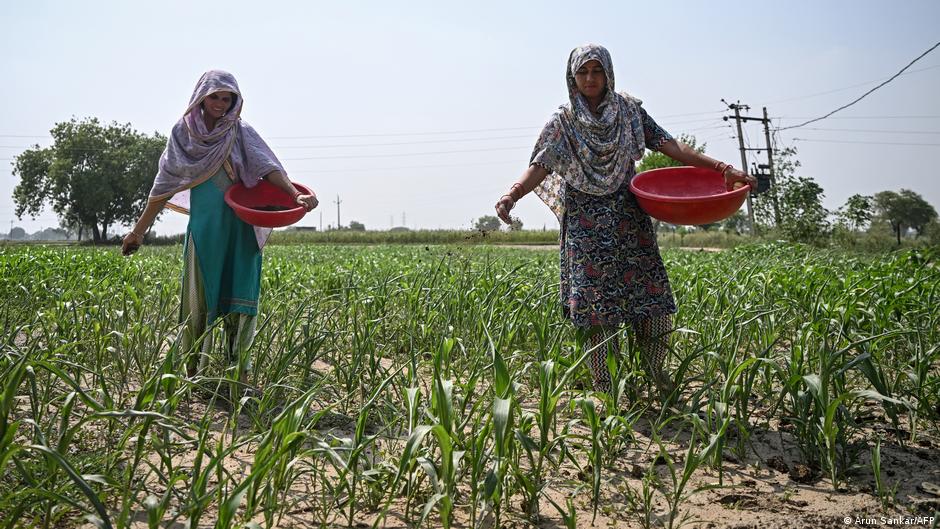
Ramesh Reddy, 44, put everything he had into his 3.5 acres of tomato farm in June.
asserted
he → put → June
The farmer from Kolar district in southern Karnataka state invested 320,000 rupees (€3,000, $3,357), borrowing 250,000 rupees at 24% annual interest and pledging his wife's wedding jewelry as collateral.
asserted
farmer → invest → collateral
The harvest was meant to repay the loan and cover his son's overdue college fees.
asserted
harvest → mean → fees
Then his irrigation well ran dry.
asserted
well → run → ?
Within three weeks, the plants had turned brown and he could not salvage a single crate.
uncertain
he → turn → crate
"I have lost everything I invested," Reddy told DW.
asserted
Reddy → lose → DW
"I have no money left for the next crop and I don't know how I will repay the loan."
asserted
I → have → loan
He is now negotiating for a job as a security guard in the state capital, Bengaluru, preparing to leave his farmland behind.
asserted
He → negotiate → farmland
It replenishes reservoirs, supports agriculture and helps sustain water supplies and power generation across much of the country.
asserted
It → replenish → country
More importantly, nearly half of India's workforce depends on farming for their livelihood, doing jobs that are both tough and economically insecure.
asserted
that → depend → jobs
This time, the country received 759.4 millimeters of rain between June and September, against a long-term average of 868.6 millimeters.
asserted
country → receive → millimeters
The 12.6% deficit made it the country's driest monsoon in 11 years and the fourth driest this century.
asserted
it → make → years
Madhavan Nair Rajeevan, a climate scientist and former secretary in the Ministry of Earth Sciences, said the main factor behind the poor monsoon was a severe El Nino.
asserted
factor → say → monsoon
He had warned earlier that it posed a serious risk to rainfall.
asserted
it → warn → rainfall
"As far as the Indian monsoon is concerned, El Nino is the most important influencing factor, which we should consider very seriously,” Rajeevan told DW.
asserted
Rajeevan → concern → DW
Water and power under pressure
The effects are now hitting India's water and energy systems.
asserted
effects → hit → systems
The country's major reservoirs ended the monsoon with less water than usual, leaving both farmers and the power sector with less of a buffer going into the months ahead.
asserted
reservoirs → end → months
Combined storage in the 178 reservoirs monitored by the Central Water Commission stood at 132.7 billion cubic meters, below the 10-year average of 151.1 billion cubic meters.
That shortfall is already being felt in electricity generation.
asserted
shortfall → combine → generation
Hydropower output fell nearly 16% in September from a year earlier, according to Grid India data.
uncertain
output → fall → data
At the same time, electricity shortages reached 560 million kilowatt-hours, the highest monthly shortfall in more than three years.
asserted
shortages → reach → years
After sunset, when solar generation drops off, the grid has fewer options to make up the difference.
asserted
grid → drop → difference
Coal-fired plants have therefore had to shoulder more of the load, but they face a problem of their own.
asserted
they → fire → own
Data from the Central Electricity Authority showed that around 40% of coal-fired plants had critically low stocks, with supplies below a quarter of the required level.
asserted
% → show → level
The government has ordered some private industrial power plants to operate at full capacity and feed surplus electricity into the grid.
asserted
government → order → grid
Manufacturers are already feeling the strain.
asserted
Manufacturers → feel → strain
"Uninterrupted power supply is of paramount importance for manufacturing units, as power cuts disrupt production cycles," said Ashok Gupta, president of the Mohali Industries Association, which represents nearly 600 small and medium-sized manufacturers.
asserted
which → manufacture → manufacturers
"Such disruptions not only cause losses to manufacturers but also result in wastage of raw materials.
asserted
disruptions → cause → materials
"
A hit to rural incomes
The economic impact of a poor monsoon can extend well beyond agriculture.
asserted
impact → extend → agriculture
Weaker farm output can hit rural incomes, employment and consumption, while higher food prices put further pressure on household budgets.
asserted
prices → hit → budgets
Arun Kumar, a retired professor of economics, said the effects could be wider than the headline economic numbers suggest, particularly because much of India's rural economy operates outside the formal sector.
uncertain
much → retire → sector
"Economic development needs to be assessed through a wider set of indicators," Kumar told DW.
asserted
Kumar → need → DW
He said weaker agricultural output could push up food prices while putting pressure on incomes and consumption.
uncertain
output → say → incomes
Himanshu, a development economist at Delhi's Jawaharlal Nehru University, described the situation as a "twin shock" for rural households, with weaker farm incomes coming alongside higher food prices.
"When agricultural incomes fall and food prices rise, rural households face a squeeze on their purchasing power," he told DW.
asserted
he → describe → DW
The economist said the uneven distribution of rainfall could compound the problem, with some farming regions suffering much heavier losses than the national rainfall figure indicates.
uncertain
figure → say → losses
"The impact on rural consumption could also be significant, as households facing lower incomes and higher food costs have less money to spend on other goods and services.
uncertain
impact → face → goods
Outlook increasingly difficult to predict as climate warms
The pressure is also being felt in urban households.
asserted
pressure → predict → households
A survey in September by India's central bank found that households were expecting inflation to rise as food and fuel prices increasingly affected sentiment.
asserted
prices → find → sentiment
Sunita Sharma, a homemaker in New Delhi, said her usual shopping list now costs hundreds of rupees more than it did a few months ago.
asserted
it → say → rupees
"We have no option but to cut down on discretionary expenses just to afford basic, everyday meals," Sharma told DW.
asserted
Sharma → have → DW
The prices of some staples have risen sharply recently.
asserted
prices → rise → staples
…and 6 more, not listed.
 The Aporia