That is 0 articles you have read today.
The Aporia is free and carries no advertising, so readers are the only
thing paying for it. If you are getting this much out of it, a small
donation is what keeps it independent.
Daily limit reached
You have read 0 articles today.
That is more than the 15 a day The Aporia gives away,
and well past what it can carry on nothing. Your allowance resets at
midnight.
There is no advertising here and nothing about you is sold, so readers
are the only thing paying for it. If the site is worth this much of
your day, it is worth a few dollars.
Everything else stays open: the
maps, the
directory and
search do
not count against this, and neither does re-opening something you have
already read today.
Anne Carson, a Canadian poet and writer known for her genre-defying work that blends classical tradition with contemporary literature, has been awarded the 2026 Nobel Prize in Literature. The Swedish Academy honored her for creating new forms in literature through playful dialogue with ancient texts. The prize carries a monetary value of $1.2 million. Carson’s notable works include "Autobiography of Red" and "Norma Jeane Baker of Troy," which interweave classical Greek narratives with modern elements, showcasing her unique style and influence on contemporary literature.
Written locally by qwen2.5:14b on 2026-10-08,
using this article's own text rather than the other coverage of the
same event (that is the story summary below).
Story summary
Anne Carson, a 76-year-old Canadian poet and essayist, was announced as the winner of the 2026 Nobel Prize in Literature in Stockholm, Sweden. The Swedish Academy honored her "for her bold and inventive oeuvre that, in playful dialogue with the classical tradition, has created new forms for contemporary literature." Notably, Carson combines poetry, prose, and translation in works such as *Autobiography of Red*, a verse novel inspired by ancient Greek mythology. When informed about the prize while in Iceland, she expressed her surprise and happiness. The award includes a prize sum of 12 million Swedish kronor ($1.2m). Carson's win follows last year’s Nobel Prize awarded to Hungarian writer László Krasznahorkai.
Written for “Anne Carson Wins Nobel Prize” on 2026-10-08,
grounded in this article and the 5 other(s) covering the same event.
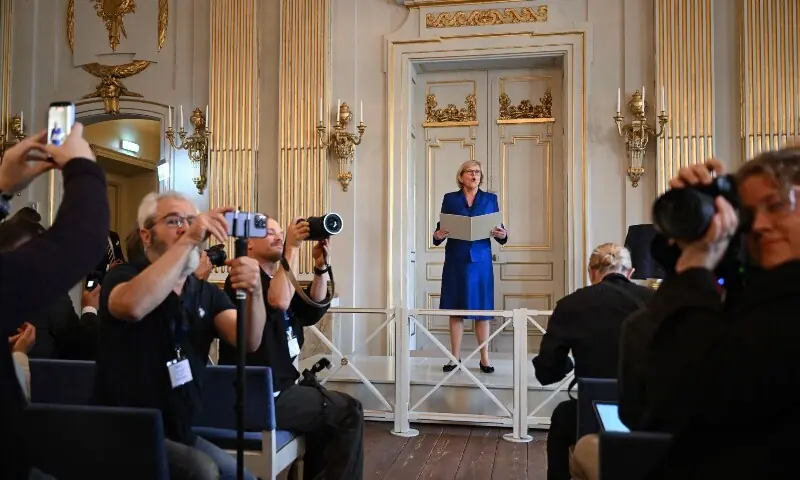
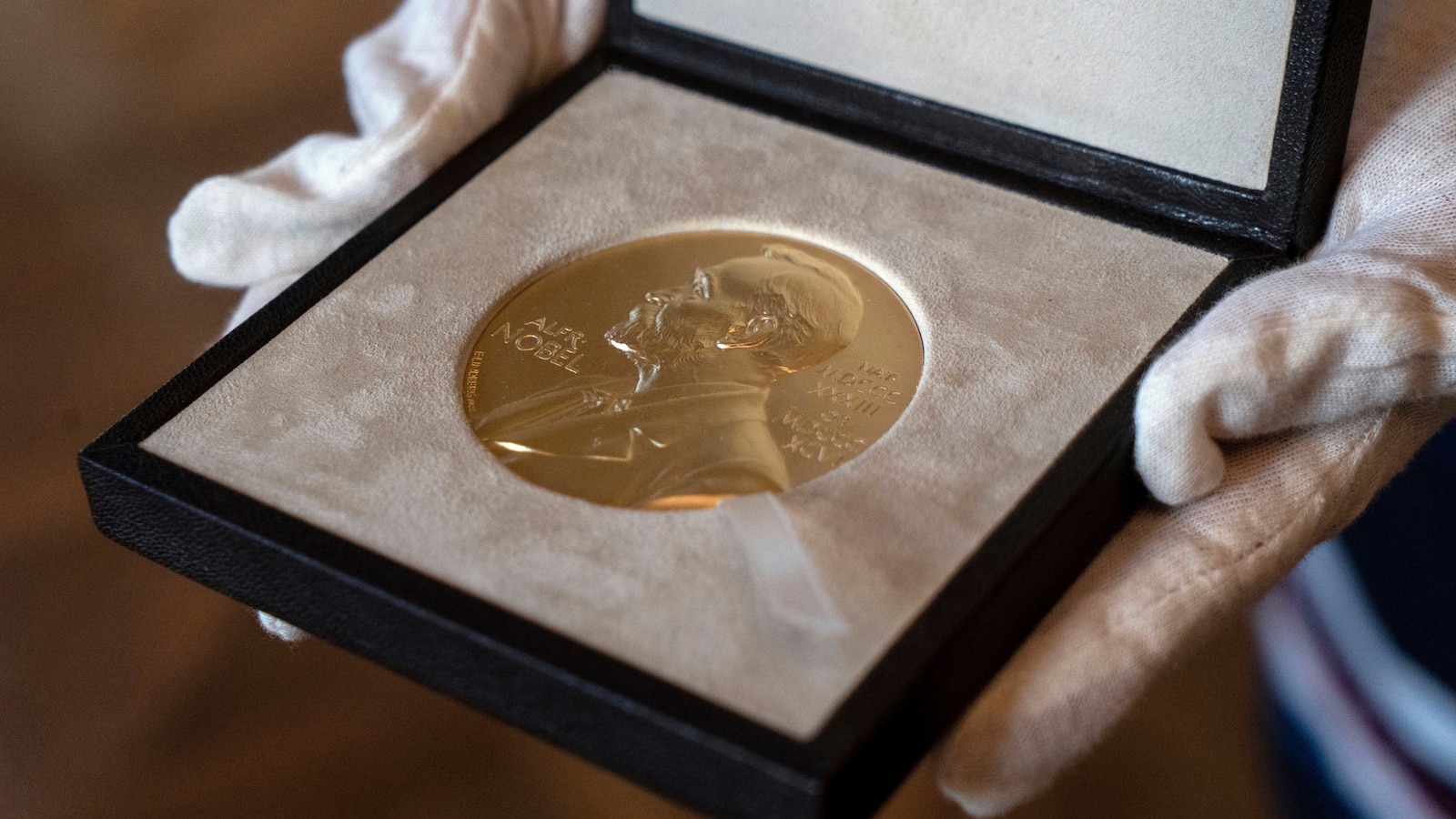
Canadian poet and writer Anne Carson won the 2026 Nobel Prize in Literature “for her bold and inventive oeuvre that, in playful dialogue with the classical tradition, has created new forms for contemporary literature,” the award-giving body said on Thursday.
asserted
body → win → Thursday
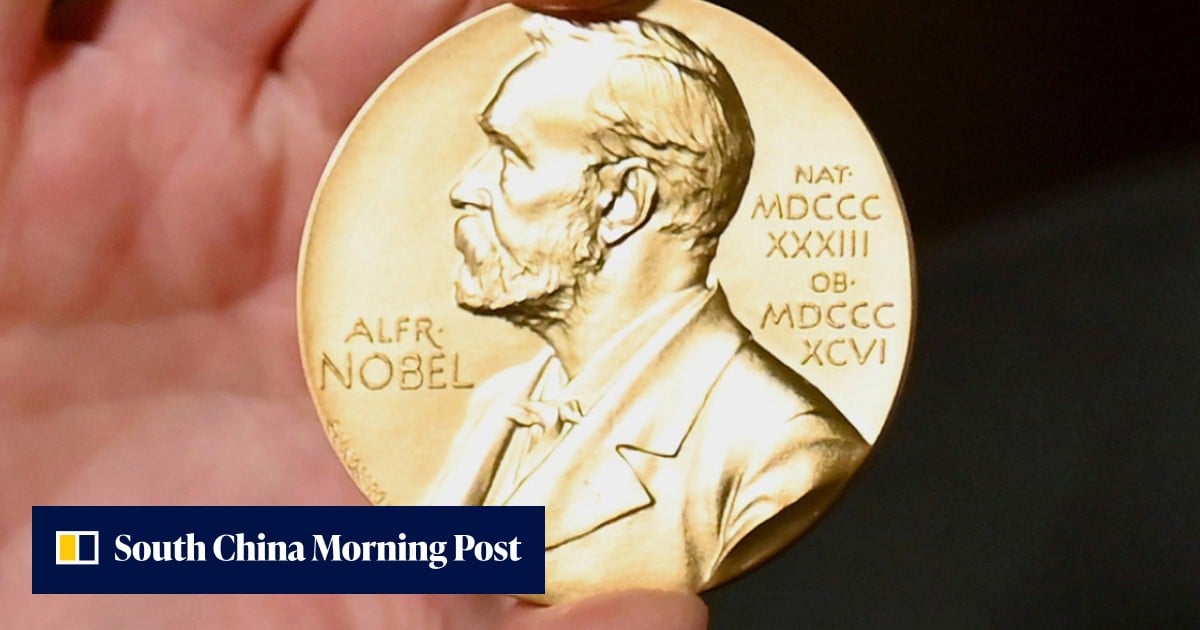
The prize is awarded by the Swedish Academy and is worth 12 million Swedish crowns ($1.2m).
asserted
prize → award → Academy
Canadian poet and essayist Carson’s work often blends verse, prose, dialogue and translation in a genre-defying mix.
asserted
work → blend → mix
She is widely known for her translations of classical Greek literature, which heavily influences her work which ranges from opera libretti to literary criticism and verse novels such as Autobiography of Red from 1998.
asserted
which → influence → 1998
Her style is exemplified in Norma Jeane Baker of Troy from 2019, a performance piece which mixes the stories of Helen of Troy in Euripides’ play Helen and Marilyn Monroe.
asserted
which → exemplify → play
Carson takes a place beside luminaries such as Alexander Solzhenitsyn, Alice Munro and Ernest Hemingway as a recipient of the award, which often divides opinion among book lovers.
asserted
which → take → lovers
The Academy has been lambasted for ignoring some of the literary titans of the last 120 years such as Leo Tolstoy, Virginia Woolf and Jorge Luis Borges, criticised for snubbing US authors, though it gave the prize to singer-songwriter Bob Dylan in 2016, and accused of being too obscure in its choices.
asserted
it → lambast → choices
Defenders say the Academy has made popular picks, such as Colombia’s Gabriel Garcia Marquez in 1982 and Doris Lessing in 2007, arguing that part of its task is to highlight lesser-known literary traditions and encourage readers to broaden their horizons.
asserted
part → say → horizons
Established in the will of Swedish dynamite inventor and businessman Alfred Nobel, the prizes for achievements in literature, science and peace have been awarded since 1901.
asserted
prizes → establish → 1901
Last year’s prize was won by Hungarian writer Laszlo Krasznahorkai, dubbed the “master of the apocalypse” by American critic Susan Sontag.
asserted
prize → win → Sontag
 The Aporia