Washington Examiner
· collected 2026-10-08 · by Aaron J. Pluto
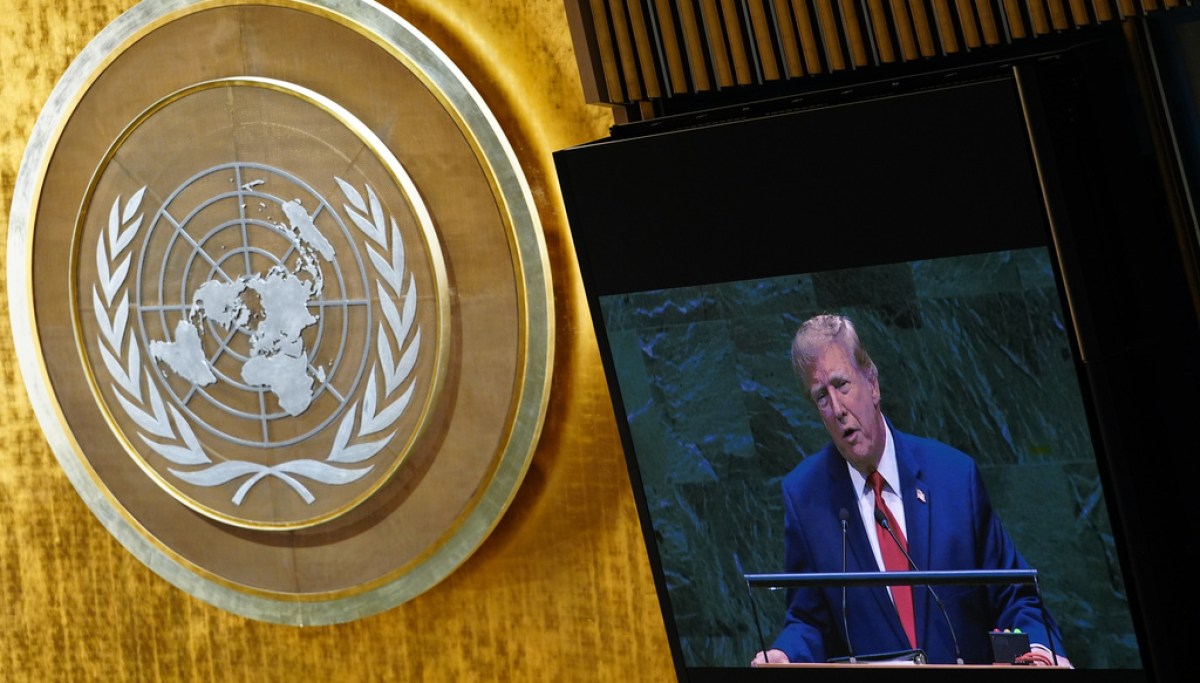
The recent United Nations General Assembly once again gave world leaders a stage to criticize President Donald Trump and American foreign policy.
asserted
Assembly → give → Trump
Iran’s president attacked Trump while portraying his own country as a victim of terrorism.
asserted
president → attack → terrorism
French President Emmanuel Macron warned of a “new age of barbarism.”
asserted
Macron → warn → barbarism
Other American allies used the gathering to distance themselves from Trump’s approach to international affairs.
asserted
allies → use → affairs
But the spectacle raises a more important question: What is the U.N. actually doing about the countries that pose the greatest threats to the international order it was created to protect?
asserted
it → raise → order
Let’s start with Russia.
asserted
’s → let → Russia
Russia invaded Ukraine in direct violation of the U.N. Charter and has repeatedly used its permanent seat on the Security Council to frustrate international action against itself.
asserted
Russia → invade → itself
Russia, including the Soviet Union, has used its Security Council veto more than any other permanent member.
asserted
Russia → include → member
China presents a different but equally serious challenge.
asserted
China → present → challenge
Beijing has spent years expanding its economic and diplomatic influence throughout the developing world and international institutions.
asserted
Beijing → spend → world
A recent report from the House Select Committee on the Chinese Communist Party detailed China’s efforts to increase its influence within UN agencies and leadership positions and use international institutions to advance its strategic interests.
asserted
report → detail → interests
Yet Russia and China remain two of the five permanent members of the Security Council, each armed with a veto.
asserted
each → remain → veto
That doesn’t make the U.N. irrelevant.
asserted
U.N. → make → ?
It does expose a serious contradiction at the heart of the institution.
asserted
It → expose → institution
And this is where Trump deserves some credit.
asserted
Trump → deserve → credit
His broader argument that the United States should stop accepting international institutions and alliances in which America provides disproportionate resources while others provide rhetoric is neither new nor unreasonable.
asserted
others → stop → rhetoric
The same applies to America’s traditional allies.
asserted
same → apply → allies
Europe has substantially increased its support for Ukraine and deserves credit for doing so.
asserted
Europe → increase → credit
But Europe still depends heavily on American weapons and other critical military capabilities to deter Russia on its own continent.
asserted
Europe → depend → continent
Canada offers another example.
asserted
Canada → offer → example
It has a proud history as a peacekeeping nation, yet today contributes fewer than 60 uniformed personnel to UN peacekeeping operations, ranking 69th among contributors.
asserted
It → have → contributors
Trump isn’t the first American president to complain about burden-sharing.
asserted
Trump → complain → sharing
What distinguishes him is his willingness to apply far more pressure to change it.
asserted
distinguishes → distinguish → it
If that pressure produces European allies with stronger militaries, NATO members better prepared to deter Russia, and democratic nations more willing to confront Chinese influence, the alliance will be stronger for it.
asserted
alliance → produce → it
Trump has taken the same aggressive approach toward China.
asserted
Trump → take → China
Tariffs have been one of his preferred tools, using access to the enormous American market as leverage while pushing the U.S. to reconsider its dependence on China for manufacturing, critical minerals, technology, and other strategically important supply chains.
asserted
Tariffs → prefer → manufacturing
More interesting, and less discussed, is how that thinking is influencing other areas of American policy.
asserted
influencing → discuss → policy
This includes antitrust, with U.S. intelligence and national security officials having reportedly argued for tech mergers that create stronger American competitors to China’s Huawei.
uncertain
that → include → Huawei
That matters.
asserted
That → matter → ?
China does not neatly separate commercial competition, technology, and national security.
asserted
China → separate → competition
The U.S. cannot afford to pretend they exist in separate worlds either.
asserted
they → afford → worlds
The same thinking applies to Chinese influence closer to home.
asserted
thinking → apply → home
At their peak, roughly 100 Confucius Institutes operated at American colleges and universities.
asserted
Institutes → operate → colleges
Concerns about transparency, academic independence, and Chinese government influence eventually drew bipartisan attention.
asserted
Concerns → draw → attention
Congress began restricting certain federal funding for universities hosting the institutes in 2018.
asserted
Congress → begin → 2018
The Trump administration increased the pressure and scrutiny, including designating the Confucius Institute U.S. Center as a foreign mission of China in 2020.
asserted
administration → increase → 2020
Today, fewer than five remain.
asserted
five → remain → ?
Trump cannot claim sole credit for that outcome.
uncertain
Trump → claim → outcome
But his administration was part of a broader shift in Washington toward treating Chinese influence as a national security issue rather than simply an academic or economic one.
asserted
administration → treat → issue
Which brings us back to the U.N.
China understands that international institutions are another arena of strategic competition.
asserted
institutions → bring → competition
…and 16 more, not listed.
 The Aporia