The Guardian
· collected 2026-10-08 · by Shannon Heffernan and Anna Flagg of the Marshall Project
The image of immigration officers arresting five-year-old Liam Conejo Ramos – in a blue bunny hat and Spider-Man backpack – in January sparked outrage across the country.
asserted
officers → arrest → country
Celebrities from Ms Rachel to Madonna called for the closure of the Dilley immigration processing center, the Texas immigrant camp that held Ramos and many children like him.
asserted
that → call → him
Lawyers filed complaints about contaminated food and shoddy healthcare, and hundreds of activists protested outside the detention camp.
asserted
hundreds → file → camp
Within months, the government began sending fewer children to Dilley.
asserted
government → begin → Dilley
But the arrests of immigrant children did not stop.
asserted
arrests → stop → children
Instead, Immigration and Customs Enforcement (ICE) arrested more than twice as many children this year through July as it did in the same period last year.
asserted
it → arrest → period
Thus far in Donald Trump’s second term, ICE has arrested more than 8,500 children.
asserted
ICE → arrest → children
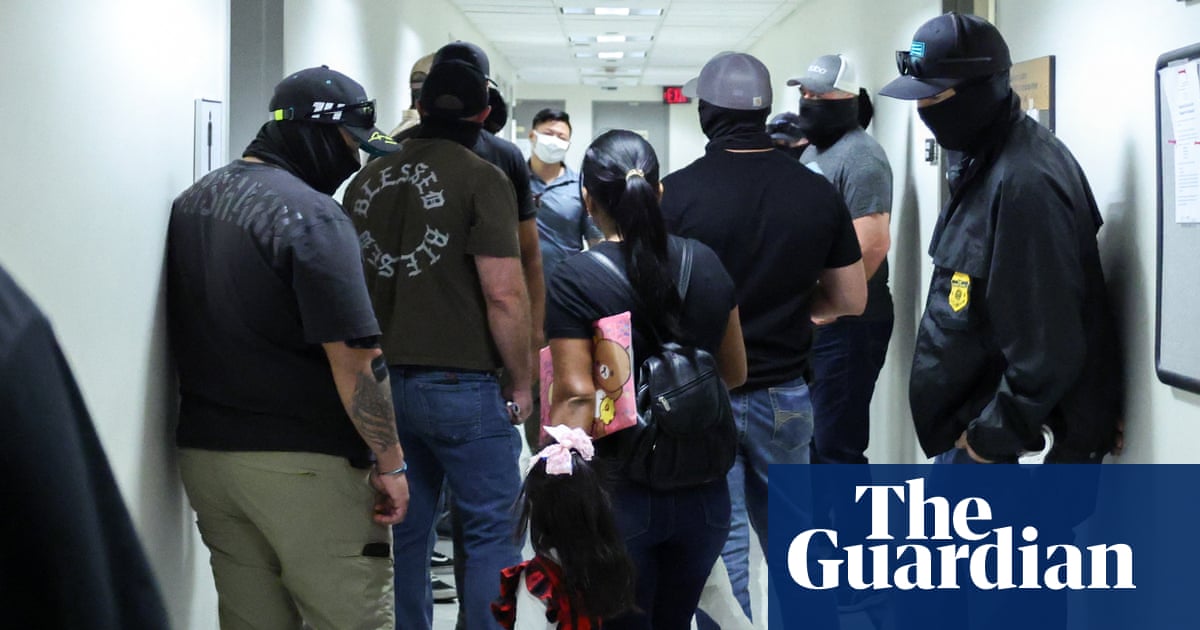
Many of those children have been detained in locations where lawyers and family members couldn’t find them, such as hotels and hold rooms in office buildings.
asserted
lawyers → detain → buildings
Immigration lawyers said they believe the government is arresting children because it wants to remove as many immigrants as possible, regardless of their age or vulnerability.
asserted
it → say → age
Elora Mukherjee, a lawyer and Columbia Law School professor, has represented more than 100 children and parents in ICE detention in the last year and said many of her clients were arrested while complying with immigration court instructions.
asserted
many → represent → instructions
This is the time of year when children should be back in school in their classrooms,” Mukherjee said.
asserted
Mukherjee → say → classrooms
The Marshall Project analyzed data on ICE arrests and detentions obtained by the Deportation Data Project, a research collaboration between the University of California, Berkeley and UCLA.
asserted
Project → analyze → California
Most immigration violations are civil, not criminal, and the vast majority of children counted in ICE’s arrest data have no criminal conviction or pending charges beyond the immigration violation.
asserted
majority → count → violation
The Department of Homeland Security did not answer specific questions about the data.
asserted
Department → answer → data
In a written statement, the agency said the data from the Deportation Data Project, which was supplied by ICE in response to information requests, was inaccurate.
asserted
which → write → requests
The department offered no evidence to support that claim and did not provide alternate figures.
uncertain
department → offer → figures
Lawyers for immigrant families said many of the children being arrested have been in the country for years, and are traumatically torn away from their friends, family and homes.
asserted
many → say → friends
A 16-year-old identified by the initials JAI said in a court declaration that he’d been living in Texas with his family for eight years.
asserted
he → identify → years
One morning earlier this year, at about 5am, he heard yelling and pounding on the door of his home.
asserted
he → hear → home
Suddenly, officers charged in, he said, and went to his 12-year-old brother’s room.
asserted
he → charge → room
“They pointed a gun at my little brother; threw him against a wall; grabbed him by the hair; and then put handcuffs on him.
asserted
They → point → him
They did the same thing with me,” he said.
asserted
he → do → me
ICE’s increased targeting of children was especially sharp in some states.
asserted
targeting → increase → states
In Massachusetts and Florida, more than twice as many children were arrested in the first seven months of the year as in all of 2025.
asserted
children → arrest → 2025
In New York and New Jersey, the arrests tripled.
asserted
arrests → triple → York
Nuala O’Doherty-Naranjo, an attorney and founder of the Jackson Heights Immigration Center in New York City, said the rise in arrests of families has created a chilling effect in immigrant communities.
asserted
rise → say → communities
Outside her door, she sees ICE driving up and down the street, and when she visits high schools she senses a fearful mood.
asserted
she → see → mood
She said she used to tell immigrant families that they were welcome in New York City and should register students for school, go to English classes and join community groups.
asserted
they → say → groups
But she’s increasingly found herself shifting her message to: “I was wrong.
asserted
I → find → message
Many children arrested by ICE wind up being detained, for periods of less than an hour to several months.
asserted
children → arrest → months
ICE has detained more than 8,750 kids since Trump retook office, slightly more than the number it arrested, because children can come into detention via various methods, such as being apprehended by the border patrol.
asserted
children → detain → patrol
Children detained for long stretches are usually sent to the immigrant camp in Dilley.
asserted
Children → detain → Dilley
And throughout the year, hundreds of children continued to face long stints there.
asserted
hundreds → continue → stints
But children were also held for shorter stints in a wide range of locations, including hotels and hold rooms, where lawyers said their clients often lacked access to proper food or privacy.
asserted
clients → hold → food
Becky Wolozin, a lawyer with the National Center for Youth Law, described these locations as “black boxes”, where families essentially disappear, with little to no contact with lawyers and relatives.
asserted
families → describe → lawyers
The ICE data obtained by the Deportation Data Project does not note when the agency detained children in hotels.
asserted
agency → obtain → hotels
But court filings in a class action lawsuit known as the Flores settlement document 86 children who were held for more than three days in hotels in February and March.
asserted
who → know → February
The Department of Homeland Security and ICE did not respond to questions about children held in hotels.
asserted
Department → respond → hotels
But in court filings, government officials said some hotel stays were necessary because of flight delays or challenges obtaining travel documents.
asserted
stays → say → documents
In February, a woman in Long Island, New York, went with her two children to a scheduled check-in with ICE, planning to go to a favorite restaurant after the appointment.
asserted
woman → go → appointment
…and 20 more, not listed.
 The Aporia