The Sydney Morning Herald
· collected 2026-10-08 · by Telegraph Obituaries
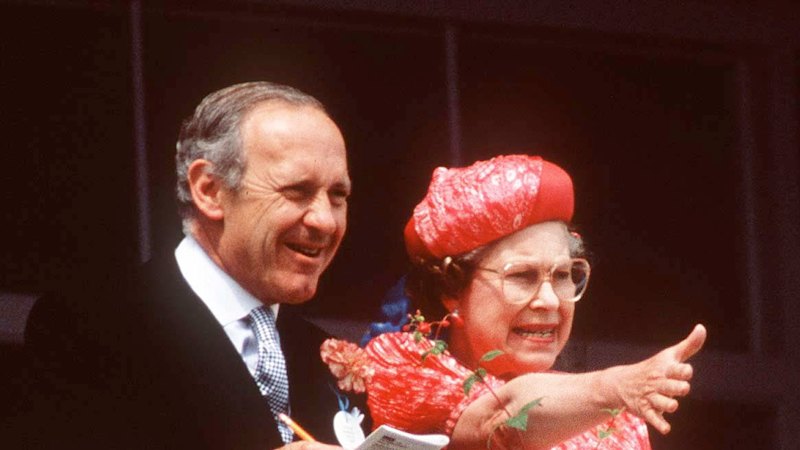
Sir William Heseltine, who has died aged 96, was Queen Elizabeth II’s fifth private secretary.
asserted
who → die → ?
Although he served in that capacity for only five years (1986-90) he had hitherto been working in the palace for two decades in increasingly senior roles – press secretary, assistant private secretary and deputy private secretary – honing his skills in close proximity to his predecessors and his sovereign for more than a third of the Queen’s long reign, and most of his working life.
asserted
he → serve → life
The private secretary is responsible for supporting the monarch in their duties as head of state in the United Kingdom.
asserted
secretary → support → Kingdom
He also liaises with the armed forces, the church and their patronages.
asserted
He → liaise → forces
Although the position was not made official until 1867, the first private secretary was Colonel Herbert Taylor, who took the office in 1805 for George III (and again for William IV in 1830).
asserted
who → make → 1830
Harold Laski described the role as one of “dignified slavery” – alternating between statesman and lackey.
asserted
Laski → describe → statesman
Valentine Low, in his 2022 study Courtiers, wrote that a good private secretary must both be able to give the monarch good and serious advice, and be able to make them laugh.
asserted
them → write → advice
The Queen’s favourite private secretary – her third, the exuberant, aristocratic Martin Charteris – had humour in spades and would be seen slapping his knee with delight as the Queen delivered one of his jokes.
asserted
Queen → have → jokes
Heseltine considered Charteris the most outstanding of all the Queen’s men – and his model – and although Heseltine’s disposition and humour were more contained, his equanimity, directness and wit appealed to the Queen, who came to call him “my Bill”.
asserted
who → consider → him
In 1986 Heseltine succeeded the slightly ponderous and loquacious Sir Philip Moore as private secretary.
asserted
Heseltine → succeed → secretary
Moore was something of a departure from the blue-blooded scions, nephews and cousins of courtiers who had previously filled the role; but Heseltine was from a completely different mould.
asserted
Heseltine → fill → mould
A distinctly “untweedy” figure, as the Queen’s biographer Ben Pimlott put it, Heseltine brought with him considerable experience of dealing with politicians, more so than with newspaper journalists.
asserted
Heseltine → put → journalists
He was tested very quickly when The Sunday Times published an article in July 1986 from “an unimpeachable source” claiming that the Queen was dismayed by her uncaring, confrontational and socially divisive prime minister, Margaret Thatcher.
asserted
Queen → test → minister
It eventually became clear that the royal press secretary Michael Shea had briefed the authors of the article, but Heseltine managed to reassure the public that it did not reflect her views.
asserted
it → become → views
The Queen had been scrupulously impartial for 34 years and would not have shared her opinions with her press secretary.
asserted
Queen → share → secretary
Another challenge came in May 1987 when Timoci Bavadra, ousted as Fijian prime minister in a military coup, came to London to seek the Queen’s support.
uncertain
Bavadra → come → support
Heseltine demurred on the sovereign’s behalf and did so again five months later when Fiji’s pre-eminent statesman Sir Kamisese Mara sought a royal audience as a privy counsellor.
asserted
statesman → demur → counsellor
Both departed without meeting their monarch.
asserted
Both → depart → monarch
Heseltine resolved to retire when he was 60, leaving before the Queen’s annus horribilis of 1992.
asserted
he → resolve → 1992
Dealing with the crises of that year fell to his successor, Robert Fellowes, who had the misfortune to be both Princess Diana’s brother-in-law and Sarah Ferguson’s cousin.
asserted
who → deal → misfortune
At Heseltine’s last meeting with the Princess of Wales, in 1990 at Balmoral, Diana spoke of her marital difficulties but assured Heseltine that she was determined “to stick it out and make a go of it”.
asserted
she → speak → it
Heseltine said that had he known what was to come he might have delayed his departure.
uncertain
he → say → departure
It was only at the end of that grim year and the fire at Windsor Castle that the Queen agreed to pay income tax, something Heseltine had long argued for.
asserted
Heseltine → agree → something
William Frederick Payne Heseltine was born in Fremantle, Western Australia, on July 17, 1930, the elder son of Henry John Heseltine and his wife Louise Mary Gwythyr, nee Payne, both school teachers.
asserted
Heseltine → bear → Heseltine
His father (from a line of ship builders, captains and merchants) had migrated alone from Hull at 17.
asserted
father → migrate → 17
Louise’s family was more established; her grandfathers had been a prison teacher and a warder when the state was still a convict colony.
asserted
state → establish → ?
It suited the media narrative to say Heseltine was “the boy from Wyalkatchem”, a small town in the West Australian wheat belt where his father was the sole teacher; but in fact young Bill spent only a year there when he was five – the family was otherwise based in East Fremantle.
asserted
family → suit → Fremantle
He attended one of Perth’s leading Anglican boys’ schools, Christ Church Grammar, and proved a brilliant student.
asserted
He → attend → schools
After graduating with first-class honours from the University of Western Australia he hoped to join the Department of External Affairs.
asserted
he → graduate → Affairs
But this was limited to ex-servicemen, and in 1951 he was persuaded to apply to the Prime Minister’s Department.
asserted
he → limit → Department
Menzies insisted on calling him “Heselteen”, to which he replied: “Actually I call it Heseltine.”
asserted
I → insist → it
When the prime minister countered, “Oh, lad, you don’t know how to pronounce your name,” his young secretary exploded: “Well, this comes very well from somebody whose name is Mingies and goes masquerading around the countryside as Menzies.
asserted
name → counter → Menzies
Heseltine had earned newfound respect.
asserted
Heseltine → earn → respect
“Ah, well,” Menzies relented.
asserted
Menzies → relent → ?
“I suppose it’s about time I called you Bill.”
asserted
I → suppose → you
From then on Heseltine was treated like a member of the family.
asserted
Heseltine → treat → family
Reacting, in part, to Lord Altrincham’s attack on the stuffiness of the court, the palace sought to recruit suitable candidates from the Commonwealth.
asserted
palace → react → Commonwealth
Heseltine was approached, in 1959, to be assistant information officer.
asserted
Heseltine → approach → 1959
When he remonstrated that he knew very little about the press, he was told that might be an advantage.
uncertain
that → remonstrate → press
On his first meeting with the Queen she shared her reading habits at breakfast: “Philip and I sit at opposite ends of the table.
asserted
Philip → share → table
…and 29 more, not listed.
 The Aporia