Claims extracted
13
sentences that state something as happening or true
Uncertain
15%
2 of 13 hedged
("reportedly", "may", "according to")
Leaning
Leans left
of the writing, not the subject · beta estimate
Publisher signals
65/100
Evening Standard's corrections and
hedging, across everything collected from it. Not a measure of accuracy.
Outlets on this story
1
Health
Same framing elsewhere
1
articles that frame the event the way this one does
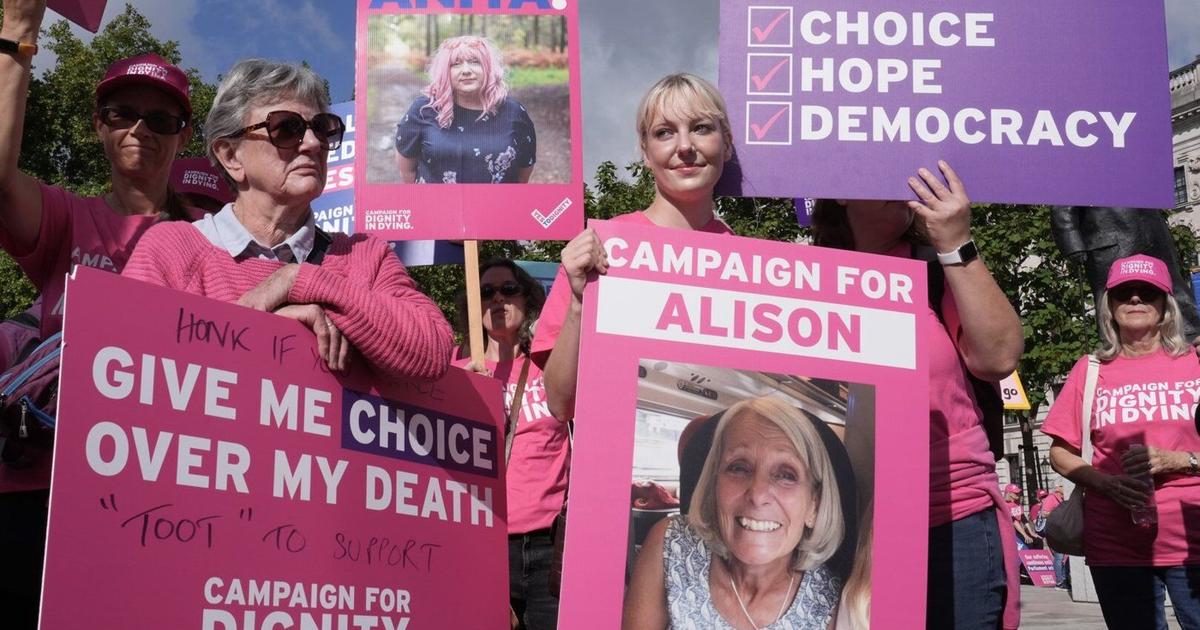
Six in 10 people support the return of the assisted dying Bill to Parliament, but a third of the public feel the law should only be changed if there is more funding for end-of-life care alongside it, according to new polling.
uncertain
law → support → polling
Support for assisted dying being legalised has remained relatively stable since the Terminally Ill Adults (End of Life) Bill was first introduced to Parliament in late 2024, the Ipsos polling for the Press Association found.
asserted
polling → assist → Association
Of 1,133 people aged 16-75 surveyed at the end of August, 61% said they supported the reintroduction of the Bill, which is being brought by Labour MP Lauren Edwards who has taken it over from her party colleague Kim Leadbeater.
asserted
who → survey → colleague
Fourteen per cent said they opposed the return of the Bill while the same proportion said they did not support or oppose it.
asserted
they → say → it
The rest said they did not know or preferred not to say.
asserted
they → say → ?
Older people – aged 55-75 – were most likely to support the Bill’s return (67%).
asserted
people → age → return
This compared with 63% of 35-54 year-olds and just over half (52%) of people aged 16 to 34.
asserted
This → compare → people
However, giving some insight into his view on the issue shortly after becoming PM in July, he said he believed the funding of palliative care needs to be fixed before consideration can be given to legalising assisted dying.
asserted
consideration → give → dying
Palliative care is described by the NHS as the management of pain and other distressing symptoms which should be available as soon as someone first learns they have a life-limiting or terminal illness, while end-of-life care is a form of palliative care given when someone is close to death.
asserted
someone → describe → death
The new polling found 34% of people said assisting dying should be made legal but only if it is accompanied by additional investment in state-funded end-of-life care.
Meanwhile, three in 10 (30%) said they agreed with the statement that assisted dying should be made legal, even without extra investment in this kind of care.
asserted
dying → find → care
One in 10 people said they opposed legalising assisted dying and said there should be more funding for end-of-life care, while 7% said assisted dying should not be legalised even if it was accompanied by further investment in such care.
asserted
it → say → care
Support for the principle of assisted dying, where it is legal for a doctor to prescribe life-ending medication to a consenting terminally ill adult was at 68% when the latest polling was done, up slightly from 66% in October 2024.
Read More
Opposition remained at 16% across that two-year period.
asserted
Opposition → assist → period
The Government has a neutral position on the Bill and MPs will vote according to their consciences, rather than along party lines.
uncertain
MPs → have → lines
 The Aporia