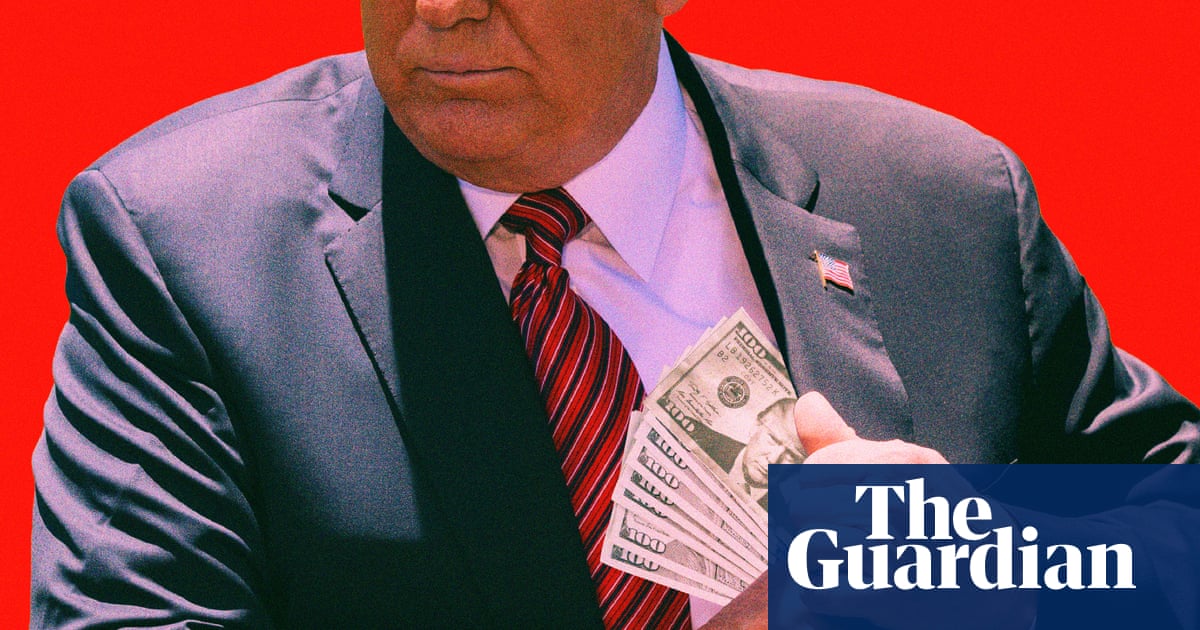
The Democratic National Committee and Common Cause have filed lawsuits against President Donald Trump for allegedly misusing $20 million in taxpayer funds intended for border security commemorative activities to fund political advertisements. The ads, which began airing in September, aim to bolster Republican chances in the November midterm elections by promoting Trump’s policies; one ad closely resembles a 2024 re-election campaign commercial. Both lawsuits argue that these expenditures violate laws prohibiting public funds from being used for political propaganda and seek to declare the ads illegal, halt further spending on them, and recover money already spent.
Written locally by qwen2.5:14b on 2026-10-08,
using this article's own text rather than the other coverage of the
same event (that is the story summary below).
Why this leaning score
The model judged this article politically coded and scored it -0.45, but 1 quote(s) could not be found in the article and the other 1 are attributed speech rather than the article's own narration, so the score is not published.
Written under an earlier scoring contract, which gave a paragraph
rather than checkable quotes. Re-analysing this article replaces it.
Leaning score withheld for article 64503: no verified evidence · logged 2026-10-08
The Democratic National Committee has filed a lawsuit against United States President Donald Trump over television advertisements that were publicly funded and allegedly used to promote his political policies.
uncertain
that → file → policies
Ken Martin, who heads the Democratic Party’s leadership body, suggested in a statement on Wednesday that the ads were designed to bolster Republican odds in the upcoming November 3 midterm elections.
uncertain
ads → head → elections
FCC head says controversial Trump ads do not raise concerns
- list 2 of 3‘We’ll decide’:
asserted
ads → say → concerns
Trump hints he may pay for US government-funded ads
- list 3 of
uncertain
he → hint → ads
3Most Americans oppose Trump’s taxpayer-funded ‘golden age’ ads: Poll
asserted
Americans → oppose → ads
“Donald Trump is misusing millions of taxpayer dollars to fund pure propaganda ads in a last-ditch attempt to save Republicans in November,” Martin said.
asserted
Martin → misuse → November
Later that day, Common Cause, a democracy watchdog group, filed a second lawsuit over the same set of ads.
asserted
Cause → file → ads
It argued that the ads were “overtly political” and therefore ran afoul of laws that bar public funds from being used for political propaganda.
asserted
that → argue → propaganda
“These ads are not public-service announcements,” Common Cause said in its lawsuit, citing a justification Trump has offered for the television spots.
asserted
Trump → say → spots
Both lawsuits argue that, to create the ad campaign, Trump directed the White House to repurpose $20m in funds that Congress allocated for commemorative activities related to border security, including for those killed in the line of duty.
asserted
Congress → argue → duty
That manoeuvre, they argue, violates the separation of powers established in the US Constitution.
asserted
they → argue → Constitution
“The founders made clear more than 200 years ago that the executive can spend money only according to Congress’s direction,” Common Cause’s lawsuit said.
uncertain
lawsuit → make → direction
The two lawsuits also point to a provision Congress includes in its appropriations bills barring the use of taxpayer funds for “publicity or propaganda purposes”.
asserted
Congress → point → purposes
Both complaints seek to have the ads declared illegal, and the expenditures stopped.
asserted
expenditures → seek → ?
They also call for steps to be taken to recover any money already spent on the ads.
asserted
steps → call → ads
The Democrats’ lawsuit was filed in Washington, DC, while the Common Cause complaint will be heard in the Southern District of New York.
asserted
complaint → file → York
Trump has faced mounting criticism over the ads, which began airing in September.
asserted
which → face → September
So far, the advertising campaign has cost more than $12m to run, according to the media tracking firm AdImpact.
uncertain
campaign → cost → firm
The $20m Trump tapped for the ads comes from a $175m package Congress assigned to the Department of Homeland Security as part of Trump’s immigration enforcement agenda.
asserted
Congress → tap → agenda
Critics have pointed out that one of the ads appears nearly identical to a television spot Trump used in his 2024 re-election campaign.
asserted
Trump → point → campaign
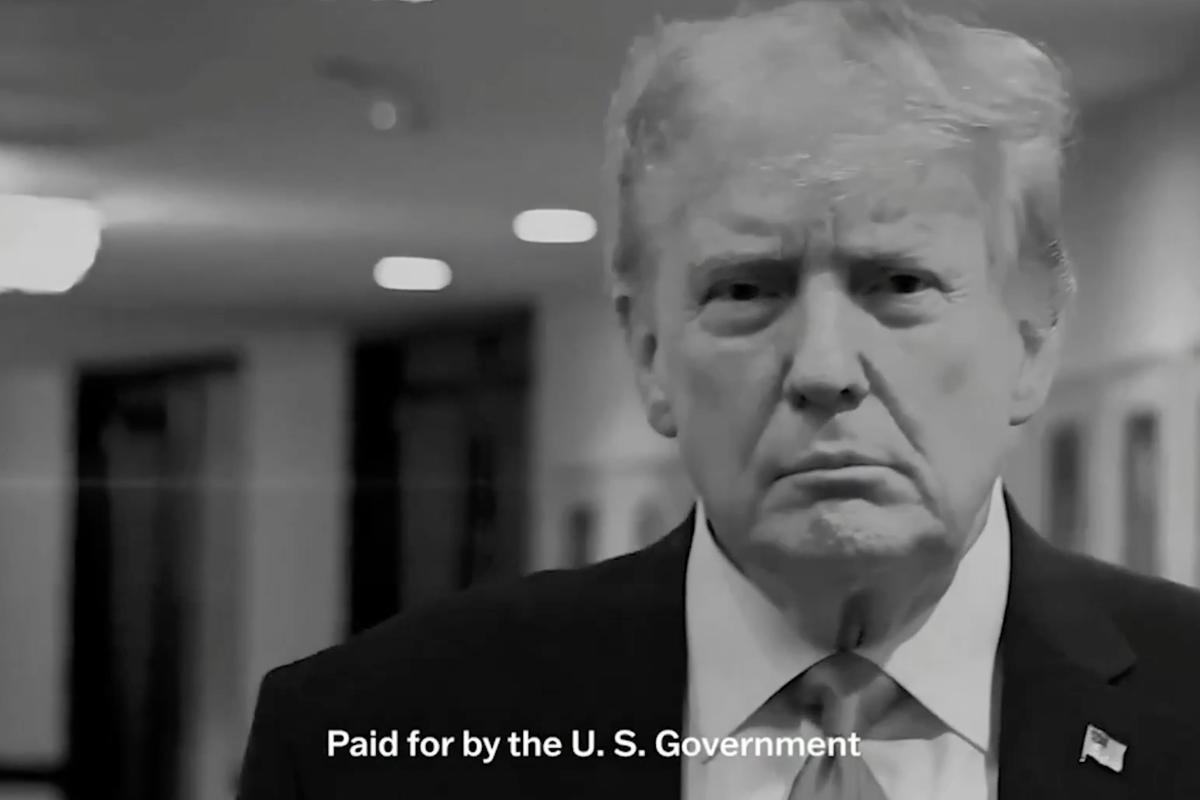
Three ads have aired so far.
asserted
ads → air → ?
In one, a choir sings “love me” over a montage of Trump as he declares the US will “never be a communist country”.
asserted
US → sing → Trump
Another uses images of Mount Rushmore as Trump heralds a new “golden age of America”.
asserted
Trump → use → America
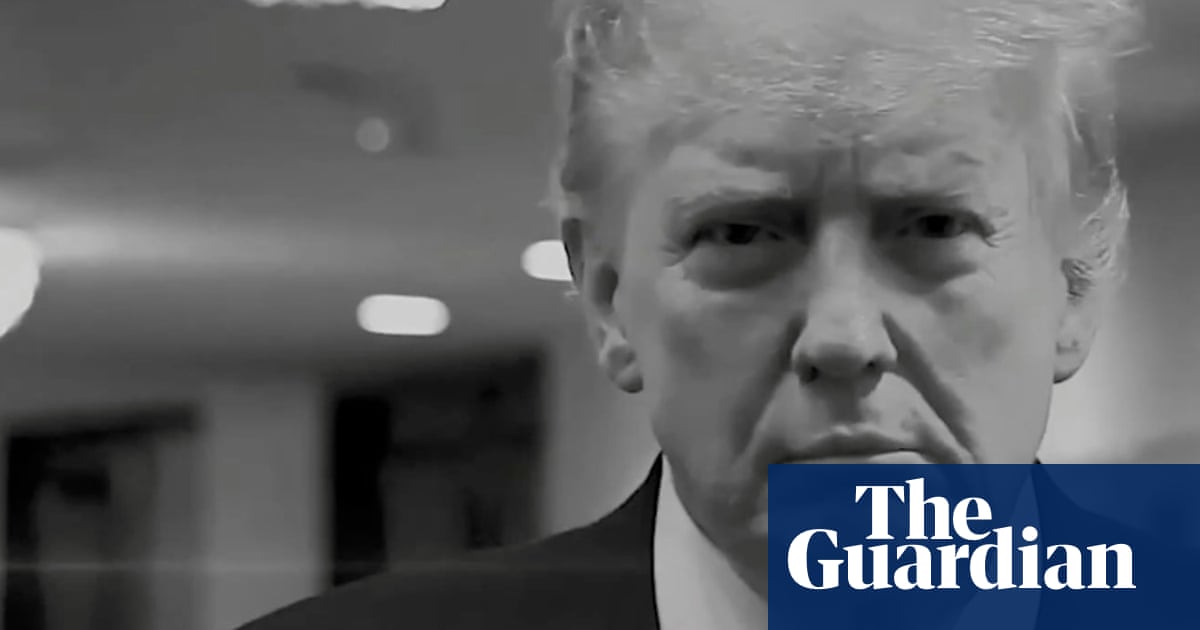
The third is darker: Trump walks towards the camera in black and white, warning of a “final battle” against the “deep state” and other perceived enemies.
asserted
Trump → walk → state
On Wednesday, the news agency Reuters and the research firm Ipsos released a poll showing the ads are highly unpopular.
asserted
ads → release → poll
Some 86 percent of the Americans surveyed, including four out of five Republicans, said it was inappropriate for Trump to have used public money for them.
asserted
Trump → survey → them
Trump has defended the ads as “promotion for the country”, and he has argued they were similar to public outreach campaigns put out by previous administrations.
asserted
they → defend → administrations
But after a bipartisan backlash, Trump said on Monday that taxpayer funds would no longer be used for future ads.
asserted
funds → say → ads
He did not, however, commit to paying back the money already spent on the existing ads.
asserted
He → commit → ads
Members of Trump’s Republican Party have been among those speaking out against the ad campaign.
asserted
Members → speak → campaign
Senator Thom Tillis, a Republican from North Carolina, said the advertisements resembled something former Hungarian leader Viktor Orban would put out.
asserted
Orban → say → something
Senate Majority Leader John Thune, meanwhile, indicated he agreed with the message in one of the advertisements, but he emphasised that “it shouldn’t be paid for with taxpayer dollars”.
asserted
it → indicate → dollars
 The Aporia