That is 0 articles you have read today.
The Aporia is free and carries no advertising, so readers are the only
thing paying for it. If you are getting this much out of it, a small
donation is what keeps it independent.
Daily limit reached
You have read 0 articles today.
That is more than the 15 a day The Aporia gives away,
and well past what it can carry on nothing. Your allowance resets at
midnight.
There is no advertising here and nothing about you is sold, so readers
are the only thing paying for it. If the site is worth this much of
your day, it is worth a few dollars.
Everything else stays open: the
maps, the
directory and
search do
not count against this, and neither does re-opening something you have
already read today.
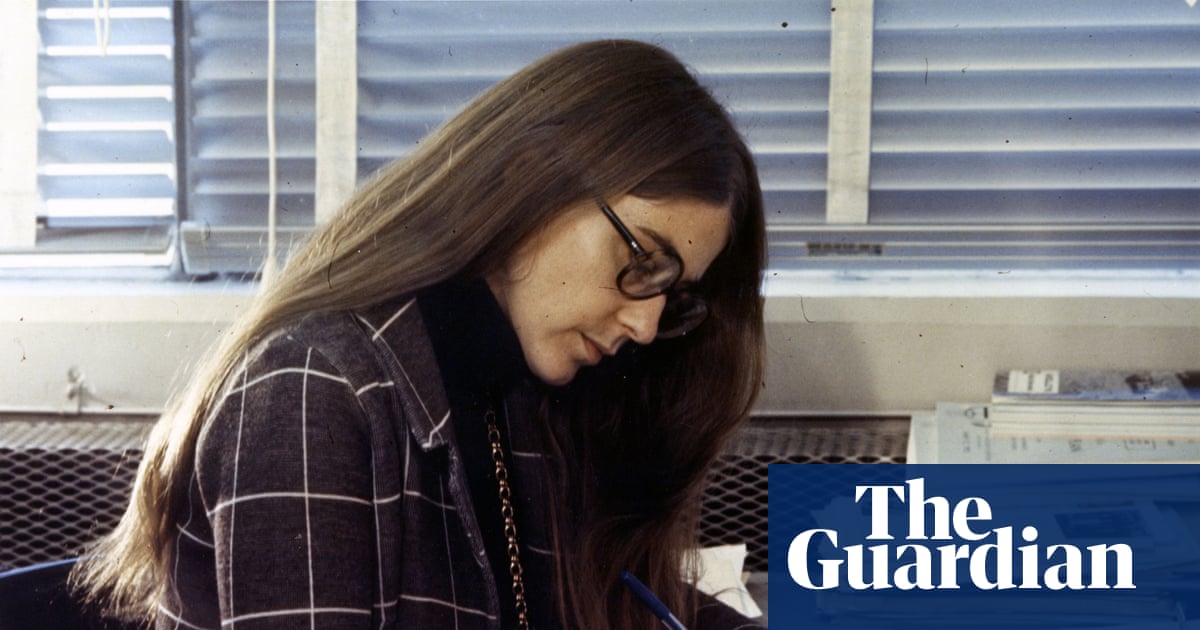
Margaret Hamilton, who created the software that powered NASA’s Apollo 11 moon landing and pioneered computer programming in an era before it became common, passed away at age 90 on September 30. At MIT, she learned to program under a meteorologist and later developed error detection and recovery mechanisms for the Apollo mission's onboard flight system, which successfully handled critical hardware issues during the historic lunar landing in 1969. President Obama highlighted her contributions when he awarded her the Presidential Medal of Freedom in 2016.
Written locally by qwen2.5:14b on 2026-10-08,
using this article's own text rather than the other coverage of the
same event (that is the story summary below).
Story summary
Margaret Hamilton, 90, the computer pioneer whose software powered the Apollo 11 moon landing, died in September 2022. At MIT, she learned programming from a meteorologist and later joined Nasa's Apollo project as its first programmer and female hire. Her software played a critical role during the historic mission when alarms sounded minutes before landing. Despite potential hardware issues, Hamilton’s software ensured mission continuation by detecting problems and compensating for them, restarting essential tasks to ensure a successful moon landing.
Written for “Margaret Hamilton Dies” on 2026-10-08,
grounded in this article and the 0 other(s) covering the same event.
Margaret Hamilton, the computer pioneer whose software powered the first moon landing, has died, the Massachusetts Institute of Technology (MIT) announced on Wednesday.
asserted
Institute → power → Wednesday
In an era before titles such as software engineer and computer scientist became mainstream, Hamilton, who died on 30 September, learned to program under the tutelage of a renowned MIT meteorologist.
asserted
who → become → meteorologist
She continued to perfect the craft in an MIT laboratory, writing software that could detect enemy aircraft.
uncertain
that → continue → aircraft
When the institute received a Nasa contract to develop the Apollo onboard flight software, she jumped at the opportunity.
asserted
she → receive → opportunity
“I was attracted both by the sheer idea and the fact that it had never been done before.
asserted
it → attract → idea
I was the first programmer to join and the first woman they hired,” she told the Guardian in 2019.
asserted
she → join → 2019
In 1969, minutes before the Apollo 11 spacecraft was set to make history by landing on the lunar surface, an onboard computer’s alarm rang, indicating an emergency.
asserted
alarm → set → emergency
Faced with a decision of whether to abort the mission, the spacecraft continued on.
asserted
spacecraft → face → mission
The software was working just as Hamilton and her team intended.
asserted
Hamilton → work → ?
“It quickly became clear the software was not only informing everyone that there was a hardware-related problem but was compensating for it – restarting and re-establishing the highest priority tasks.
asserted
software → become → tasks
The error detection and recovery mechanisms had come to the rescue,” Hamilton said.
asserted
Hamilton → come → rescue
Barack Obama referenced the incident when he presented her with the Presidential Medal of Freedom in 2016.
asserted
he → reference → 2016
“Our astronauts didn’t have much time, but thankfully they had Margaret Hamilton,” he said.
asserted
he → have → Hamilton
Hamilton is survived by her daughter, a son-in-law, two grandsons and four great grandchildren, according to MIT.
uncertain
Hamilton → survive → MIT
Reflecting on the mission, in a 2009 interview with MIT News, Hamilton said: “Looking back, we were the luckiest people in the world; there was no choice but to be pioneers; no time to be beginners.”
asserted
we → reflect → world
 The Aporia