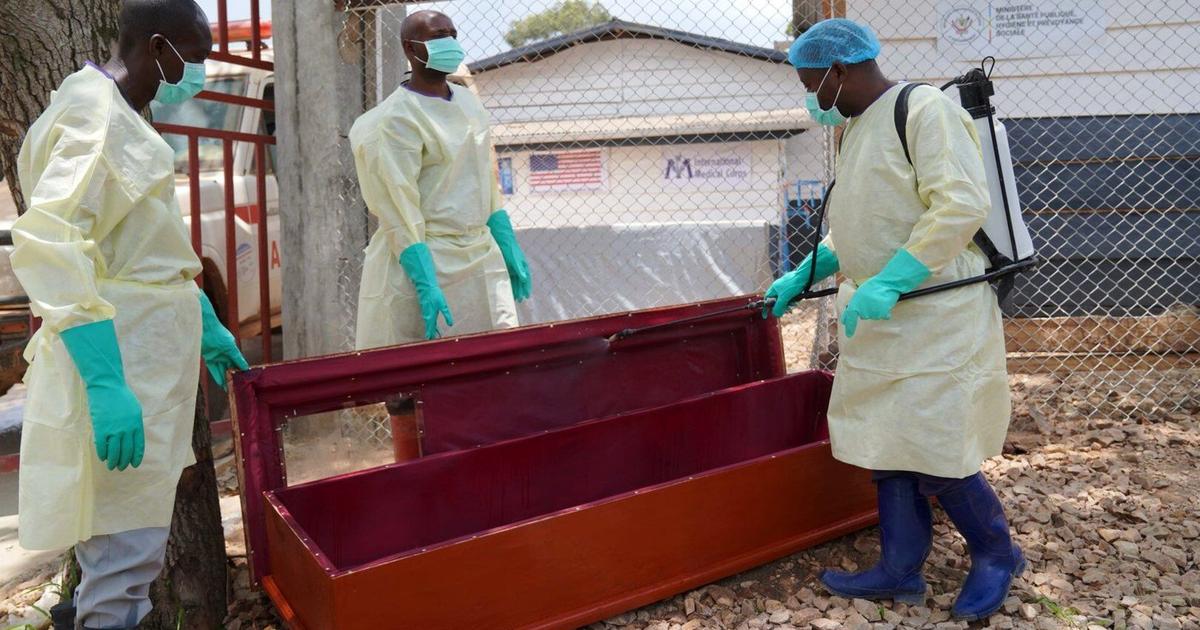
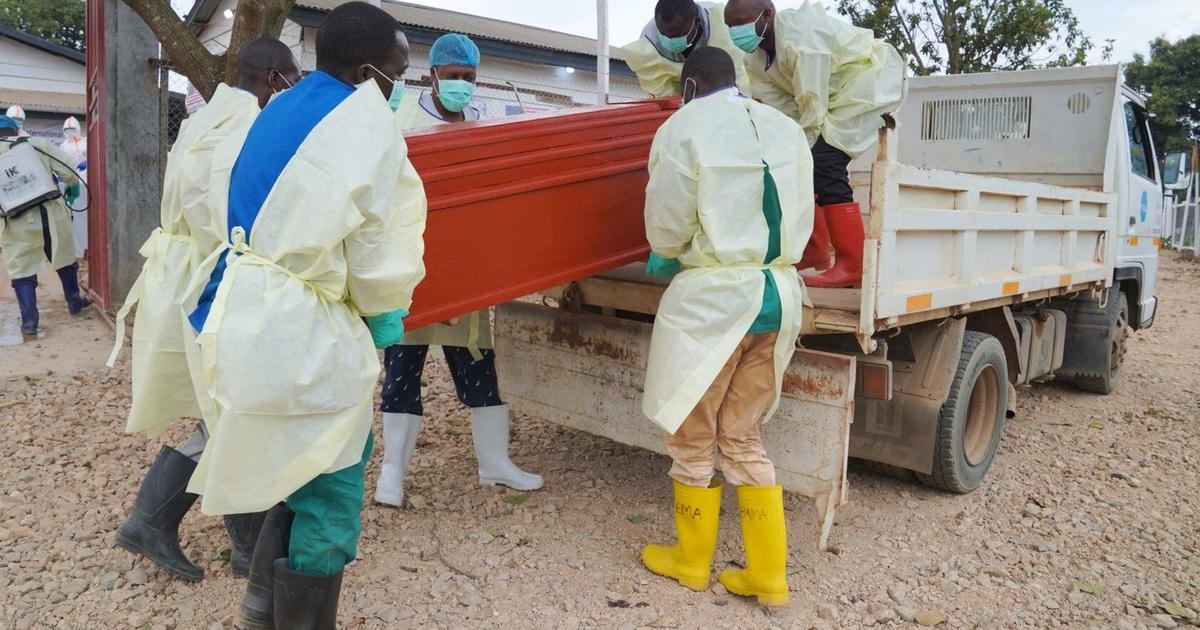
BUNIA, Congo (AP) — Yuma Adolphe and his team are responsible for the safe and dignified burial of some of the people who die from Ebola in Ituri, the epicenter of history’s deadliest Ebola outbreak.
asserted
who → die → outbreak
Nearly every day, they dig the graves, prepare the bodies and handle the coffins.
asserted
they → dig → coffins
But as the authorities grapple with the outbreak, which has killed nearly 3,200 people among more than 6,500 cases, the burial team says they are at their limits, struggling with an increasing workload and hostile communities.
asserted
they → grapple → workload
“It is difficult, but we try to push ourselves beyond our limits,” Adolphe told The Associated Press.
asserted
Adolphe → try → Press
Since the outbreak began in mid-May, authorities have deployed small burial teams like Adolphe’s across the hot spots to handle the burials.
uncertain
authorities → begin → burials
Paid $20 a day, they are a part of a group of front-line workers who are working to contain the rapidly moving disease.
asserted
who → pay → disease
Despite the toll, the burial team members say the priority is to keep their community safe.
asserted
priority → say → community
“We have to look at our own mental well-being, and physically the fatigue mounts, but we keep going to ensure the community is protected.”
asserted
community → look → being
‘In the past, we did not die like this’
But their work is in the crosshairs of the locals’ frustration with the outbreak, which not only has taken their loved ones but prohibits them from traditional burial rites.
Health workers exclusively handle the bodies as Ebola spreads as a result of direct contact with the blood or bodily fluids of infected people.
asserted
Ebola → die → people
Experts say bodies of victims still contain considerable amounts of active virus and can spread infections further.
asserted
bodies → say → infections
Burial teams have faced attacks
Since May, health workers and burial teams such as Adolphe’s have been attacked by bereaved families across the front line of the outbreak.
uncertain
workers → face → outbreak
“Usually, the body is handed over to the family, who can handle it however they wish, in accordance with our African customs,” Adolphe said.
asserted
Adolphe → hand → customs
“But in this situation, it’s difficult to let the family handle the body as they please.
asserted
they → ’ → body
They are deprived of certain rituals, and that’s what leads to misunderstandings.”
asserted
what → deprive → misunderstandings
Jeanne Alasha, adviser to the military governor of Ituri on health and humanitarian affairs, said that “as for those who continue to assault the teams, they are committing offenses punishable by law.”
asserted
they → say → law
Ituri province, where the outbreak is concentrated, is also at the center of the rebel conflict in eastern Congo.
asserted
outbreak → concentrate → Congo
The province is under a military government appointed by federal civilian authorities in Kinshasa.
asserted
province → appoint → Kinshasa
Shortly before noon last Friday, Justine Habineno, a 36-year-old chorister, was buried in Congo’s Ituri province.
asserted
Habineno → bury → province
Habineno had died of Ebola.
asserted
Habineno → die → Ebola
She had only complained of slight headaches before heading to a hospital and was diagnosed with Ebola, her mother said.
asserted
mother → complain → Ebola
A catechist presided over the ceremony attended by dozens of people, as a team of specialist burial team members in scrubs and boots stood by.
asserted
team → preside → scrubs
Habineno’s mother, Sofia Wanito, said that the doctors only allowed her to see the body through the window of the hospital ward, and she wasn’t allowed to touch the coffin.
asserted
she → say → coffin
“In the past, we didn’t die like this.
asserted
we → die → this
I could not even cover her with the sheets myself and pay a final tribute,” Wanito said.
uncertain
Wanito → cover → tribute
Efforts to contain the virus are faltering
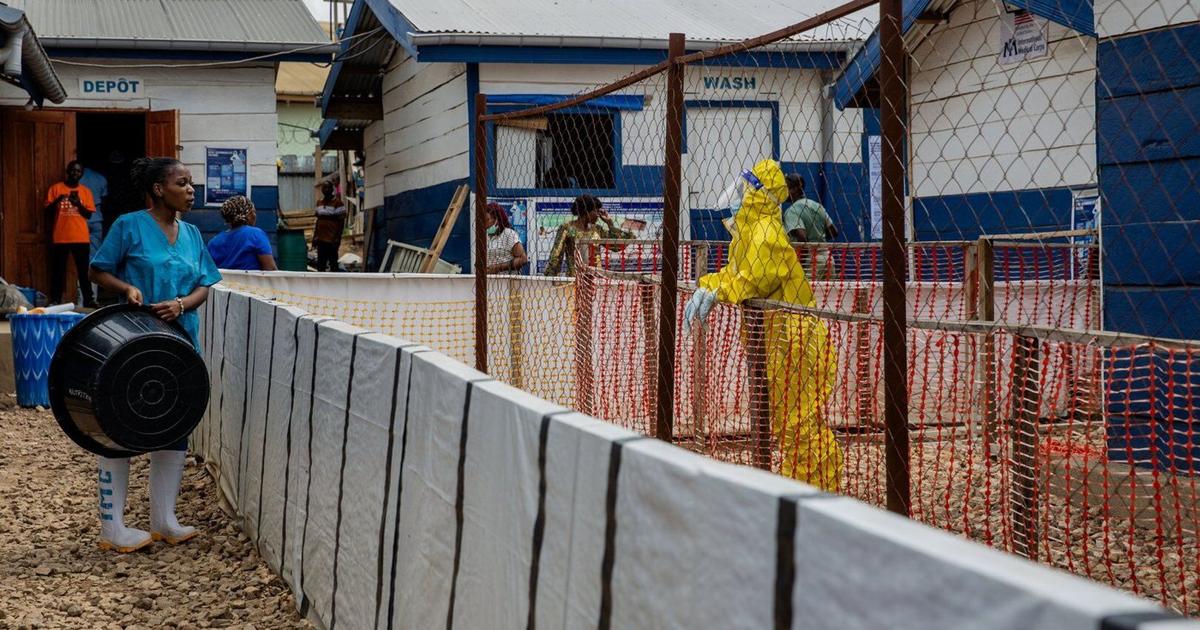
The Ebola outbreak is spreading across six provinces in eastern Congo in some of the most difficult conditions imaginable, fueled by rebel violence, displacement and intense population movements.
asserted
outbreak → contain → violence
A weak healthcare and surveillance system also challenges responders, and insufficient contact tracing and laboratory testing.
asserted
system → challenge → responders
Efforts to contain the outbreak have also been complicated by the lack of an approved vaccine or treatment for the rare Bundibugyo virus causing it.
asserted
Efforts → contain → it
Authorities have started vaccinating front-line health workers with the Evrebo vaccine, which the World Health Organization says could offer some protection against Ebola but there’s no conclusive evidence that it would work against the current virus.
uncertain
it → start → virus
Health authorities say the true scale of the crisis is likely three times more than official statistics as the disease continues to outpace efforts to contain it.
asserted
disease → say → it
WHO has said that it’s projected to surpass the deadliest in history, West Africa’s 2014-2016 outbreak, which killed more than 11,000 people.
asserted
which → say → people
Front-line health workers in eastern Congo have gone on multiple strikes to demand pay for their work, complicating efforts to stop the outbreak.
asserted
workers → go → outbreak
‘We are putting everything on the line’
asserted
We → put → line
Benjamin Muhindo, another burial team member, said that his family worries that he might bring the virus home.
uncertain
he → say → virus
For him, though, a bigger priority is ensuring the proper burial of victims, he said.
asserted
he → ensure → victims
“Burials during this Ebola epidemic are very complicated, as we are working under pressure and constantly racing against the clock,” Muhindo said.
asserted
Muhindo → work → clock
Trauma experts say the high number of cases and the deaths are only one side of its impact at personal and communal levels.
asserted
number → say → levels
“The trauma of this outbreak doesn’t stop with the case count,” said Rose Tchwenko, Mercy Corps country director in Congo.
asserted
Tchwenko → stop → Congo
The chain of transmission will only be broken by “an integrated holistic response,” which includes a social response to bereaved families and front-line workers, she added.
asserted
she → break → families
After the burial on Friday, Adolphe said that he’s very tired but more worried about the community than anything else.
asserted
he → say → anything
“We have no choice,” he said.
asserted
he → have → choice
…and 1 more, not listed.
 The Aporia