That is 0 articles you have read today.
The Aporia is free and carries no advertising, so readers are the only
thing paying for it. If you are getting this much out of it, a small
donation is what keeps it independent.
Daily limit reached
You have read 0 articles today.
That is more than the 15 a day The Aporia gives away,
and well past what it can carry on nothing. Your allowance resets at
midnight.
There is no advertising here and nothing about you is sold, so readers
are the only thing paying for it. If the site is worth this much of
your day, it is worth a few dollars.
Everything else stays open: the
maps, the
directory and
search do
not count against this, and neither does re-opening something you have
already read today.
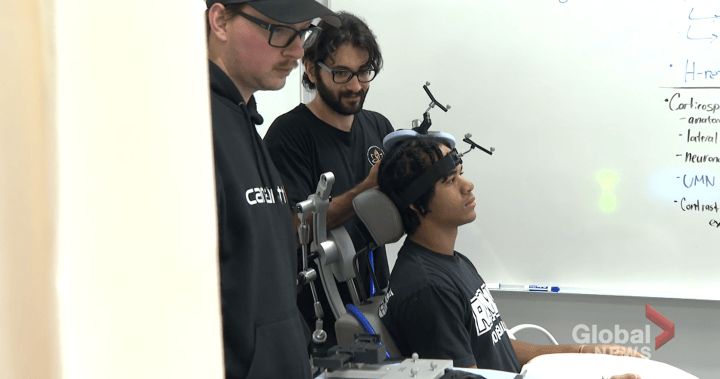
The University of Regina has been researching the use of CBD for managing pain in athletes recovering from concussions since 2022 with a $500,000 grant from the NFL. The study aims to explore whether CBD can be an alternative to prescription opioids while addressing concerns about potential misuse due to THC contamination. Dr. Patrick Neary and PhD student Jamie White are leading the research, which includes educating athletes on the risks of THC in sports despite its legal status in Canada.
Written locally by qwen2.5:14b on 2026-10-07,
using this article's own text rather than the other coverage of the
same event (that is the story summary below).
Story summary
Concerns about concussion prevention and treatment have been increasing in recent years, with five to ten percent of competitive student-athletes sustaining concussions annually, not counting undiagnosed cases. Since 2022, the University of Regina has been investigating cannabinoids as a potential safer alternative for pain management after concussions, receiving $500,000 from the NFL for this research. PhD student Jamie White, supervised by Dr. Patrick Neary, is part of the pioneering team exploring how cannabinoids affect human health in post-concussion scenarios. Carter Ashman, a rookie on the Regina Rams football team and participant in the study, hopes it will reduce concussion rates and improve treatment methods. As cannabis becomes more legalized, researchers aim to understand its scientific basis rather than allowing its use to proliferate without proper knowledge.
Written for “Concussion Treatment Studies Cbd” on 2026-10-08,
grounded in this article and the 0 other(s) covering the same event.
Concerns about prevention and treatment of concussions have been growing within the last several years.
asserted
Concerns → grow → years
Five to ten per cent of competitive student-athletes will sustain a concussion; this doesn’t include any undiagnosed head injuries.
asserted
this → sustain → injuries
The University of Regina has been working to solve this issue since 2022, when $500,000 was received from the NFL to determine whether cannabinoids could safely be used for pain management in post-concussion syndrome athletes, as opposed to prescription medication such as opioids.
uncertain
cannabinoids → work → opioids
“I hope that it helps with concussions because that’s a big thing in my sport and I hope that it lowers the amount of concussions and how we treat them,” said Ashman.
asserted
Ashman → hope → them
PhD student Jamie White has been supervised in this study by Dr. Patrick Neary for two years.
asserted
White → supervise → years
They are part of the first groups to study the effects of cannabinoids on humans.
asserted
They → study → humans
White addresses why this route of treatment is becoming more explored.
asserted
route → address → treatment
Get breaking National news
“If you look at the NFL, if you look at NBA, lots of those players at the highest level also use cannabis.
asserted
lots → get → cannabis
And so now that there is a shift towards a legalization market, it’s really important to understand the actual science behind it, as opposed to just letting it kind of run rampant,” said White.
asserted
White → be → it
One concern this form of treatment faces is misuse.
asserted
form → face → treatment
While CBD is legal in sports, THC is banned by the World Anti-Doping Agency (WADA) in competition.
asserted
THC → ban → competition
The risk of using CBD is that many products will contain trace amounts of THC.
asserted
products → use → THC
USports does not test for THC, but any athletes representing Canada can’t use it due to this potential cross-contamination.
asserted
athletes → test → contamination
Canada Sport Integrity educates roughly 25,000 athletes about this policy, despite advocating for change for years now.
asserted
Integrity → educate → years
Executive Director Kevin Bean says it’s important to inform athletes of these risks, even as he hopes they change.
asserted
they → say → risks
“THC is a prohibited substance on the WADA, as I’ve mentioned.
asserted
I → prohibit → WADA
And from our organization’s perspective, we’ve actually lobbied for the substance to come off the prohibited list, but it’s a global list and it’s determined by the World Anti-Doping Agency.
asserted
it → lobby → Agency
So it is prohibited in sports, remains prohibited in sport despite its legalized status in Canada,” said Bean.
asserted
Bean → prohibit → Canada
“So we continue to have to educate athletes on the dangers of consuming THC in and around competitions that they might participate in.
uncertain
they → continue → that
So that’s something that we’re focused on now with that particular substance.”
asserted
we → ’ → substance
White shares a similar sentiment on the subject.
asserted
White → share → subject
“It’s important for these athletes, especially to have an understanding of how cannabis works with the body, how they could use it potentially to benefit them and how can they avoid misusing it as well.
uncertain
they → ’ → it
The field of cannabis science is new and unexplored, leaving lots of work to be done.
asserted
field → leave → work
 The Aporia