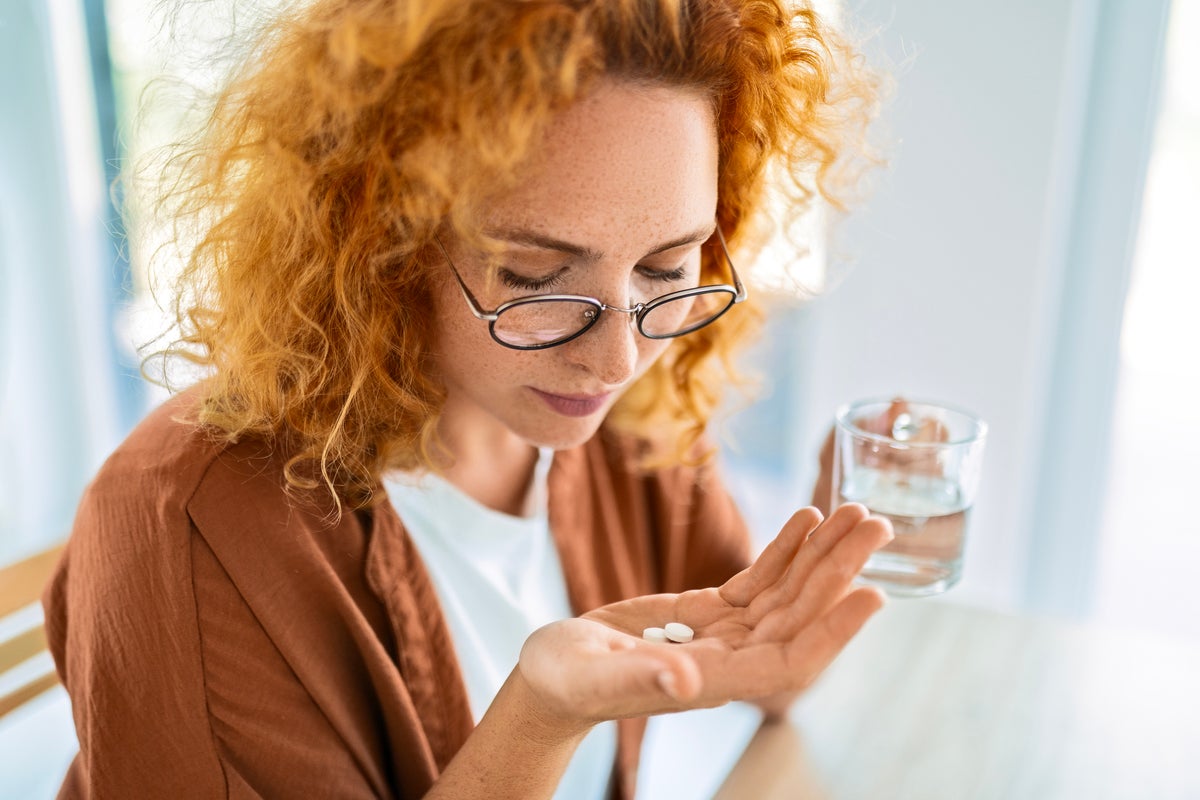
A late-stage trial has shown that solengepras, a daily pill for Parkinson's disease developed by Cerevance, significantly reduces symptoms such as stiffness and tremors and improves overall quality of life for patients. Unlike current treatments that focus on dopamine, this new drug targets the GPR6 receptor to ease the brain's braking effect on movement, offering potential hope for a major new class of treatment. The trial involved 341 participants over 12 weeks, with some receiving either 75mg or 150mg doses of solengepras daily, while others received a placebo.
Written locally by qwen2.5:14b on 2026-10-07,
using this article's own text rather than the other coverage of the
same event (that is the story summary below).
A daily pill for Parkinson's disease has demonstrated huge benefits in a late–stage trial, raising hopes patients could see the first major new class of treatment in decades.
uncertain
patients → demonstrate → decades
The drug significantly reduced the amount of time patients spent struggling with the stiffness, slowness and tremors associated with the condition.
It also helped them to stay more alert during the day, made everyday tasks such as dressing and eating easier and improved their overall quality of life.
asserted
tasks → reduce → life
The drug, named solengepras, works in a different way to the treatments that have dominated Parkinson's care for more than half a century.
asserted
that → name → century
Most of the medicines doctors currently use act on dopamine, a chemical messenger in the brain that helps control movement and is depleted in people with the disease.
asserted
that → use → disease
But solengepras targets a different part of the brain's movement system, potentially opening a new route for treatment.
asserted
solengepras → target → treatment
Dame Kate Bingham, managing partner at SV Health Investors, whose Dementia Discovery Fund backed Cerevance, the Boston–based biotech company behind the drug, described it as 'an entirely novel drug class beyond the dopamine pathway, which has been the basis of Parkinson's treatment for decades'.
asserted
which → back → decades
About 166,000 people in the UK have been diagnosed with Parkinson's, with thousands more thought to be living with the condition without a diagnosis.
asserted
thousands → diagnose → diagnosis
Dame Kate Bingham, managing partner at SV Health Investors, whose Dementia Discovery Fund backed Cerevance, the Boston–based biotech company behind the drug
The progressive brain condition develops when nerve cells that make dopamine are gradually lost.
asserted
that → back → dopamine
As dopamine levels fall, movements can become slower and stiffer, and a tremor can develop.
asserted
tremor → fall → ?
A treatment called levodopa transformed Parkinson's care in the 1960s.
asserted
treatment → call → 1960s
It is converted by the body into dopamine, helping to replace some of what the brain has lost.
asserted
brain → convert → what
Since then, the most effective treatments have largely worked along the same lines, by boosting dopamine or copying its effects.
asserted
treatments → work → effects
They can be highly effective but as Parkinson's progresses their effects often become less predictable.
asserted
effects → progress → ?
Patients experience what are known as 'off' periods when a dose wears off and symptoms return.
asserted
symptoms → experience → periods
Dopamine–based treatments can also cause dyskinesia, which involves involuntary twisting or jerking movements.
asserted
which → base → movements
Actor Michael J. Fox, who has helped raised the profile of Parkinson's disease by speaking about his own diagnosis
asserted
who → help → diagnosis
Rather than influencing dopamine levels, solengepras blocks a receptor called GPR6, which is found in a brain circuit that acts like a brake on movement.
asserted
that → influence → movement
In Parkinson's, the loss of dopamine upsets the balance between brain signals that encourage movement and those that hold it back.
asserted
that → upset → it
If the brake effect is too strong, solengepras is designed to ease it.
asserted
solengepras → design → it
The Phase 3 trial involved 341 people with Parkinson's, who were randomly assigned to receive either 75mg or 150mg of solengepras, or a placebo, once a day for 12 weeks.
asserted
who → involve → weeks
All the patients enrolled in the trial also continued to take levodopa and other dopamine–based drugs, which were already being prescribed.
asserted
which → enrol → levodopa
Both the patients taking solengepras and those taking the placebo improved over the trial, despite the latter group being given a sham pill.
However, the higher–dose solengepras group experienced about 37 minutes less 'off' time each day – where their dopamine drugs were not working properly – than those taking the placebo, and about 94 minutes less 'off' time than before the trial began.
They also gained about 36 extra minutes a day of 'on' time without troublesome dyskinesia, compared with the placebo group, The Times reported.
asserted
Times → take → group
Furthermore, patients taking solengepras did better on a standard scale measuring activities such as dressing, eating and getting around.
asserted
patients → take → dressing
No serious adverse events were reported and only 3.5 per cent of patients stopped treatment because of side effects, which was the same proportion as in the placebo group.
asserted
which → report → group
Dr Stuart Isaacson, a principal investigator in the trial, said patients often end up taking increasingly frequent and higher doses of levodopa, alongside other dopamine–based drugs.
asserted
patients → say → drugs
As doses rise, so can side effects such as dyskinesia, which prevents many patients from taking the amount they need.
asserted
they → rise → amount
The new treatment could offer a much–needed alternative and 'gives great hope for the future', he added.
uncertain
he → offer → future
Laurence Barker, a partner at SV Health Investors and a board member of Cerevance, said: 'We are thrilled to see that the early scientific discovery of GPR6 has now translated to benefit across daily function, alertness, and quality of life measures that will have meaningful impact for Parkinson's patients.
asserted
that → say → patients
The next steps will involve discussions with US health regulators, with talks with UK regulators expected to follow.
asserted
talks → involve → regulators
If everything goes smoothly, the treatment could be available for patients in two to three years.
uncertain
treatment → go → years
 The Aporia