That is 0 articles you have read today.
The Aporia is free and carries no advertising, so readers are the only
thing paying for it. If you are getting this much out of it, a small
donation is what keeps it independent.
Daily limit reached
You have read 0 articles today.
That is more than the 15 a day The Aporia gives away,
and well past what it can carry on nothing. Your allowance resets at
midnight.
There is no advertising here and nothing about you is sold, so readers
are the only thing paying for it. If the site is worth this much of
your day, it is worth a few dollars.
Everything else stays open: the
maps, the
directory and
search do
not count against this, and neither does re-opening something you have
already read today.
South China Morning Post
· collected 2026-10-07 · by Aldo Giovannitti
The article discusses how the aviation superhubs in Dubai, Doha, and Abu Dhabi, which have redirected millions of passengers traveling between Western countries and Asia for decades, now face challenges due to their involvement in regional conflicts. Last year, these three airports collectively handled about 182 million passengers, with Dubai alone managing 95.2 million, surpassing Hong Kong's traffic figures. The article focuses on how the Gulf’s hub-and-spoke model has shaped global aviation flows but questions its sustainability amid current geopolitical tensions.
Written locally by qwen2.5:14b on 2026-10-07,
using this article's own text rather than the other coverage of the
same event (that is the story summary below).
Story summary
For decades, Dubai, Doha, and Abu Dhabi have operated as critical aviation hubs connecting Western and Asian travelers, handling about 182 million passengers last year alone, which is roughly three times the traffic at Hong Kong Airport. In 2022, Dubai International Airport set a record by processing 95.2 million passengers, highlighting its dominance in global air travel. However, the ongoing war has transformed these Gulf hubs into active battlegrounds, threatening the stability of their hub-and-spoke model and challenging the established standard for transcontinental aviation routes.
Written for “Gulf Aviation Superhub Model Under Th…” on 2026-10-07,
grounded in this article and the 0 other(s) covering the same event.
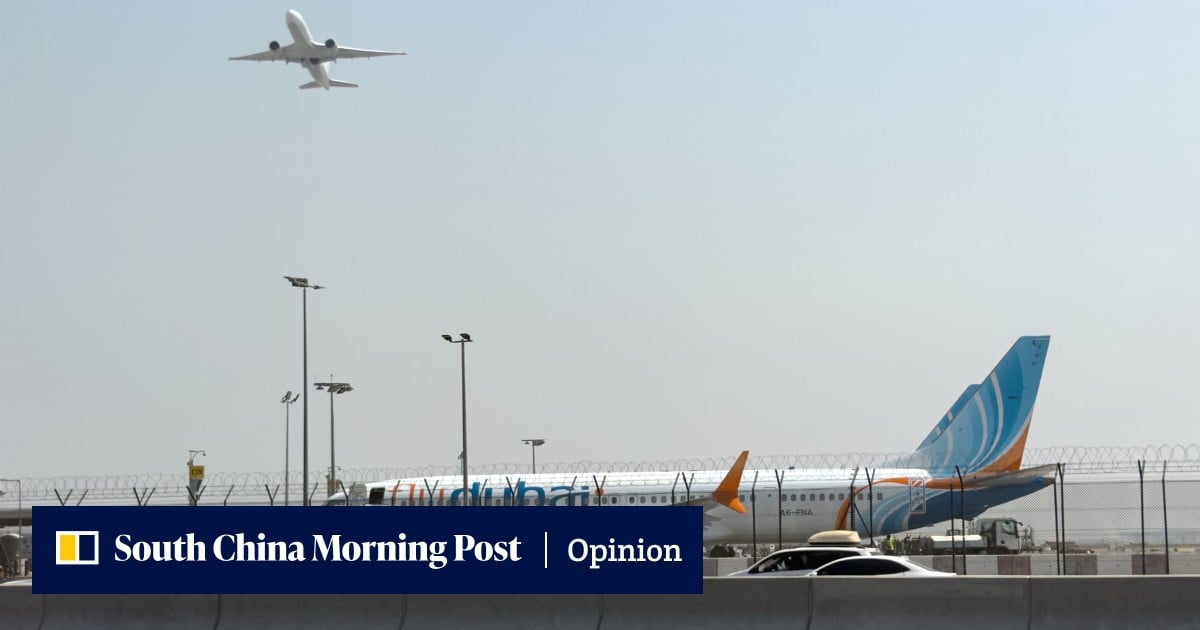
Can the Gulf aviation superhub model survive the war?
asserted
model → survive → war
The problem is not that war disrupts flights, but that this time, the hubs of Dubai, Doha and Abu Dhabi have become part of the battlefield
For decades, the Gulf superhubs of Dubai, Doha and Abu Dhabi performed an improbable trick.
asserted
superhubs → disrupt → trick
They redirected millions of people travelling between the West and Asia to connect through their airports.
asserted
They → redirect → airports
Last year, the three airports handled about 182 million passengers, three times the traffic at Hong Kong airport.
asserted
airports → handle → airport
Dubai alone handled 95.2 million, the highest ever recorded by an airport.
asserted
Dubai → handle → airport
The Gulf’s hub-and-spoke model – funnelling passengers through a central airport to multiple destinations – created economies of scale that redesigned global commercial aviation flows through a routing system solid enough to become the new standard of travel between West and East.
asserted
that → funnel → West
 The Aporia