A study published in Nature reveals that land use changes following colonization in south-east Australia created a "catastrophic wildfire loop," making the region more prone to severe bushfires. Researchers from the University of Melbourne, collaborating with the Gunaikurnai Land and Waters Aboriginal Corporation, analyzed pollen and charcoal particles from a sediment core at Purghagoolah lake, dating back 1,000 years. The study found that the removal of traditional land management practices by Indigenous peoples led to increased vegetation density, which in turn triggered more intense fires, altering the landscape further. This research underscores the importance of integrating Indigenous cultural burning techniques into contemporary fire management strategies to mitigate wildfire risks.
Written locally by qwen2.5:14b on 2026-10-07,
using this article's own text rather than the other coverage of the
same event (that is the story summary below).
Story summary
A new study published in Nature reveals that colonial activities have created a "catastrophic wildfire loop" in south-eastern Australia. Researchers from the University of Melbourne, working with the Gunaikurnai Land and Waters Aboriginal Corporation, reconstructed 1,000 years of vegetation and fire history at Purghagoolah lake in Croajingolong National Park, Gippsland, Victoria. By analyzing pollen and charcoal particles in a sediment core, they found that the landscape transitioned from open woodland to dense forest following colonization. This shift led to more intense fires due to the loss of traditional cultural burning practices by the Gunaikurnai people who were removed from their land. Professor Michael-Shawn Fletcher asserts that prior to colonial interference, these lands were actively managed and cared for by Indigenous Australians, preventing excessive buildup of flammable vegetation. This research highlights how historical changes in land management have increased current fire risks exacerbated by climate change.
Written for “Australian Wildfire Risk Increase” on 2026-10-07,
grounded in this article and the 0 other(s) covering the same event.
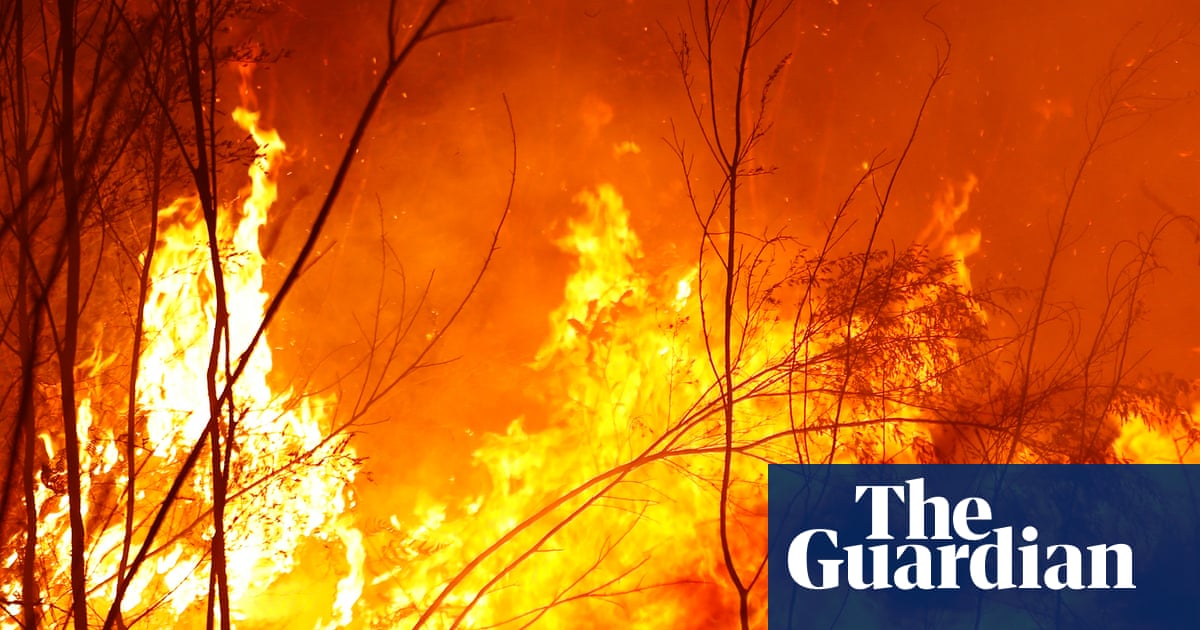
The drastic land use changes wreaked by colonisation created a “catastrophic wildfire loop” that rendered south-east Australia more susceptible to climate-fuelled bushfires, experts say.
asserted
experts → wreak → bushfires
A team of researchers, working with the Gunaikurnai Land and Waters Aboriginal Corporation, an organisation that represents traditional owners, reconstructed 1,000 years of vegetation and fire history at Purghagoolah, a lake surrounded by forest in Croajingolong national park in Gippsland, Victoria.
asserted
that → work → Gippsland
They analysed pollen and charcoal particles deposited over time in a metre-long sediment core, uncovering historical changes in the landscape and the interactions between weather, eucalypt cover and fire frequency and intensity.
asserted
They → analyse → weather
The results, published in Nature, revealed the shift from open woodland to dense forest after colonisation led to more intense fires, changes consistent with the loss of cultural burning practices and the removal of traditional owners, the Gunaikurnai people, from the land.
asserted
shift → publish → land
Michael-Shawn Fletcher, a professor at the University of Melbourne and the study’s lead author, said prior to colonisation “this was a cared for and managed landscape”.
“Gunaikurnai are removed from Country and you see a change in the amount of trees and shrubs in the landscape, and that drives more fires,” he said.
asserted
he → say → fires
“It’s actually land use change, more than a century before climate changes, that has allowed shrubs to increase, fires to get hotter.
asserted
fires → ’ → changes
Those hot fires then trigger eucalypt recruitment.
asserted
fires → trigger → recruitment
And the eucalypts then increase, driving further fire.”
asserted
eucalypts → increase → fire
Fletcher said the research provided scientific evidence for the value of cultural burning, and the importance of integrating Indigenous knowledge into modern fire management strategies.
asserted
research → say → strategies
Cultural burning refers to the way First Nations people use low-temperature fire to maintain a safe and productive landscape.
asserted
people → refer → landscape
These practices, which are still used in parts of Australia today, are based on a responsive “right time, right place” approach that differs from mainstream prescribed burning practices undertaken by government agencies for hazard reduction.
asserted
that → use → reduction
“Hopefully this opens a conversation around the possibilities, into a new future where we can actually start getting control of the catastrophic fire problem,” Fletcher said.
asserted
Fletcher → open → problem
Prof David Bowman, a fire scientist based at the University of Tasmania, who was not an author of the paper, said the research was significant and contributed to the “growing realisation” about the legacy of landscape change resulting from the loss of Indigenous fire management.
asserted
research → base → management
“Other factors have exacerbated these changes, [such as] the introduction of non-native animals, non-native plants in some cases.
asserted
factors → exacerbate → cases
These are very complex ecological processes, but taking out traditional fire management is a very significant thing to have happened.
asserted
taking → take → management
The long-term records were “critically important” for piecing together the historical changes in fire regimes, and how they’re responding to climate drivers, he said.
asserted
he → piece → drivers
“One of the big questions in wildfire science is how anomalous, or how unprecedented, is the stuff that’s happening?”
asserted
that → happen → science
Bowman described the research as “like a pipe opener”.
asserted
Bowman → describe → opener
“I really hope that it opens up a conversation that we really need to have about managing our landscapes as the fire crisis is worsening.”
asserted
crisis → hope → landscapes
 The Aporia