That is 0 articles you have read today.
The Aporia is free and carries no advertising, so readers are the only
thing paying for it. If you are getting this much out of it, a small
donation is what keeps it independent.
Daily limit reached
You have read 0 articles today.
That is more than the 15 a day The Aporia gives away,
and well past what it can carry on nothing. Your allowance resets at
midnight.
There is no advertising here and nothing about you is sold, so readers
are the only thing paying for it. If the site is worth this much of
your day, it is worth a few dollars.
Everything else stays open: the
maps, the
directory and
search do
not count against this, and neither does re-opening something you have
already read today.
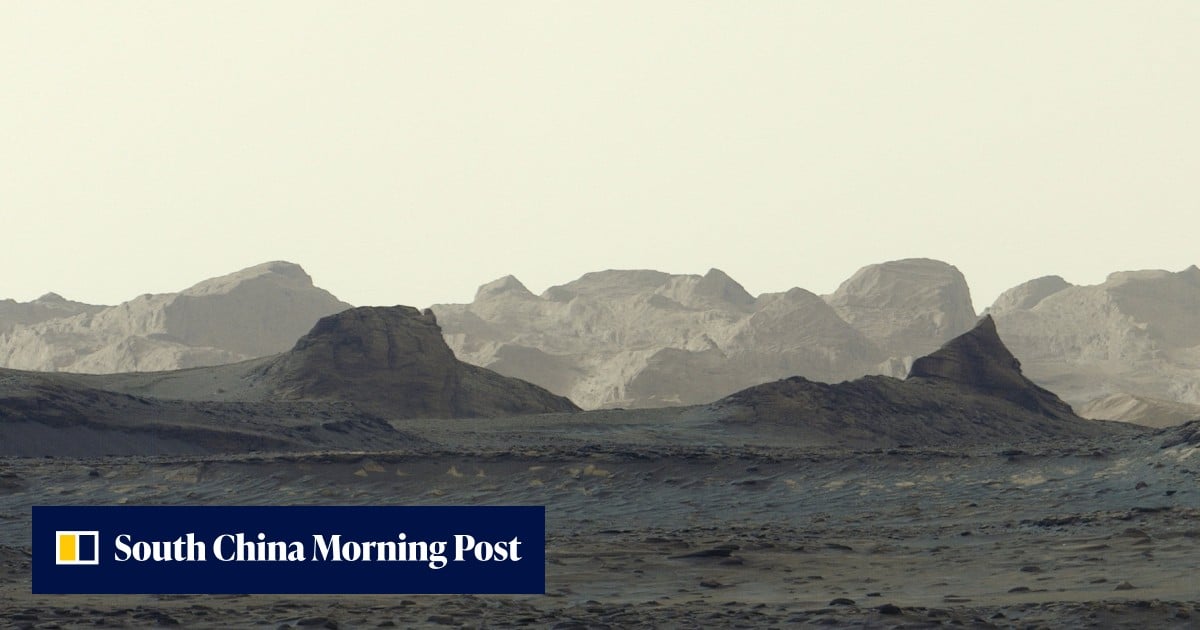
NASA's Curiosity rover has captured an image showing dawn breaking over the Martian landscape, revealing ancient rock formations in Gale Crater near Mars' equator. The photo highlights wind-carved cliffs known as yardangs, which are believed to have formed about three billion years ago due to wind erosion after volcanic activity deposited sediment there. Planetary scientist Ashwin Vasavada describes these features and notes that Curiosity is currently climbing Mount Sharp within the crater, gradually ascending nearly a kilometer in elevation since 2014, making it the highest climb on Mars recorded by any rover.
Written locally by qwen2.5:14b on 2026-10-07,
using this article's own text rather than the other coverage of the
same event (that is the story summary below).
Story summary
Nasa released a striking image of dawn on Mars captured by its Curiosity rover, showcasing sunlight illuminating jagged crags formed billions of years ago. The car-sized rover, which landed in Gale Crater near the Martian equator in 2012, has been climbing Mount Sharp, a 5-km-tall mountain since 2014. The image was taken by Curiosity's Mastcam camera about an hour after sunrise on August 3rd.
Planetary scientist Ashwin Vasavada from Nasa’s Jet Propulsion Laboratory in California explained that the bright craggy peaks are a rock layer distinct from those previously explored, possibly formed by wind-blown sediment or ash from nearby volcanic activity. Scientists hope Curiosity will reach these layers, known as yardangs, sometime between 2027 and 2028 to study them further.
Written for “Martian Dawn Images” on 2026-10-07,
grounded in this article and the 2 other(s) covering the same event.
NASA's Curiosity rover takes striking image of dawn on Mars
Curiosity landed in 2012 in Gale Crater near the Martian equator
NASA has released a striking image of dawn on the Martian surface taken by its Curiosity rover, showing sunlight bathing jagged crags formed billions of years ago as the car-sized vehicle continues to explore Earth's planetary neighbour.
asserted
vehicle → take → neighbour
Curiosity landed in 2012 in Gale Crater near the Martian equator, and since 2014 has been climbing Mount Sharp, a five-kilometre-tall mountain rising from the crater floor.
asserted
Curiosity → land → floor
The image was taken by the six-wheeled rover's Mastcam camera about an hour after the sun rose above a landscape featuring wind-carved cliffs in the distance.
asserted
sun → take → distance
"The bright craggy peaks in the distance are a rock layer that is quite different in appearance from all the layers the rover has driven through so far," said planetary scientist Ashwin Vasavada of NASA's Jet Propulsion Laboratory in California, the Curiosity project scientist.
asserted
Vasavada → drive → California
NASA believes that some kind of wind-blown sediment landed in the crater from nearby volcanic activity.
asserted
kind → believe → activity
Once it hardened into rock, "eons of wind carved up the rock layer into ridges called yardangs," Vasvada said.
asserted
Vasvada → harden → ridges
The yardang layer most likely formed about three billion years ago, around the same time as the rest of the mountain, according to Vasavada.
uncertain
layer → form → Vasavada
This layer spans about 16 kilometres across the northwestern reaches of Mount Sharp.
asserted
layer → span → Sharp
But the layers appears to have been added on later, he said.
asserted
he → appear → ?
"It's above what geologists call an unconformity: a gap in time where previous layers eroded down before new layers were deposited on top.
asserted
layers → call → top
"
Rover making gradual ascent up mountain
The rover on its gradual ascent up the mountain has gained upwards of nearly a kilometre in elevation, the most ever climbed on Mars, according to NASA.
uncertain
rover → make → NASA
Mount Sharp is built of layers, each recording a period of the planet's geological past.
asserted
each → build → past
In studying these layers, scientists have learned more about bodies of water — lakes and streams — that long ago covered this region, at a time when Mars was wetter and warmer than the cold and desolate place it is today.
asserted
it → study → place
NASA rover adds to growing list of organic compounds detected on Mars
Mars rover snaps pictures of giant, dark sand dunes
Vasavada said NASA hopes Curiosity will reach the yardang layer in 2027 or 2028, at which time it will use its instruments to scrutinize the geology there.
asserted
it → add → geology
Curiosity has been studying the geology and climate of Mars and examining whether it once bore conditions conducive to harboring microbial life.
asserted
it → study → life
It is one of two NASA rovers operating on Mars.
asserted
It → operate → Mars
The Perseverance rover is currently traversing the margins of Jezero Crater in the northern hemisphere.
asserted
rover → traverse → hemisphere
"This scene has a wildness that reminds me of a road trip through Monument Valley, Arizona.
asserted
that → have → Valley
You can almost feel the silence and the endless open space under the sky," Vasavada said.
asserted
Vasavada → feel → sky
"But as familiar as that sounds, the sky is orange and the sunrise has shades of blue.
asserted
sunrise → sound → blue
 The Aporia