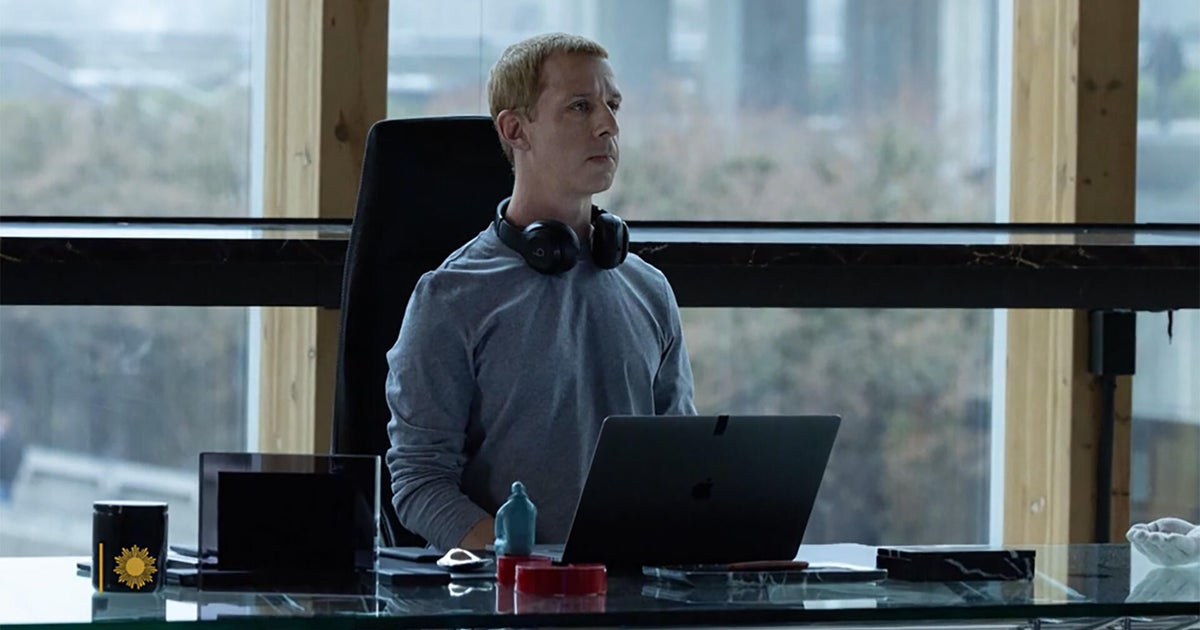
Aaron Sorkin's new film, "The Social Reckoning," centers on Frances Haugen, a former Facebook employee who leaked internal documents revealing the company’s harmful practices. The movie, which stars Mikey Madison as Haugen, explores how Facebook’s algorithms fueled political division and other societal issues. In an interview with TIME, both Haugen and Madison discuss the challenges of portraying the whistleblower accurately and adapting to Sorkin's rapid-fire dialogue style.
Written locally by qwen2.5:14b on 2026-10-07,
using this article's own text rather than the other coverage of the
same event (that is the story summary below).
The Social Network helped define a generation of tech founders when it premiered in 2010: Written by Aaron Sorkin, it tells the story of Facebook’s founding by an ambitious, jilted college kid who imposes his will on the world.
asserted
who → define → world
Now, in The Social Reckoning, Sorkin focuses on the ills of the company Facebook eventually became.
asserted
Facebook → focus → company
He tells the story through the lens of Frances Haugen, a former employee who demonstrated through a trove of internal documents, leaked to the Wall Street Journal, that Facebook’s algorithm was stoking political division, that Instagram was contributing to body-image issues for teen girls, and that the company’s platforms were being used by drug dealers and human traffickers.
asserted
platforms → tell → dealers
CEO Mark Zuckerberg has denied his company, rebranded as Meta after Haugen’s leak, prioritized profit over safety.
asserted
company → deny → safety
Mikey Madison, fresh off her Oscar for Anora, plays Haugen in the film.
asserted
Madison → play → film
Madison and Haugen sat with TIME for their first interview together.
asserted
Madison → sit → interview
Mikey, you and Frances have not had the opportunity to spend a lot of time together.
asserted
you → have → time
How much is the Frances of the film based on the real Frances?
asserted
Frances → base → Frances
When I got the script, I knew about the Facebook Files, but I didn’t know Frances’ name.
asserted
I → get → name
So I looked her up, and I was like, “She’s blonde and has blue eyes.
asserted
She → look → eyes
Why does Aaron want me for this?”
asserted
Aaron → want → this
And he said, “I want you to try and build the character from my script.”
asserted
you → say → script
But of course I read her memoir and tried to do my due diligence because there was so much I didn’t understand.
asserted
I → read → diligence
I don’t have a personal relationship with social media at all.
asserted
I → have → media
Is there a reason you don’t have social media?
asserted
you → have → media
It’s just something that never quite stuck.
asserted
that → ’ → ?
It’s something I never felt I could understand.
uncertain
I → ’ → ?
When I was 13, I had an Instagram, but it kind of lived and died at that time and not for any particular reason or self-preservation.
asserted
it → have → reason
Frances, Aaron reached out to you about the script.
asserted
Aaron → reach → script
I first met Aaron a few months after I came forward as a whistleblower, and he wanted to figure out if it was possible to do a companion piece to The Social Network.
asserted
it → meet → Network
After my memoir came out, he came back to me with this heavily underlined, sticky-noted, dog-eared copy.
asserted
he → come → copy
He writes notoriously fast-talking characters.
asserted
He → write → characters
Mikey, how did you prep for the Sorkin rhythm?
asserted
you → prep → rhythm
I don’t know if much can prepare you for that.
asserted
much → know → that
I’m not someone who naturally speaks in that rhythmic way.
asserted
who → ’m → way
I don’t know anyone who does, except for maybe Aaron.
asserted
who → know → Aaron
It’s singular to his sensibilities as a screenwriter.
asserted
It → ’ → screenwriter
I keep joking that Aaron has this internal stopwatch in his head.
asserted
Aaron → keep → head
Every period, every comma is incredibly intentional, and the space between is timed, and we’re on a deadline.
asserted
we → time → deadline
The first day on set, after seven or eight takes, he came in and was like, ‘OK, we’re starting to cook with a bit of gas here.’
asserted
we → come → gas
That’s hard.
asserted
That → ’ → ?
But I also think it created a certain intensity.
asserted
it → think → intensity
[Wall Street Journal reporter] Jeff [Horwitz] and I are both chatty people who talk quickly, so you do capture the excitement of when we were in the weeds.
asserted
we → talk → weeds
Meta reached an $18 billion settlement in August, ending a multi-state lawsuit that alleged it got teens hooked on social media while jeopardizing their mental health.
asserted
teens → reach → health
Meta did not admit to any wrongdoing.
asserted
Meta → admit → wrongdoing
We’re only in the first chapter of the settlements.
asserted
We → ’re → settlements
We still have two major sets of settlements to go just in the United States.
asserted
We → have → States
The school districts are bringing very large suits, which I’m expecting to have dollar values north of $100 billion, maybe $200 billion.
asserted
I → bring → billion
And then we have the individual kids and family lawsuits.
asserted
we → have → lawsuits
So far, we’ve only had one resolve, but it was $6 million to a single person.
asserted
it → have → person
…and 39 more, not listed.
 The Aporia