That is 0 articles you have read today.
The Aporia is free and carries no advertising, so readers are the only
thing paying for it. If you are getting this much out of it, a small
donation is what keeps it independent.
Daily limit reached
You have read 0 articles today.
That is more than the 15 a day The Aporia gives away,
and well past what it can carry on nothing. Your allowance resets at
midnight.
There is no advertising here and nothing about you is sold, so readers
are the only thing paying for it. If the site is worth this much of
your day, it is worth a few dollars.
Everything else stays open: the
maps, the
directory and
search do
not count against this, and neither does re-opening something you have
already read today.
Mustafa Bilal, a researcher at the Centre for Aerospace and Security Studies, argues that urgent rules are needed as the development of autonomous military technology accelerates. He references a December 2022 incident where a Chinese J-11 fighter nearly collided with a US RC-135 surveillance plane over the South China Sea. The Pentagon is now planning to establish a four-star Autonomous Warfare Command and has requested $54.6 billion for autonomous and unmanned systems in the 2027 fiscal year, marking a significant increase from previous years.
Written locally by qwen2.5:14b on 2026-10-07,
using this article's own text rather than the other coverage of the
same event (that is the story summary below).
Story summary
Mustafa Bilal, a researcher at the Centre for Aerospace and Security Studies in Islamabad, highlights the urgent need for US and China to set rules before autonomous fighter aircraft are deployed. In December 2022, a close encounter occurred over the South China Sea when a Chinese J-11 fighter nearly collided with a US RC-135 surveillance plane; both sides released video footage but blamed each other for the near-miss. Bilal warns that future incidents might involve unmanned aircraft operating without human pilots. Additionally, US Defence Secretary Pete Hegseth announced plans on September 30 to establish a new four-star Autonomous Warfare Command aimed at scaling up autonomous and robotic capabilities across the US military. The Pentagon has requested an increase of $54.6 billion for accelerating such developments in the 2027 financial year, emphasizing the rapid pace of military AI advancements globally.
Written for “AI Weapons Regulation” on 2026-10-07,
grounded in this article and the 0 other(s) covering the same event.
Why this leaning score
This article does not take a side on a contested political
question, so it has no leaning score. That is an
answer rather than a gap: a match report or a rescue can be warmly
or critically written without being left or right, and scoring it
anyway is how approval of a subject gets recorded as a political
position.
No political leaning scored for article 62770 · logged 2026-10-07
US and China must set rules before autonomous fighters cross paths
Rapid military AI development makes agreed limits on mission scopes, operational areas and target parameters an urgent priority
3-MIN READ3-MIN
Mustafa Bilal is a researcher at the Centre for Aerospace and Security Studies, Islamabad.
asserted
Bilal → set → Studies
In December 2022, a Chinese J-11 fighter came within metres of a US RC-135 surveillance plane over the South China Sea, according to the US military, which criticised it as an unsafe manoeuvre.
uncertain
which → come → manoeuvre
China, however, held the American crew responsible and claimed the RC-135 had suddenly veered towards the Chinese jet despite repeated warnings.
asserted
RC-135 → hold → warnings
Both sides released video footage, yet neither accepted the other’s account of the incident.
asserted
neither → release → incident
This and other such close encounters involved human pilots.
asserted
This → involve → pilots
The next one may involve aircraft with no one on board.
uncertain
one → involve → board
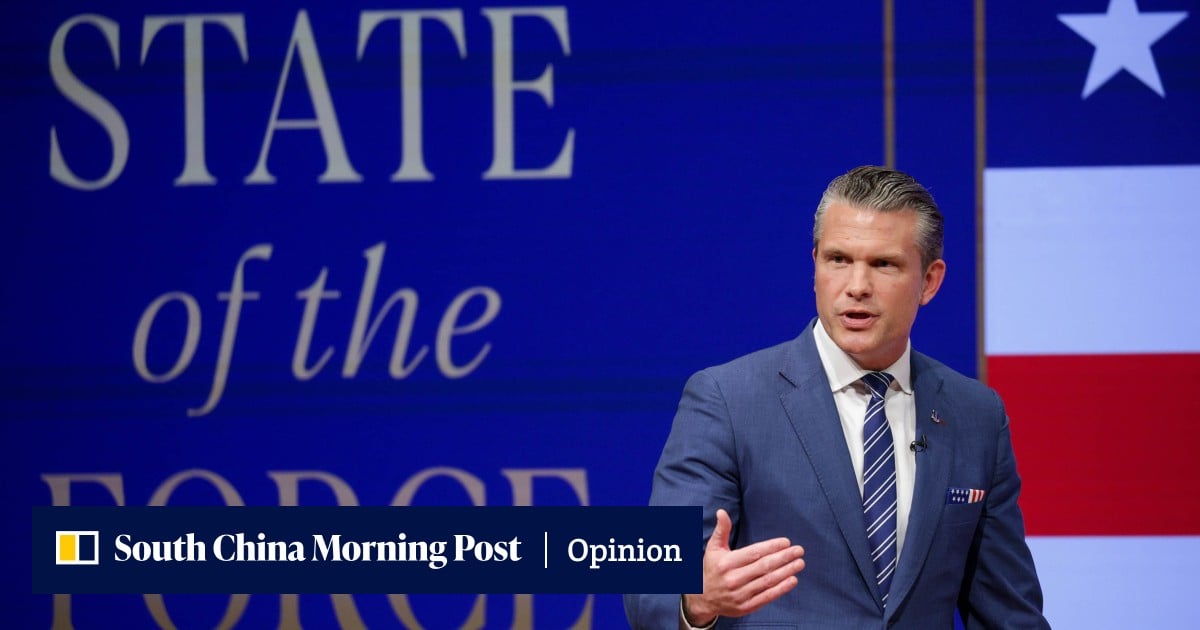
On September 30, US Defence Secretary Pete Hegseth announced plans for a four-star Autonomous Warfare Command to scale up autonomous and robotic capabilities across the US military.
asserted
Hegseth → announce → military
The Pentagon has requested US$54.6 billion for accelerating the development and adoption of autonomous and unmanned systems in the 2027 financial year, up from US$225.9 million the year before.
asserted
Pentagon → request → million
 The Aporia