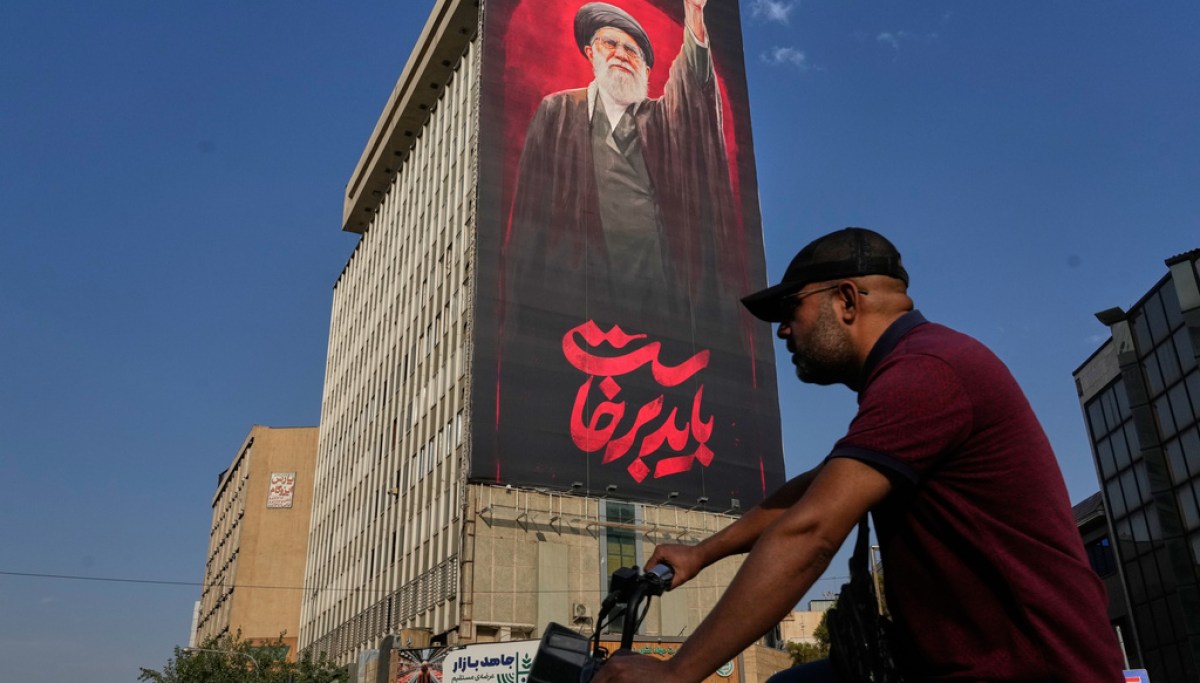
A former French counterterrorism judge has raised a question Western governments should have asked years ago: What did Iran’s rulers gain when Europe and the United States weakened an organized force opposed to them?
asserted
Europe → raise → them
Marc Trevidic’s account matters because he speaks from experience inside the judicial system.
asserted
he → matter → system
Discussing France’s 2003 proceedings against members of the People’s Mojahedin Organization of Iran, or MEK, he recalled a period when Paris pursued valuable oil and gas agreements with Tehran while the Iranian authorities sought action against their opponents.
asserted
authorities → discuss → opponents
Trevidic later handled the case and dismissed the charges he examined.
asserted
he → handle → charges
In remarks delivered in May 2026, he described the political use of counterterrorism justice.
uncertain
he → deliver → justice
He also offered a strategic assessment: The MEK once possessed substantial military capabilities in Iran that, in his view, would be useful today in bringing down the regime.
asserted
that → offer → regime
France, the U.S., and Britain, he said, had all played a part in eliminating those capabilities.
asserted
he → say → capabilities
His testimony connects two questions usually discussed separately: whether restrictions on an opposition organization were justified, and how those restrictions affected the government it opposed.
asserted
it → connect → government
An organization need not be certain of overthrowing a government to influence its behavior.
asserted
organization → overthrow → behavior
Its existence can force that government to allocate forces, protect vulnerable positions, and consider the possibility of organized resistance.
asserted
existence → force → resistance
Removing such a challenge changes the calculation, even when no one can predict the outcome of the alternative.
asserted
one → remove → alternative
That is the strategic dimension missing from much of the debate about the MEK’s disarmament in Iraq.
asserted
That → miss → Iraq
In 2003, American forces overthrew Saddam Hussein and collected the MEK’s weapons and heavy equipment.
asserted
forces → overthrow → weapons
Saddam was Tehran’s long-standing state adversary.
asserted
Saddam → stand → ?
The MEK was an Iranian opposition force operating from Iraqi territory.
asserted
MEK → operate → territory
The two were distinct obstacles, and Washington removed them for different reasons.
asserted
Washington → remove → reasons
Nevertheless, Tehran emerged with neither confronting it across its western border.
asserted
neither → emerge → border
The invasion did not automatically deliver Iraq to Iran.
asserted
invasion → deliver → Iran
The collapse of Iraqi institutions, the choices of postwar leaders, and Tehran’s own investment in political and armed networks all mattered.
asserted
collapse → matter → networks
But the Islamic Republic operated in an environment from which two important constraints had disappeared.
asserted
constraints → operate → which
The history of Western restrictions on the MEK reveals how that environment developed.
asserted
environment → reveal → MEK
In 1997, the Clinton administration placed the group on the American list of foreign terrorist organizations.
asserted
administration → place → organizations
The Los Angeles Times reported that a senior administration official described its inclusion as a goodwill gesture toward Iran’s newly elected president, Mohammad Khatami.
asserted
official → report → president
The European Union imposed restrictions in 2002.
asserted
Union → impose → 2002
The official’s explanation exposed a consequential diplomatic assumption: Limiting an opposition movement could help improve relations with the government it challenged.
uncertain
it → expose → government
The immediate benefit was easier to imagine than the longer-term cost.
asserted
benefit → imagine → cost
Trevidic’s account of the French proceedings supplies a European parallel.
asserted
account → supply → parallel
If diplomatic and commercial interests helped shape action against Tehran’s opponents, the resulting decisions must be assessed beyond the negotiations they were intended to facilitate.
asserted
they → help → negotiations
The intelligence failures preceding the Iraq invasion belong in this examination, too.
asserted
failures → precede → examination
A Senate Intelligence Committee investigation found that false information from sources affiliated with Ahmed Chalabi’s Iraqi National Congress had supported important prewar assessments concerning Iraq’s alleged weapons programs.
asserted
information → find → programs
In June 2004, Los Angeles Times columnist Tim Rutten discussed allegations that Chalabi had passed sensitive American information to Iran, which Chalabi denied, and speculation that he might have been an Iranian double agent.
uncertain
he → discuss → which
Those suspicions did not establish that Tehran orchestrated the deception.
asserted
Tehran → establish → deception
The Senate investigation did not demonstrate Iranian direction of Chalabi’s network.
asserted
investigation → demonstrate → network
The strategic argument rests on the consequences of the decisions, rather than on an unproven explanation of who engineered them.
asserted
who → rest → them
Those consequences also invite a question about repression inside Iran.
asserted
consequences → invite → Iran
A government facing fewer organized challenges has greater flexibility in deploying its security apparatus.
asserted
government → face → apparatus
Would retaining the MEK’s former capabilities have made Tehran more cautious during subsequent domestic uprisings?
asserted
Tehran → retain → uprisings
No historical record can give a definitive answer.
asserted
record → give → answer
Trevidic’s assessment nevertheless makes dismissing the question difficult.
asserted
dismissing → make → question
The practical lesson for Washington is to assess opposition policy as part of Iran policy.
asserted
lesson → assess → policy
…and 7 more, not listed.
 The Aporia