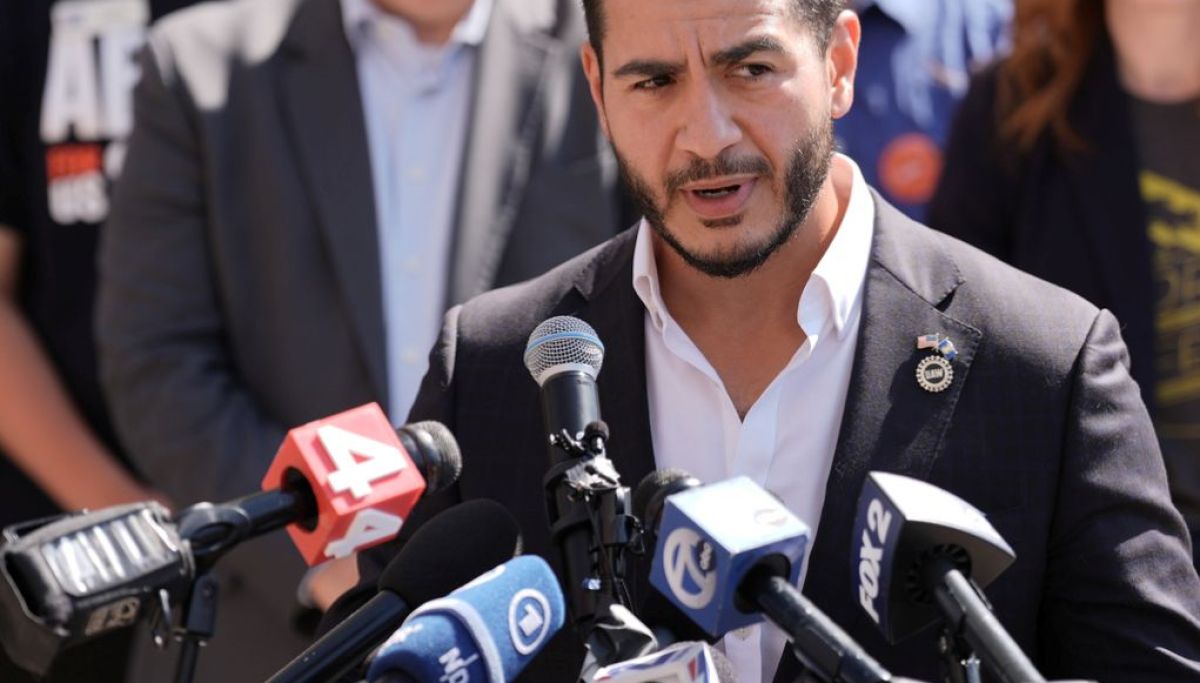
Abdul el Sayed, who recently won the Democratic nomination in Michigan, has appeared in hundreds of television interviews and campaign events delivering a simple message: America’s domestic policies are broken, and ending aid to Israel is the way to fix them.
asserted
ending → win → them
This reductive argument has become a defining feature of many progressive campaigns within the Democratic Party, and, unfortunately, it appears to be resonating with voters.
asserted
it → become → voters
El Sayed promises to improve education, healthcare, and other public services without raising taxes or requiring any tangible sacrifice from Americans.
asserted
Sayed → promise → Americans
Speaking from a position of authority as a Senate candidate, he is effectively offering voters a free lunch — both figuratively and, in many cases, literally.
asserted
he → speak → cases
Anyone who reviews el Sayed’s media appearances will notice how deliberate he is in framing his message.
asserted
he → review → message
He consistently returns to the same set of key words and themes: education, healthcare, children, Gaza, weapons, genocide, and similar talking points.
asserted
He → return → words
By doing so, he often succeeds in steering interviews toward emotionally charged debates over foreign policy and military assistance, leaving little or no time for journalists to examine whether his proposed solution would meaningfully address the domestic problems he highlights — even under the most charitable interpretation.
asserted
he → do → interpretation
More perplexing is the apparent reluctance of interviewers to ask el Sayed to show his work.
asserted
reluctance → ask → work
A Senate candidate should be expected to demonstrate at least a basic understanding of the federal budget and the policymaking processes surrounding foreign affairs and national security.
asserted
candidate → expect → affairs
Yet his central claims are rarely subjected to meaningful scrutiny.
uncertain
claims → subject → scrutiny
Breaking down el Sayed’s arguments raises several straightforward but important questions that voters deserve to hear addressed.
asserted
voters → break → that
The scale of America’s social spending compared with the foreign assistance budget
Combined federal, state, and local spending on major social insurance, social welfare, and education programs in the United States now exceeds $5 trillion annually.
asserted
spending → compare → trillion
By comparison, the enacted fiscal 2026 foreign assistance budget is approximately $50 billion.
asserted
budget → enact → comparison
This comparison raises an important question.
asserted
comparison → raise → question
El Sayed appears to argue that redirecting roughly 1% of current social spending would substantially improve America’s education and social programs.
asserted
redirecting → appear → education
Yet he largely ignores a more fundamental issue: persistent inefficiency, waste, and mismanagement within many domestic programs.
asserted
he → ignore → programs
If the government already spends more than $15,000 annually for every U.S. citizen and lawful permanent resident on these programs, why has that level of spending not produced the outcomes he seeks?
asserted
he → spend → outcomes
And how would a 1% increase magically solve the problems?
asserted
increase → solve → problems
What is actually included in the foreign assistance budget?
asserted
What → include → budget
El Sayed also appears to misunderstand — or at least misrepresent — what the foreign assistance budget actually funds and how it affects American interests.
asserted
it → appear → interests
More than half of the foreign assistance budget supports economic development, disaster relief, and global health initiatives.
asserted
half → support → development
These programs address humanitarian crises while also helping contain threats that affect the U.S.
asserted
that → address → U.S.
Among them is the President’s Emergency Plan for AIDS Relief, which has been credited with saving more than 26 million lives since its creation and has played a central role in combating the global HIV epidemic.
asserted
which → credit → epidemic
However, the Trump administration’s recent budget reductions have increasingly prioritized programs that provide measurable strategic or humanitarian benefits while advancing American interests.
asserted
that → prioritize → interests
Out of an annual federal budget of roughly $5.52 trillion, the $3.3 billion allocated annually to Israel through Foreign Military Financing receives a remarkably disproportionate share of political and media attention.
asserted
billion → allocate → attention
It is important to understand what FMF actually is.
asserted
FMF → understand → ?
Rather than functioning as unrestricted cash assistance, FMF generally operates as credit that recipient countries use to purchase U.S.-manufactured defense equipment and systems.
asserted
countries → function → equipment
For accuracy, Congress increased this funding by approximately $500 million for fiscal 2027.
asserted
Congress → increase → 2027
The additional funding will support joint missile-defense research, combining American technological capabilities with Israeli operational experience.
asserted
funding → support → experience
This cooperation will greatly strengthen the U.S.’s ability to respond to increasingly sophisticated missile and drone threats posed by adversaries.
asserted
cooperation → strengthen → adversaries
El Sayed portrays military assistance to Israel as unnecessary and wasteful.
asserted
Sayed → portray → Israel
Yet decisions regarding FMF are debated annually in Congress and involve a broad range of strategic, military, diplomatic, and political considerations.
asserted
decisions → regard → considerations
FMF is approved only when it can be clearly demonstrated that funds will better advance U.S. national security interests than alternative uses of those resources, including applying funds directly to the U.S. armed forces budget.
asserted
funds → approve → budget
It is also worth remembering that military assistance to Israel originated as part of the Camp David Accords, negotiated during the administration of President Jimmy Carter — a figure admired by the progressive Left.
asserted
assistance → remember → Left
The agreement, which established military assistance for both Egypt and Israel, helped end decades of war between the two countries.
asserted
which → establish → countries
The resulting peace has contributed to greater regional stability and reduced the risk of a conflict that had severely disrupted the global economy.
asserted
that → result → economy
El Sayed should also remember that his own family emigrated from Egypt in 1979, a year after the Camp David agreement was signed.
asserted
agreement → remember → 1979
Without the accords and the associated FMF assistance, his family could have ended as a casualty of the war instead of successful American citizens with a son running for Senate.
uncertain
family → associate → Senate
Ultimately, this debate is not about whether America should fix and improve its schools, healthcare system, or social programs.
asserted
America → fix → schools
Those are goals shared across the political spectrum.
asserted
Those → share → spectrum
…and 16 more, not listed.
 The Aporia