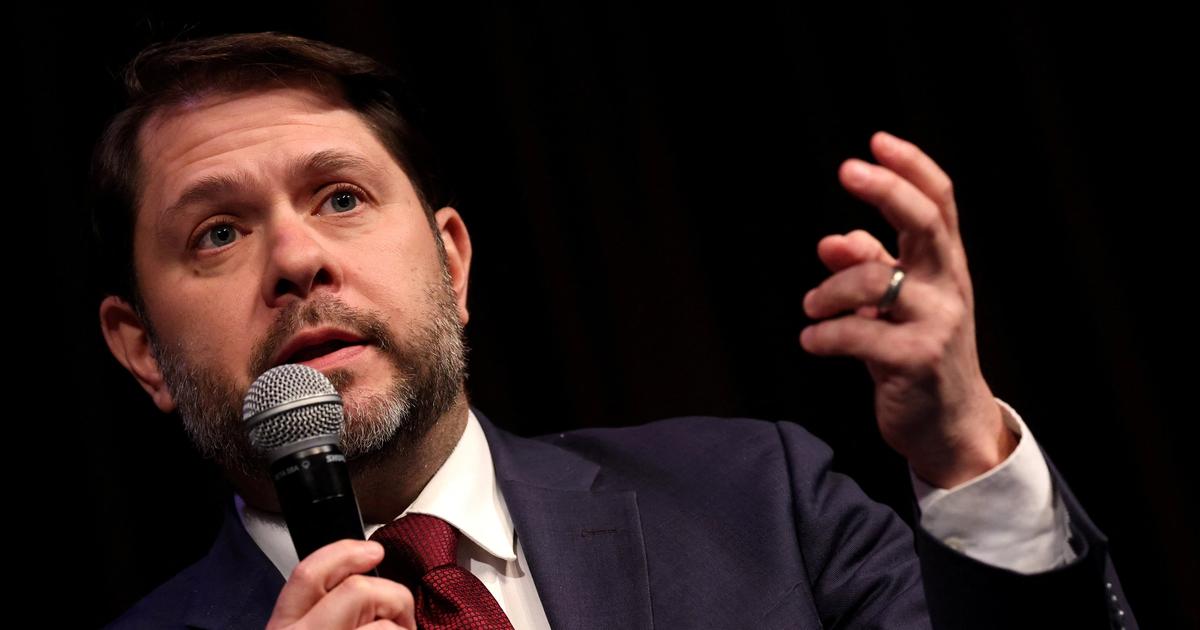
Ruben Gallego, an Arizona senator, unveiled a comprehensive policy agenda aimed at protecting workers from the impacts of artificial intelligence (AI) and economic changes. The plan includes raising the minimum wage to $20 per hour, increasing overtime pay to double the regular rate, and introducing taxes on data centers and automated jobs to fund federal public works programs. Gallego’s proposals reflect his intent to address public concerns about wages not keeping up with inflation and job losses due to AI, positioning him as a key figure in the Democratic Party's strategy for the upcoming midterm elections.
Written locally by qwen2.5:14b on 2026-10-07,
using this article's own text rather than the other coverage of the
same event (that is the story summary below).
Ruben Gallego isn’t sure if he’s running for president yet, but he still has big plans for his Democratic Party once it’s back in power.
asserted
it → run → power
The Arizona senator is launching a huge, wide-reaching policy agenda on Wednesday that’s aimed at confronting a labor market — and workforce — getting reshaped in real time by the AI boom.
asserted
that → launch → boom
He wants to raise the minimum wage and boost overtime pay while imposing taxes on data centers and automated jobs, in addition to creating a federal public works program to ensure US workers can cope with AI.
asserted
workers → want → AI
It’s a big move by the first-term senator as his party wages a pitched fight for control of Congress in next month’s midterm elections.
asserted
party → ’ → elections
He said he recognizes that the public needs to start hearing about what Democrats intend to do with control in Washington, if they wrest some of it from GOP hands this fall.
asserted
they → say → hands
“People that are working right now don’t feel like their hard work is actually bringing them anything in return … and going into election season, people want to know where Democrats stand,” Gallego told Semafor in an interview this week.
asserted
Gallego → work → interview
“With AI becoming more and more prevalent in people’s lives and fears, I think it’s also important that we have a real forward-leaning policy that deals with AI and the workforce,” he added.
asserted
he → become → AI
Gallego’s sweeping proposals certainly look like the policy engine undergirding a 2028 presidential campaign.
asserted
proposals → look → campaign
He said he’s “not naive” about his work furthering that speculation, though he demurred on his future aspirations.
asserted
he → say → aspirations
“No matter what,” Gallego said, “I’m going to be involved in” policy debates after the 2028 race.
asserted
I → say → race
“I’m not in the space right now to make a decision,” he added.
asserted
he → ’m → decision
“A lot of conversations have to happen between me and my wife, especially when it comes to raising kids and potentially running for office.”
asserted
it → have → office
Know More
Gallego’s plan, which he pitches with a personal touch by invoking his upbringing in Arizona and the state’s recent run of rapid growth and economic change, touches almost every aspect of the American economy.
asserted
he → know → economy
But he’s chiefly concerned with evident public views that wages are not keeping pace with rising prices — that the American “dream is slipping away from millions of Arizonans,” as he writes in his proposal.
asserted
he → ’ → proposal
On top of raising the minimum wage to $20 per hour and pegging it to inflation, his agenda would promote sectoral bargaining agreements to establish labor standards for entire industries, require companies to provide paid leave, and raise overtime pay for eligible workers from time-and-a-half to double pay.
asserted
agenda → raise → pay
He’s got equally ambitious plans for the AI industry, calling for a 10 percent excise tax on data center revenues and an end to tax incentives for those projects, a “robot tax” to discourage job losses due to automation, and consideration of a tax on AI tokens.
asserted
He → get → tokens
He wants to use that money to help fund a “New Deal-style” public works program to ensure the US won’t experience “massive unemployment” from the adaptation of AI.
asserted
US → want → AI
“Data centers and AI companies cannot just be operating untouched and also unbothered in terms of what they do to our labor markets, to our communities.
asserted
they → operate → communities
They need to be part of the solution and not just be a problem,” Gallego said in the telephone interview.
asserted
Gallego → need → interview
He also wants to prioritize reclassifying certain so-called gig workers as employees rather than independent contractors and require companies to give workers more notice ahead of mass layoffs.
asserted
He → want → layoffs
Gallego said he’s ready to maximize Democratic authority to get it done.
asserted
it → say → authority
He proposed putting as much of his proposal as he can in a party-line budget reconciliation bill that Democrats can pass with a simple majority if they control the House, Senate, and White House come 2029.
asserted
they → propose → House
He added that Democrats should not listen to the Senate parliamentarian if, for example, a minimum wage hike gets ruled ineligible for reconciliation (as it was in 2021).
asserted
it → add → 2021
“We shouldn’t be afraid to push the limits on reconciliation, on overruling the parliamentarian,” he said, arguing that Republicans have “already kind of blown up the parliamentarian primacy” anyway.
asserted
Republicans → push → primacy
The rising class of Democrats has big ideas, and you can already start to see the party nearing a big debate about its agenda ahead of 2028.
asserted
party → rise → 2028
Gallego’s plan is one of the most expansive yet, but he isn’t the first to jump in.
asserted
he → jump → expansive
Sens. Chris Van Hollen of Maryland and Cory Booker of New Jersey have tax cut ideas.
asserted
Hollen → have → ideas
Sen. Andy Kim of New Jersey wants his party to give kids universal health insurance coverage.
asserted
party → want → coverage
This bold flurry is a stark contrast with Democratic leaders, who would like to start really shaping their agenda … after the midterm elections.
asserted
who → like → elections
 The Aporia