www.thestar.com - RSS Results of type article
· collected 2026-09-06 · by Torstar Open Data Team
Toronto Public Health has issued a warning advising people to stay out of the water at four public beaches: Marie Curtis Park, Sunnyside, Ward's Island, and Cherry, effective September 6 at 5 p.m. The decision is based on elevated E. coli bacteria levels in the water, which can cause serious illness if consumed. No specific number of E. coli colonies per sample is given, but the article notes that according to Ontario Ministry of Health guidelines, swimming is not recommended when such levels are detected. The article serves as a public health advisory rather than an investigative report.
Written by the local model on 2026-09-07,
using this article's own text rather than the other coverage of the
same event (that is the story summary below).
Story summary
As of September 6 at 5 p.m., four public beaches in Toronto are closed due to poor water quality: Marie Curtis Park, Sunnyside, Ward’s Island, and Cherry. According to the Ontario Ministry of Health and Long-Term Care, water is considered unsafe for swimming if one sample contains 400 or more E. coli bacteria per 100 millilitres, or the average of five samples is 200 or more. Swimming in contaminated water can cause serious illness, including stomach cramps, diarrhea, and vomiting. High levels of E. coli may also indicate the presence of other harmful organisms that can cause skin rashes and infections. The closures are due to high levels of E. coli detected in the water at these beaches, although it's worth noting that the latest available data may not reflect current conditions, as collecting and testing beach water for E. coli can take a day or more. This is not an isolated issue, as swimming is also recommended against when it's raining, the water is wavy or cloudy, there are many birds present, or two days after a big storm.

Written for “E Coli Outbreak Alert” on 2026-09-07,
grounded in this article and the 0 other(s) covering the same event.
Why this leaning score
This article does not take a side on a contested political
question, so it has no leaning score. That is an
answer rather than a gap: a match report or a rescue can be warmly
or critically written without being left or right, and scoring it
anyway is how approval of a subject gets recorded as a political
position.
No political leaning scored for article 6248 · logged 2026-09-07
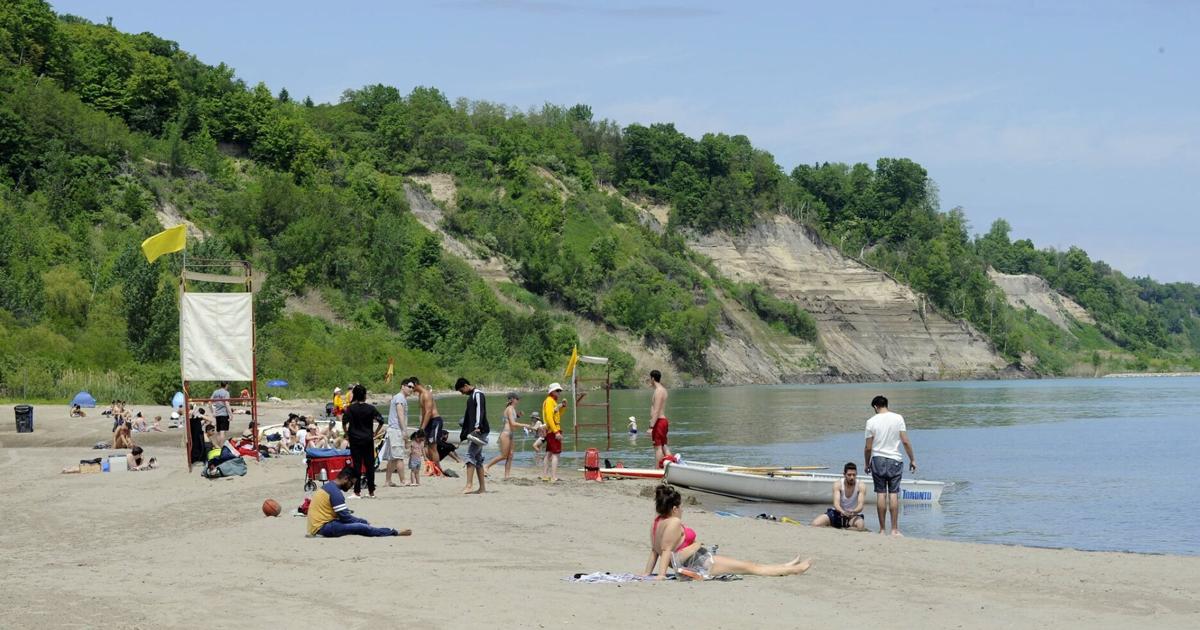
You’ll want to stay out of the water at Marie Curtis Park, Sunnyside, Ward’s Island and Cherry as of Sept. 6 at 5 p.m.
asserted
You → want → p.m.
Here’s the latest beach water quality report from Toronto Public Health:
asserted
report → ’ → Health
According to public health guidelines from the Ontario Ministry of Health and Long-Term Care, water is considered unsafe for swimming when one sample contains 400 or more E. coli bacteria per 100 millilitres, or the geometric mean of five samples is 200 or more.
uncertain
mean → accord → samples
Collecting, transporting and testing beach water for E. coli can take a day or more, so the latest available data may not reflect current conditions at the beach.
uncertain
data → collect → beach
Swimming is not recommended when it’s raining, the water is wavy or cloudy, there are lots of birds, or for two days after a big storm.
asserted
water → recommend → storm
Consuming E. coli can cause serious illness, including stomach cramps, diarrhea and vomiting.
asserted
Consuming → consume → cramps
When high levels of the bacteria are detected it’s more likely that other harmful organisms are present as well, including those that cause skin rashes and eye, ear, nose and throat infections.
asserted
that → detect → rashes
A beach may also be considered unsafe for swimming due to weather conditions, runoff, pollution, spills, smells, garbage, sharp debris and dead fish.
uncertain
beach → consider → conditions
In addition, public beaches are monitored for blue-green algae, which can be highly toxic to humans, dogs and other animals.
asserted
which → monitor → humans
About this story
This story is automatically generated at 7 a.m. and updated periodically until 3 p.m. as new data become available from Toronto Public Health.
asserted
data → generate → Health