Story summary
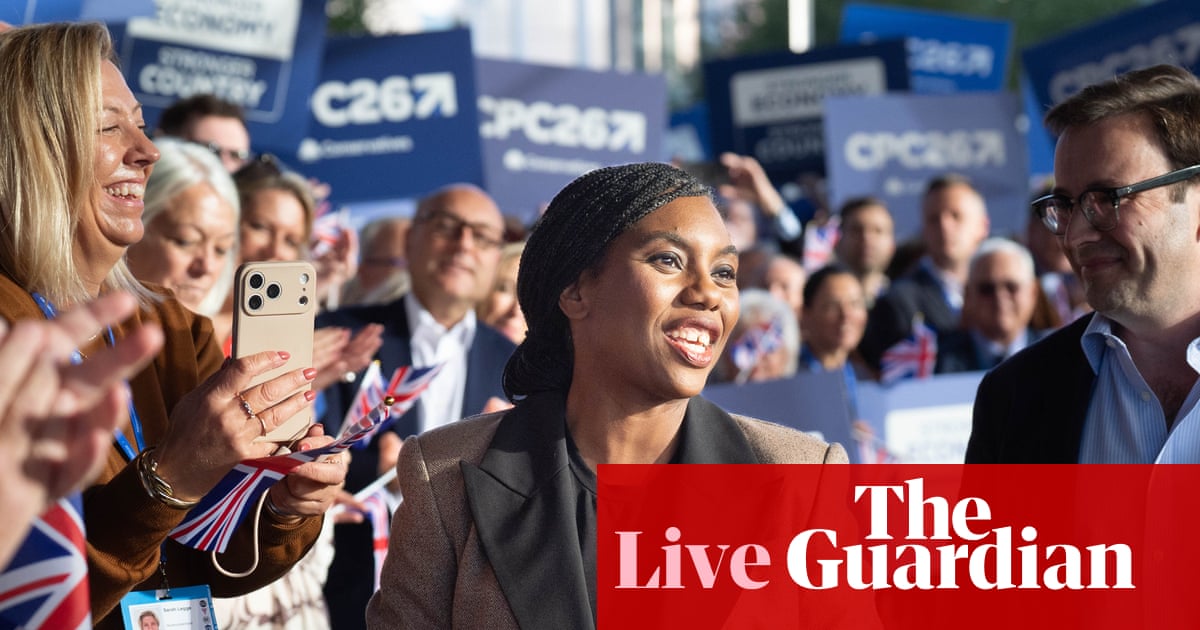
Kemi Badenoch, the leader of the Conservative Party in the UK, is set to deliver a keynote speech at her party's annual conference in Birmingham. The speech will frame the upcoming general election as a "battle for the soul of the nation," highlighting ideological differences with Labour under Prime Minister Andy Burnham. Badenoch plans to accuse Labour of wanting to reverse economic policies that failed in the past and presiding over what she calls a "tax doom loop" that is making everyone poorer.
Badenoch will argue that government should focus on core responsibilities like defense, borders, public order, and essential infrastructure, while allowing individuals more autonomy. She intends to present her party as fighting against excessive taxation and for economic growth. The Conservatives have already pledged £10 billion towards a UK air defense system and proposed reducing employer National Insurance contributions for workers aged 21 to 24.
In the speech, Badenoch will also announce cutting inheritance tax rates on estates worth more than £325,000, reflecting her party's commitment to reducing taxes. The Conservatives are currently trailing both Labour and Reform UK in opinion polls, making this a crucial moment for them to rally support ahead of the next election.
Written for “Battle For Britain's Soul” on 2026-10-07,
grounded in this article and the 6 other(s) covering the same event.
As Andrew McDonald and Megan McElroy point out in their London Playbook briefing, there are broadly two options if Kemi Badenoch wants to cut inheritance tax without getting rid of it completely.
asserted
Badenoch → point → it
They report:
There were persistent rumors and some reporting before this conference that the Tories were looking to scrap that tax altogether.
asserted
Tories → report → tax
But since then, Badenoch’s team has been making more cautious noises.
asserted
team → make → noises
Right-leaning papers including the Telegraph, Times and Sun all report this morning that Badenoch will cut IHT, but not scrap it.
asserted
Badenoch → lean → it
That would sit well with the broad theme of the speech on the state of the public finances, given inheritance tax is expected to raise more than £10 billion a year from next year onwards.
asserted
tax → sit → year
To put it another way: scrapping IHT would effectively cost the same as building a “Britannia Shield” every year.
asserted
scrapping → put → Shield
Instead: The Times’ Oliver Wright and co. reckon Badenoch will announce a cut to the 40% inheritance tax rate, which only applies to an estate’s value over £325,000 (or £500,000 if a home is given to a direct descendant).
asserted
home → reckon → descendant
If that is what Badenoch opts for … it’s still an expensive tax cut.
asserted
it → opt → what
Estimates from 2023, the last time the Tories were looking at this, reckoned a 10 percentage point cut to 30% would cost a few billion a year.
asserted
cut → look → billion
The other rumor doing the rounds is that she could change the thresholds at which IHT kicks in.
uncertain
IHT → do → which
Inheritance tax (IHT) s one of the most curious taxes in the Treasury’s armoury.
asserted
tax → s → armoury
It is one of the most unpopular of all taxes levied by HM Revenue and Customs, with polling showing strong support for getting rid of it entirely, even though most people never pay it.
asserted
people → levy → it
The explanation for this paradox is partly the visceral belief, widely shared, that parents should be able to pass on their assets to their children.
asserted
parents → share → children
(Another factor is that inheritance tax is also very unpopular with the sort of rich people who own newspapers, even though Kemi Badenoch claims they never have to pay.)
uncertain
they → own → newspapers
Speaking about IHT on the Today prograamme this morning, Helen Miller, director of the Institute for Fiscal Studies thinktank, said:
It’s a tax that is charged on estates when people die, but only around one in 20 estates will actually end up paying it.
The threshold for inheritance tax is £325,000, which means it is not charged on any estates worth less than that.
asserted
it → speak → that
If a home is being given away to children, the threshold rises to £500,000, and for couples the threshold rises to £1m.
asserted
threshold → give → m.
“So most people don’t go anywhere near the tax,” Miller said.
asserted
Miller → go → tax
There are more details of how the tax works here.
asserted
tax → be → ?
And here is a Commons library briefing on IHT including this chart showing how many people pay it.
asserted
people → include → it
Badenoch expected to propose inheritance tax cut in speech to Tories saying UK faces 'battle of ideas' over spending
Good morning.
asserted
UK → expect → spending
Kemi Badenoch is expected to announce cuts to inheritance tax (IHT) this morning in a keynote conference speech that will claim the next election will be a “battle of ideas” between a government spending ever more money, and a Conservative party determined to make the state live within its means.
uncertain
state → expect → means
The Tories have not confirmed that inheritance tax cuts will be proposed.
asserted
cuts → confirm → ?
Equally, they have done nothing at all to quash speculation that Badenoch will make an announcement along these lines, to the point where it is now hard to see how she can deliver a speech that does not mention IHT without causing huge disappointment to her supporters.
asserted
that → do → supporters
IHT is set to raise £15bn a year for the Treasury by the end of the decade, and Badenoch is expected to propose cutting it rather than getting rid of it completely.
asserted
Badenoch → set → it
While any tax announcement is likely to dominate the headline, the Tories are also set to publish a “savings plan” today that will explain where they will find the money for tax cuts, including for the £2.3bn cut to employer national insurance for young people announced by the party last night.
asserted
they → dominate → party
At their conference last year, the Conservatives said they had identified cuts to government spending worth £47bn, with £23bn coming from welfare.
asserted
23bn → say → welfare
Yesterday Helen Whately, the shadow work and pensions secretary, said she had found “billions more” in cuts, in addition to those on the table last year.
asserted
she → say → table
The Conservatives have released some extracts from Badenoch’s speech in advance, and she will focus on an assertion that there is now a firm dividing line between Labour and the Tories on public spending.
asserted
she → release → spending
She will say:
There is a fight coming in British politics.
asserted
She → say → politics
A fight that we have not seen in this country for more than half a century.
asserted
we → see → century
A battle that goes to the very core of who we are and what kind of country we want to be.
asserted
we → go → country
On one side we have a government that wants to wind back the clock to failed ideas of the past.
asserted
that → have → past
They believe economic growth is created by politicians.
asserted
growth → believe → politicians
They think government knows best.
asserted
government → think → ?
They think that your income, your pension and your savings are theirs to take and then hand out as they see fit.
asserted
they → think → ?
They claim that what they are doing is compassionate but we know that these ideas will make every single person in this country poorer.
uncertain
person → claim → country
Your bills will go up.
asserted
bills → go → ?
You will find it harder and harder to make ends meet.
asserted
ends → find → ?
Just because these ideas are delivered on TikTok doesn’t make them any less dangerous than they have always been.
asserted
they → deliver → TikTok
A renewed Conservative party fighting again for the belief that what people earn belongs to them, not government.
asserted
earn → renew → government
…and 3 more, not listed.
 The Aporia