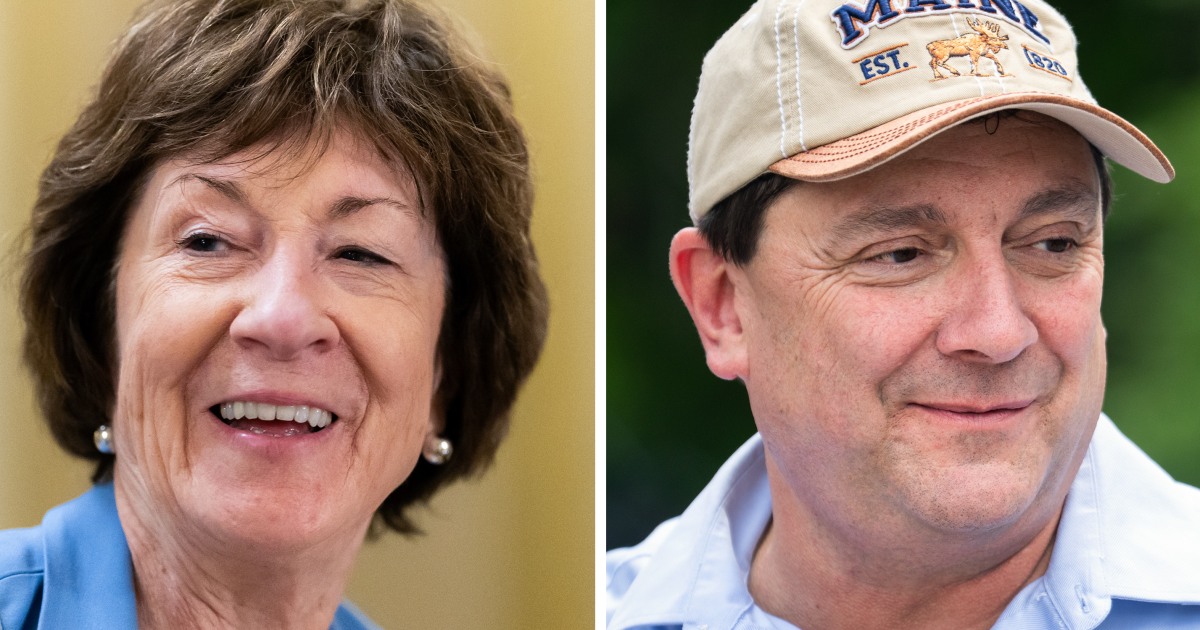
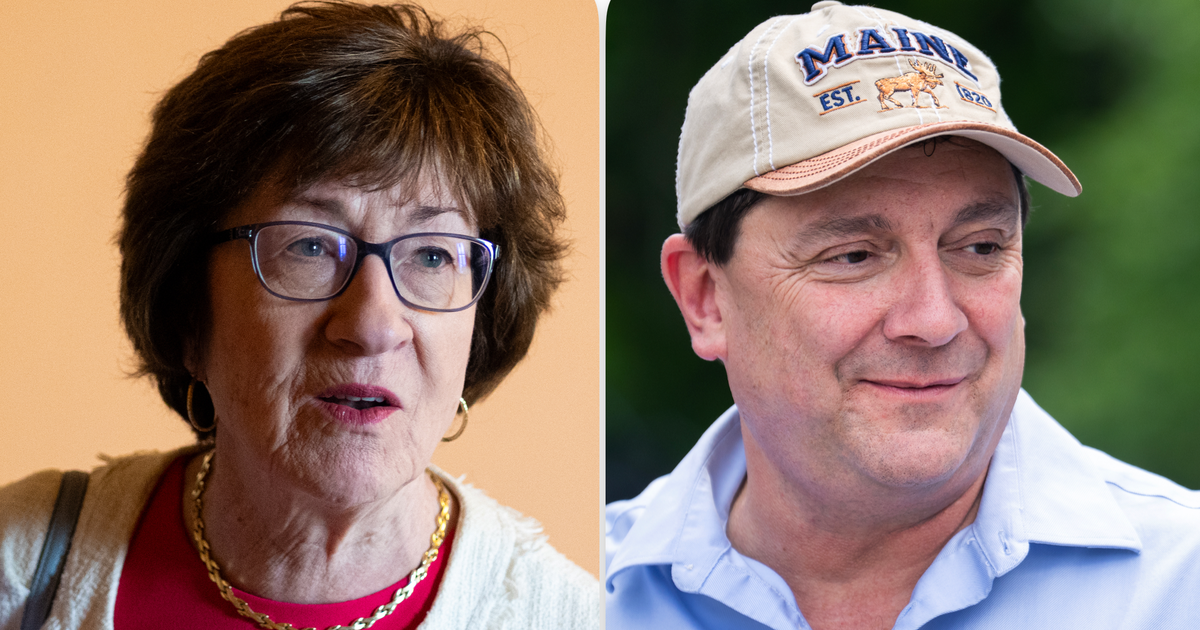
During a Maine Senate debate, Republican Senator Susan Collins distanced herself from President Donald Trump by emphasizing her independent voting record and noting she is “not exactly his favorite senator.” Democratic challenger Troy Jackson attempted to tie Collins to Trump through votes like confirming Supreme Court Justice Brett Kavanaugh. However, Collins highlighted that she voted against Trump more often than any other senator did during the Biden presidency on issues such as tariffs and immigration policy. This debate reflects ongoing efforts by Democrats to capitalize on Trump’s unpopularity in Maine ahead of November elections.
Written locally by qwen2.5:14b on 2026-10-07,
using this article's own text rather than the other coverage of the
same event (that is the story summary below).
Story summary
In the first Senate debate in Maine on Tuesday, Republican incumbent Susan Collins faced Democrat Troy Jackson. Jackson accused Collins of being an "arsonist," saying she helped create problems and now wants credit for fixing them. When questioned about a potential visit by President Donald Trump to campaign in Maine ahead of midterms, Collins dodged the question and suggested Trump would not come, noting they had no communication regarding such a trip.
Collins, seeking her sixth term despite representing a state that voted Democratic in recent presidential elections (including Kamala Harris in 2024), emphasized her independence from Trump. She highlighted instances where she opposed his policies and stressed her seniority as chair of the Senate Appropriations Committee, noting she had secured $1.5 billion in federal funds for Maine projects.
Jackson criticized Collins' support for Brett Kavanaugh's confirmation to the Supreme Court, which later led to a rollback of abortion rights. He also attacked her record on voter ID laws and argued that she has aligned too closely with Trump's agenda despite distancing herself during debates.
Written for “Maine Senate Debate Collides Over Trump” on 2026-10-07,
grounded in this article and the 7 other(s) covering the same event.
Why this leaning score
The model judged this article politically coded and scored it -0.45, but all 3 of its quote(s) are attributed speech - words the article quotes from someone, not the article's own narration, so the score is not published.
Written under an earlier scoring contract, which gave a paragraph
rather than checkable quotes. Re-analysing this article replaces it.
Leaning score withheld for article 62024: attributed speech only · logged 2026-10-07
In her first Maine Senate debate against Democrat Troy Jackson, Republican Sen. Susan Collins sought to distance herself from President Donald Trump, stressing her independent voting record and noting she is "not exactly his favorite senator."
asserted
she → seek → record
Democrats are targeting the Maine seat to gain control of the Senate.
asserted
Democrats → target → Senate
Following Trump’s defeat in the state in 2024, the party hopes to unseat the five-term moderate Republican, who has previously survived competitive challenges.
asserted
who → follow → challenges
Jackson, a former logger and state lawmaker, spent much of the hour-long debate attempting to link Collins to the president.
asserted
Jackson → spend → president
He pointed to her pivotal vote confirming Supreme Court Justice Brett Kavanaugh, a Trump nominee who later helped overturn abortion rights.
asserted
who → point → rights
Though Collins supports abortion rights and said Kavanaugh assured her the precedent was settled law, she recently stated she does not regret her vote.
asserted
she → support → vote
"Would you trust her to pick the next Supreme Court justice?" Jackson asked.
asserted
Jackson → trust → justice
Jackson also highlighted her procedural vote to advance the president’s 2025 tax and spending bill, though Collins ultimately broke party lines to vote against the final measure.
asserted
Collins → highlight → measure
Collins countered that she voted against Trump more frequently than she did Joe Biden during his presidency, citing her opposition to administration policy on tariffs, immigration enforcement, and Iran.
asserted
she → counter → tariffs
"I voted against my party more than another other senator on either side of the aisle," Collins said.
asserted
Collins → vote → aisle
The focus on the president comes as an AP-NORC poll in September found just 31% of U.S. adults approved of how he is handling the presidency, down significantly from when he assumed office last year.
asserted
he → come → office
As the president holds national rallies for GOP candidates ahead of November, debate moderators asked Collins if she would stand beside him if he campaigns in Maine.
asserted
he → hold → Maine
"I’m not exactly his favorite senator," she said, adding, "I would say that he’s not coming to Maine."
asserted
he → ’m → Maine
Collins did not vote for Trump in 2016 and voted to convict him following his 2021 impeachment over the Jan. 6 Capitol riot.
asserted
Collins → vote → riot
In January, she joined a few Republicans supporting a failed effort to curb the president’s authority to use military force in Venezuela, leading Trump to declare on social media that they "should never be elected to office again."
asserted
they → join → office
Emphasizing her seniority, Collins said her position secures vital funding for Maine: "Leadership matters in Washington."
asserted
Leadership → emphasize → Washington
She sought to shift blame for high energy and housing costs onto Jackson, citing his tenure as state Senate president and criticizing "Augusta’s failed policies".
asserted
She → seek → policies
The debate underscored contrasting appeals to working-class voters.
asserted
debate → underscore → voters
When Collins highlighted removing goods like pulp, concrete, and road salt from Trump’s trade war with Canada, Jackson quipped, "we can’t eat road salt."
asserted
we → highlight → salt
The candidates are set to participate in three more debates later this month.
asserted
candidates → set → debates
 The Aporia