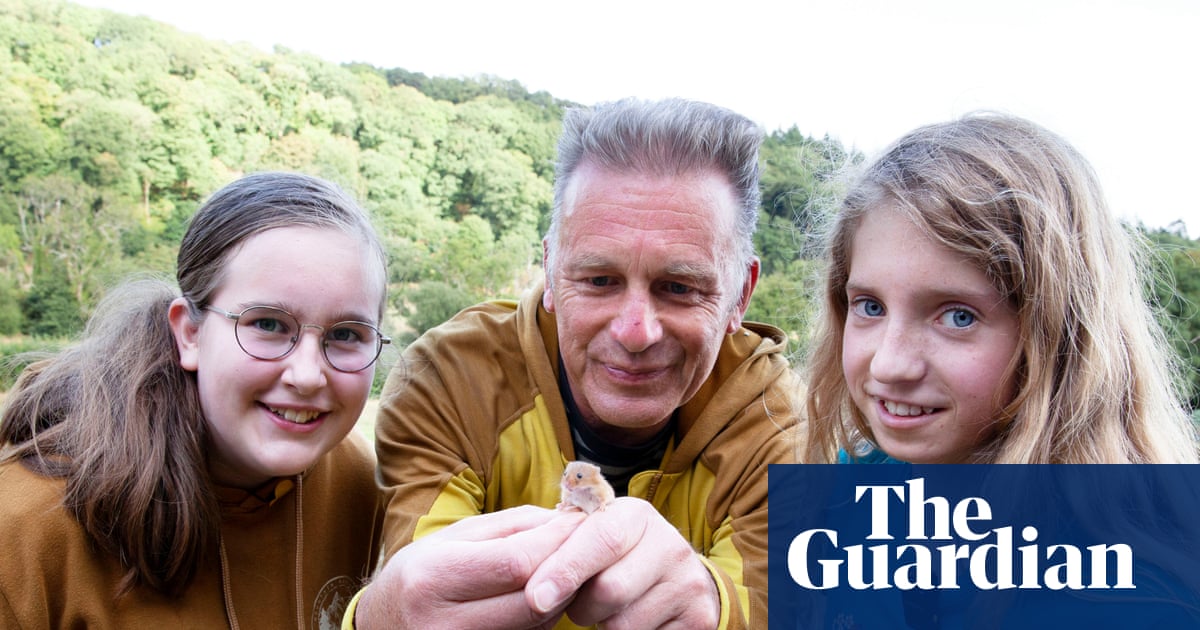
Two teenage friends, Eva Wishart and Emily Smith, have launched a conservation project called Wild Pets in Devon aimed at reversing the decline of harvest mice populations. The initiative seeks 20 local children aged eight to thirteen to rear hundreds of harvest mice at home for eventual release into nature reserves. Each participant will receive a pair of mice along with necessary equipment following a training session next spring, with the goal of releasing around 250 mice in September. Eva and Emily’s project has gained support from ecologists like Derek Gow and public figures such as Chris Packham, who praised its innovative approach to wildlife conservation.
Written locally by qwen2.5:14b on 2026-10-07,
using this article's own text rather than the other coverage of the
same event (that is the story summary below).
Children in Devon are being invited to become “citizen captive breeders”, rearing harvest mice at home for release into the wild to help revive endangered nature.
asserted
Children → invite → nature
Wild Pets, a new conservation project launched by two 14-year-old friends, is seeking 20 Devon-based children to rear hundreds of mice after the duo’s own successful restoration efforts.
asserted
Pets → launch → efforts
Eva Wishart and Emily Smith bred several hundred harvest mice in tanks in their garages and released them on a nature reserve in Devon, south-west England, where the mice have begun breeding in the wild again.
asserted
mice → breed → wild
The tiny harvest mouse, the UK’s smallest native rodent, is the only British mammal to have a prehensile tail, which can grasp or hold objects.
asserted
which → have → objects
It uses its tail to clamber up grass stems, which were once commonplace in fields, meadows and scrubland but have become far more scarce because of agricultural intensification.
asserted
which → use → intensification
Eva founded Wild Pets after feeling sorry for traditional pets such as hamsters and goldfish that are confined to cages and small spaces, while also worrying about the extinction crisis and ecological collapse.
asserted
that → found → crisis
She began breeding harvest mice aged 10.
asserted
She → begin → mice
“I took them to school once to do a talk when I was 10,” she said.
asserted
she → take → talk
“It was the most popular I’ve ever been and everyone voted that we should keep them.
asserted
we → vote → them
So then we kept them in school in a big tank in the corner for six weeks.
asserted
we → keep → weeks
They had loads of babies.”
asserted
They → have → babies
In 2025 her Wild Pets project was a runner-up in Prince William’s junior Earthshot competition, with crowdfunding supporting the first harvest mouse release.
asserted
crowdfunding → support → release
Advised by the ecologist and rewilder Derek Gow, who has managed long-running captive-breeding programmes for water voles, beavers, storks and other mammals and birds, Eva and Emily last year released hundreds of captive-bred mice into a nature reserve.
asserted
Eva → advise → reserve
The new population survived and maternal nests – distinctive grass balls expertly woven and suspended in tussocky grassland or scrub by the females – were found on the reserve this year.
asserted
nests → survive → reserve
Chris Packham called the Wild Pets concept “truly sensational” on BBC’s Springwatch.
asserted
Packham → call → Springwatch
The expanded project, supported by Gow, the Devon Environment Foundation, Mid Devon district council and the Naturesave Trust, is seeking applications from children aged eight to 13, who can apply via the Wild Pets website.
asserted
who → support → website
Eva said young wild breeders would require a certain sense of “responsibility but most of all, really, enthusiasm, because if you’re really enthusiastic and passionate about something, with a bit of help, you’ll probably do it.
asserted
you → say → it
Mainly we’re just looking for passionate kids.”
asserted
we → look → kids
Wild Pets will provide a pair of harvest mice and all the equipment after a training day next spring at Gow’s Rewilding Coombeshead centre in Devon.
asserted
Pets → provide → Devon
The children will breed the mice, which can have multiple litters over the summer, with the aim of releasing 250 next September.
asserted
which → breed → 250
Emily said taking even modest action to help wildlife alleviated feelings of anxiety about environmental destruction.
asserted
taking → say → destruction
“It definitely makes you feel a lot better in the long run.
asserted
you → make → run
It just makes you feel like you’re actually doing something rather than just watching it all happen,” she said.
asserted
she → make → something
Eva added: “Everything’s really scary at the moment for our future, on the news and at school.
asserted
Everything → add → school
Everything’s very dark.
asserted
Everything → ’ → ?
So doing something, even if it’s only a tiny thing in a tiny corner of Devon, helps us feel a bit better.”
asserted
us → do → Devon
Packham said: “It’s so inspirational when young people think of an idea and then make it happen.
asserted
it → say → idea
It’s so, so important.
asserted
It → ’ → ?
What I like about young people doing things is that they think clearly, speak clearly and they get things done.
asserted
things → like → things
The founders of Wild Pets hope to expand the wild breeding programmes to other small native species that should be more commonplace in Britain such as common lizards, stag beetles, mole crickets and glowworms.
asserted
that → hope → lizards
Eva said: “In the first year we’re just inspiring 20 kids, but then, next year, we’re going to inspire the whole country to become conservationists and care about the natural world.”
asserted
we → say → world
 The Aporia