Story summary
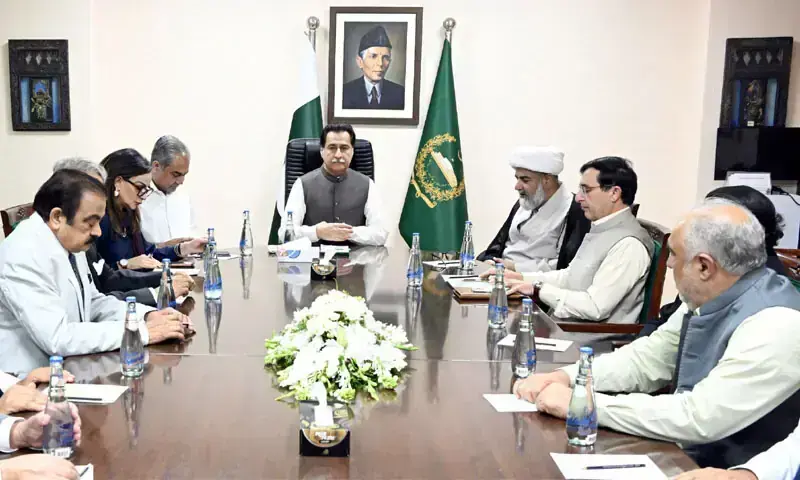
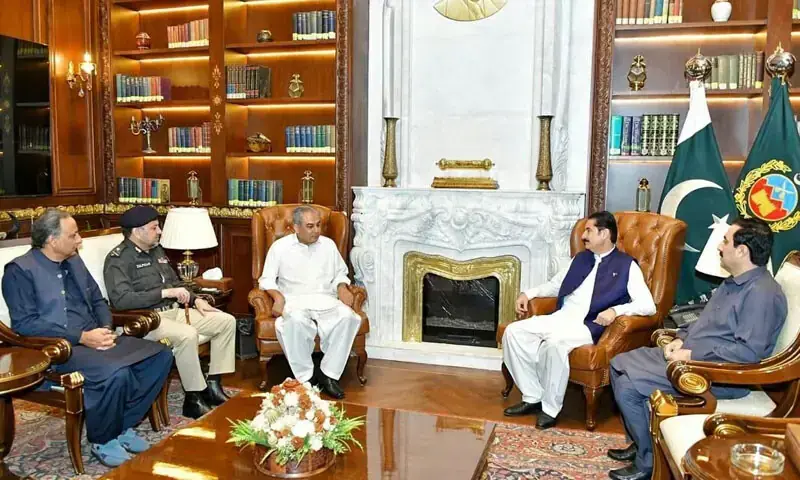
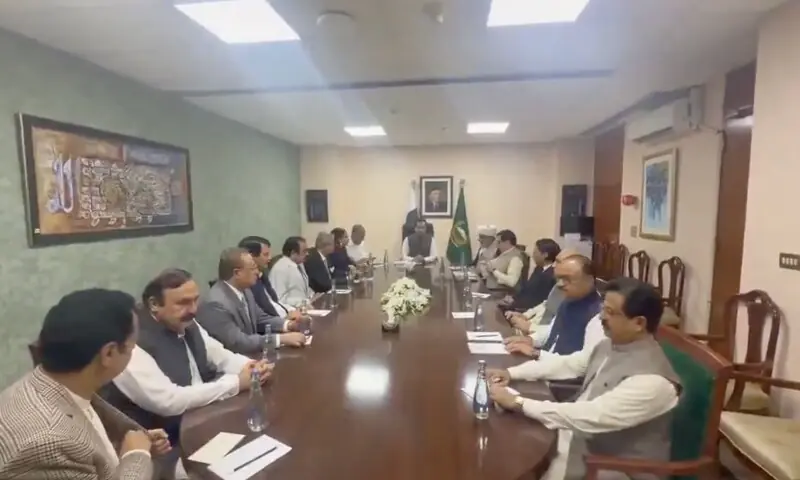
In late September 2026, Pakistan faced escalating tensions as the opposition party Pakistan Tehreek-e-Insaf (PTI) planned a long march on Islamabad starting October 4th to demand the release of jailed former Prime Minister Imran Khan. The federal government, led by Shehbaz Sharif and supported by the PPP, initiated talks in an attempt to defuse the crisis. On October 2nd, representatives from both sides met at the National Assembly Speaker Sardar Ayaz Sadiq's chamber for a marathon session aimed at resolving key differences but ended without a breakthrough due to mutual distrust and conflicting accounts of progress made.
The opposition demanded unconditional talks with Khan and proper medical treatment, while the government threatened to impose governor’s rule in Khyber Pakhtunkhwa if protests disrupted security. Despite these tensions, both sides agreed to continue discussions on October 3rd at 2pm, facilitated by Speaker Sadiq. The PPP joined as a mediator between the PTI and the government but insisted that national unity against terrorism should take precedence over political dissent.
Throughout the talks, opposition leaders warned of dire consequences if their demands were not met, while federal ministers maintained that security concerns would force them to impose emergency measures in KP. Despite these threats, both sides acknowledged the importance of dialogue in resolving the crisis as time ran out before the scheduled march. However, significant trust deficits remained unresolved, complicating efforts for a peaceful resolution ahead of PTI’s planned protest on October 4th.
Written for “Pakistan Government Opposition Talks” on 2026-10-07,
grounded in this article and the 13 other(s) covering the same event.
THE talks between the government and the opposition were doomed from the outset, even though the fact that the two sides sat face to face at the negotiating table was a positive sign.
asserted
sides → doom → table
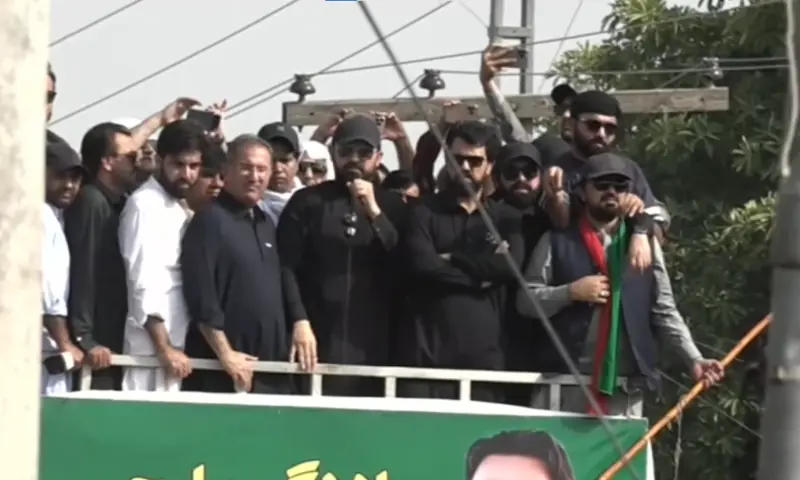
The meeting took place under the shadow of the PTI’s threatened long march to Islamabad, while the government brandished the option of governor’s rule in KP.
asserted
government → take → KP
The capital was sealed off with containers and the highways were blocked.
asserted
highways → seal → containers
Days before the talks, the military leadership warned against any repeat of a May 9-like situation — a clear message to the opposition not to cross the red line.
uncertain
leadership → warn → line
Some opposition leaders, for their part, wanted a negotiated deal to bring down the political temperature.
asserted
leaders → want → temperature
The prolonged discussions suggested a measure of seriousness on both sides, but mutual distrust and brinkmanship blocked any breakthrough.
uncertain
distrust → suggest → breakthrough
The two sides gave contrary accounts of why the talks collapsed after a marathon sitting.
asserted
talks → give → sitting
The government contended that the opposition backed out after agreeing to a final draft; the other side denied this, saying the differences were too wide to bridge.
asserted
differences → contend → this
That so-called final draft is not in the public domain, but two major points of difference appear to have defeated the agreement.
asserted
points → call → agreement
The PTI insisted on a meeting with Imran Khan, while the government wanted the KP provincial government to give unqualified support to the counterterrorism operation being carried out by the security forces.
asserted
government → insist → forces
While conceding to the opposition’s demand that the former prime minister be allowed to meet his family and his lawyers, as ordered by the Islamabad High Court, and agreeing to implement the Supreme Court order to arrange his medical treatment, the government was not prepared to let PTI leaders meet and consult him before finalising the agreement — a condition it found unacceptable.
asserted
it → concede → agreement
The prevailing political instability has provided greater space to the militants.
asserted
instability → prevail → militants
The real cause of the stalemate, however, was the issue of provincial government support, and taking ownership of a planned counterterrorism military operation in five southern districts, including the merged Fata regions.
asserted
cause → take → regions
For the provincial government this was an extremely tricky matter: it had strongly opposed any kinetic operation involving the displacement of the population, and the bitter memories of earlier operations had created intense public opposition to any such action.
asserted
memories → oppose → action
A multiparty meeting called by the provincial government early this year — whose participants included provincial legislators belonging to PML-N, PPP and ANP — had unanimously opposed any large-scale military operation.
asserted
participants → call → operation
Considering this, it was hard for the PTI to take ownership of a highly unpopular action.
asserted
PTI → consider → action
It may be true that the PTI has no clarity over how to combat the menace of terrorism that has swept a large part of the province.
uncertain
that → have → province
Its inaction, often seen as capitulation, has added to the problem.
asserted
inaction → see → problem
The ill-equipped police and Counter Terrorism Department have been a major target of militants, resulting in a virtual collapse of the administration in the troubled districts.
asserted
police → equip → districts
That inaction could also be attributed to the ongoing confrontation between the PTI and the establishment-backed federal government.
uncertain
inaction → attribute → PTI
Then there is the question of whether we have a coherent, overarching national security policy and counterterrorism strategy to deal with this existential threat.
asserted
we → be → threat
It is all left to the security establishment, with hardly any policy input from the civilian leadership.
asserted
It → leave → leadership
KP has witnessed a strong resurgence of militancy over the last five years, which has claimed the lives of thousands of civilians and security personnel.
asserted
which → witness → civilians
Last year saw the highest number of terrorist attacks in the province since 2013, despite claims of successful intelligence operations that killed hundreds of terrorists.
uncertain
that → see → terrorists
The prevailing political instability has provided greater space to the militants, who are now better equipped and better organised, and who have extended their activities to other parts of the province.
asserted
who → prevail → province
Pakistan has blamed Afghanistan’s Taliban regime for providing sanctuaries and aiding the TTP, and each major terrorist attack is now answered by Pakistani strikes across the border.
asserted
attack → blame → border
The closure of the border and of trade between the two countries over the past year has directly affected the local population and added to the tension between Peshawar and Islamabad.
asserted
closure → affect → Peshawar
There is a serious disconnect in the policy the establishment pursues in dealing with terrorism, and the government needs to address those concerns.
asserted
government → be → concerns
There are no two views about the imperatives of a national security policy, but there is also a need to bring all stakeholders on board for an overarching policy that should not rest entirely on kinetic operations.
asserted
that → be → operations
It is important to address the social and economic issues in order to win public support in the affected areas.
asserted
It → address → areas
The widening trust gap between the state and the people, and the politics of confrontation, are the biggest hurdles in combating terrorism.
asserted
gap → widen → terrorism
With little hope of the two sides returning to the negotiating table, the confrontation has now escalated: the PTI has begun its protest march from the southern KP districts.
asserted
PTI → return → districts
It is apparent that the PTI has changed its strategy of marching directly on Islamabad.
asserted
PTI → change → Islamabad
Instead, the party now plans to mobilise its supporters in the province and camp close to the capital rather than march into the city.
asserted
party → plan → city
It is the first instance of a chief executive leading a protest that paralyses his own province.
asserted
that → lead → province
Meanwhile, the federal government is considering removing the PTI government and imposing a state of emergency or governor’s rule in the province.
asserted
government → consider → province
That would be an extremely dangerous move in a province already facing terrorist attacks, rising nationalism and tension on its border.
asserted
That → face → border
Any such move by a state already fighting a separatist movement in Balochistan and a revolt-like situation in Azad Kashmir would be disastrous.
asserted
move → fight → Kashmir
The province is sitting on a powder keg, and the removal from power of an elected government that enjoys an overwhelming majority in the provincial assembly and broad popular support could ignite it in a way the state would struggle to extinguish.
uncertain
state → sit → way
We never learn lessons from our own history, and make the same mistake again and again and expect different results.
asserted
We → learn → results
 The Aporia