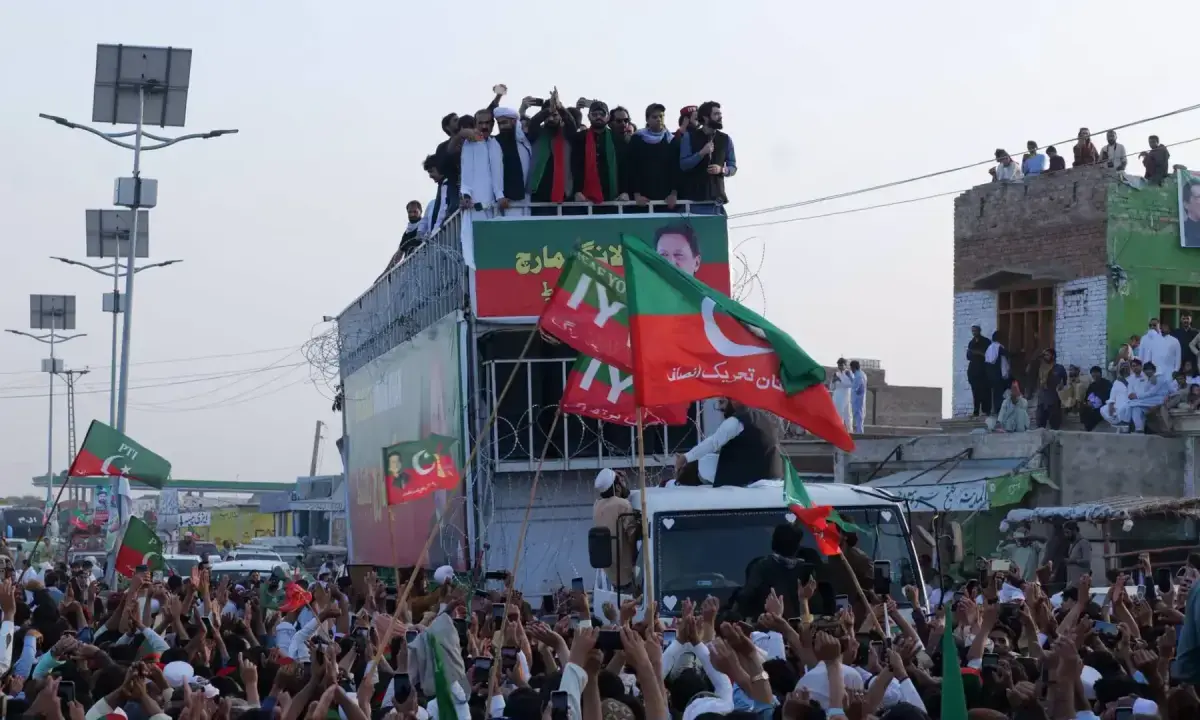
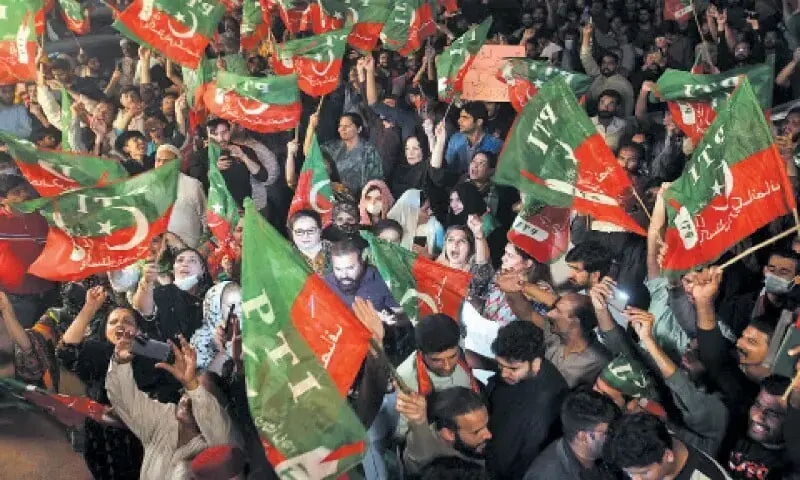
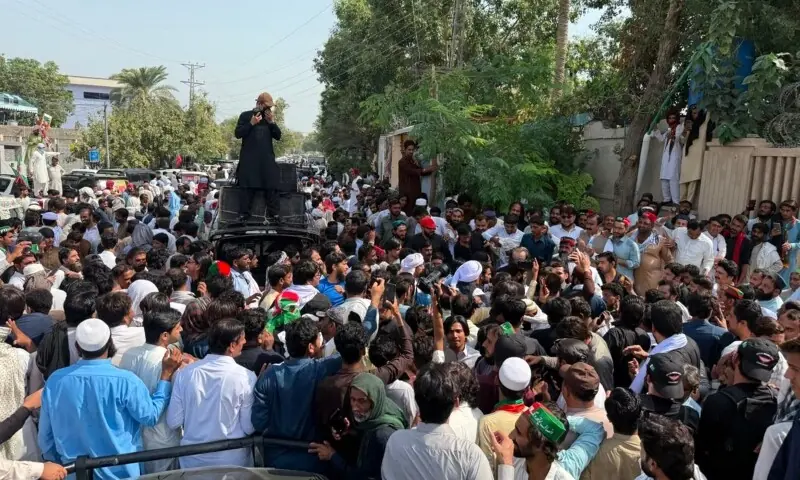
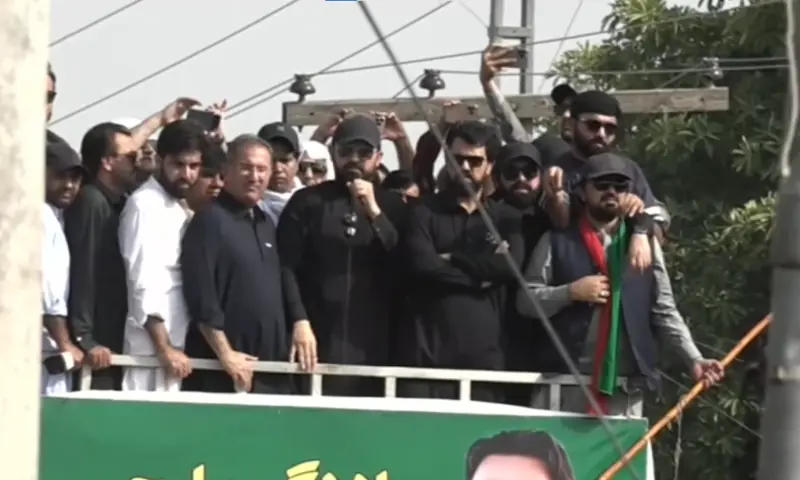
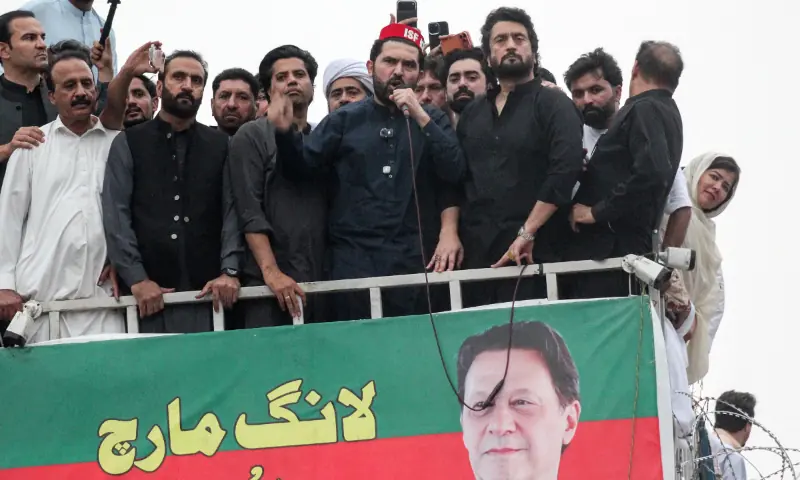
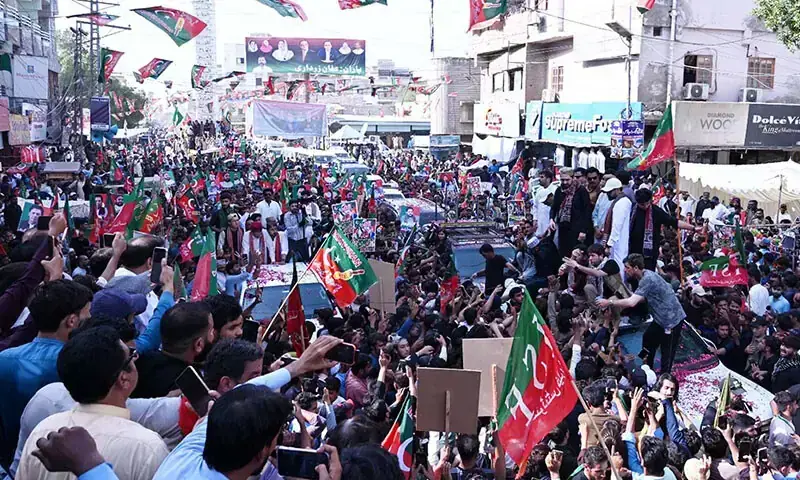
Maulana Fazlur Rahman, leader of Jamiat Ulema-i-Islam (JUI-F), advised the Pakistani government on Tuesday not to hinder PTI's planned protest march toward Islamabad, emphasizing that peaceful protests are a democratic right. Alongside other opposition leaders outside his residence, Maulana Fazl urged for mutual respect and dialogue between the government and political parties, criticizing unnamed cabinet members who questioned the loyalty of PTI members to Pakistan. He also expressed concern over ongoing unrest in Khyber Pakhtunkhwa and called for a balanced approach in addressing terrorism operations there.
Written locally by qwen2.5:14b on 2026-10-07,
using this article's own text rather than the other coverage of the
same event (that is the story summary below).
Story summary
On Tuesday, the JUI-F chief Maulana Fazlur Rahman urged the Pakistani government not to hinder PTI's planned protest march towards Islamabad. He argued that protests are a democratic right and emphasized trusting political parties when they pledge peaceful demonstrations, specifically referring to the PTI's intentions. A meeting took place at Maulana’s residence involving opposition leaders such as Senate opposition leader Allama Raja Nasir Abbas, Asad Qaiser, Akhundzada Hussain, Salman Akram Raja, alongside JUI-F members like Senator Kamran Murtaza and others. Rahman criticized the government's measures to prevent PTI protesters from entering Islamabad, asserting that these actions were unnecessary if mutual trust existed between parties.
Written for “Political Protest Demands” on 2026-10-07,
grounded in this article and the 0 other(s) covering the same event.
Why this leaning score
The article's own words the score was based on. Each is quoted
verbatim and was checked against the article text before being
stored, so you can find it in the original.
Leaning: leans left for article 61811 (high confidence, 2 verified quotes) · logged 2026-10-07
Jamiat Ulema-i-Islam (JUI-F) chief Maulana Fazlur Rahman on Tuesday advised the government not to obstruct the PTI long march heading towards Islamabad, as protests were a democratic right enjoyed by all political parties.
asserted
protests → advise → parties
Speaking to the media alongside opposition leaders outside his residence, the JUI-F leader also urged the government to trust the PTI’s intention regarding a peaceful protest.
asserted
leader → speak → protest
When political parties say they will remain peaceful, their word should be trusted, he said in a comment on measures taken by the government to stop the PTI protesters from entering the federal capital.
asserted
he → say → capital
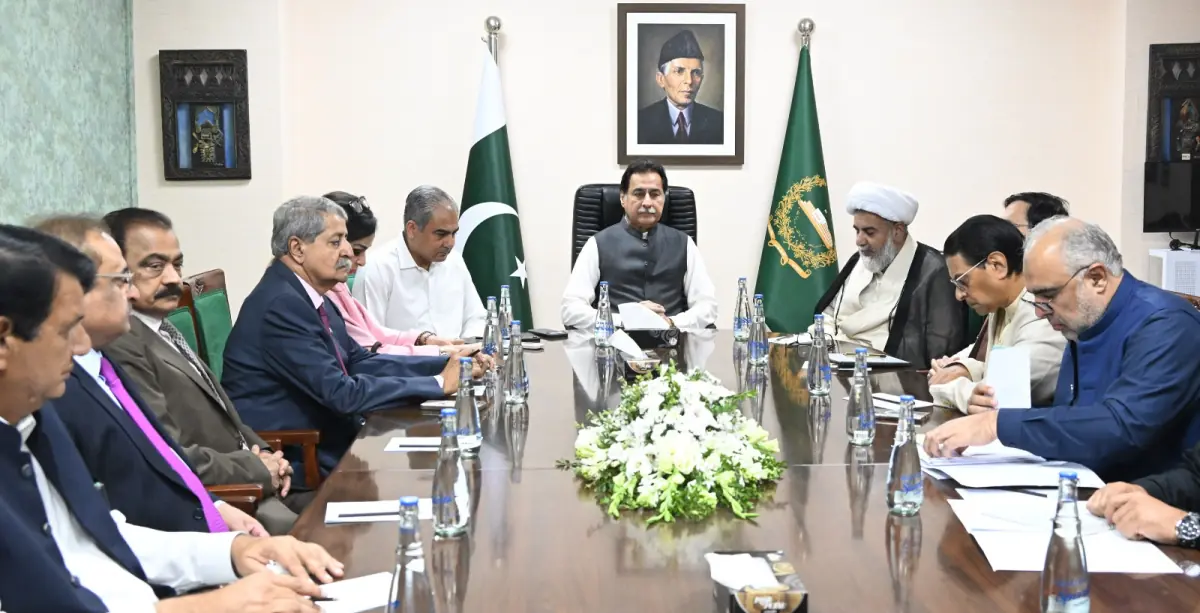
A delegation of opposition parties, including Senate opposition leader Allama Raja Nasir Abbas, Asad Qaiser, Akhundzada Hussain, Salman Akram Raja and other leaders, arrived at Maulana’s residence, while the JUI-F side included Maulana Fazlur Rahman, Senator Kamran Murtaza and other party leaders.
asserted
side → include → Rahman
The JUI-F leader claimed that the dialogue between the government and the opposition could have been successful if ‘behind-the-scenes forces’ had not participated in the process.
uncertain
forces → claim → process
According to the veteran politician, any dialogue required mutual give-and-take to move forward.
uncertain
dialogue → accord → give
Maulana Fazl said democratic and political forces believe in dialogue, adding that the opposition parties held consultations in parliament but the attitude of those in power towards the opposition was visible to all.
asserted
attitude → say → all
Without naming the cabinet members who questioned the loyalty of the PTI members towards the country, Maulana Fazl said, “We are all Pakistanis, and we are all patriots.
asserted
we → name → country
We stand with the Constitution and the state.
asserted
We → stand → Constitution
The JUI-F chief said he received an invitation from the delegation of the opposition parties to participate in the multi-party conference.
asserted
he → say → conference
“We asked the opposition to consider this in detail, and we, too, will consider it within our party,” he said, adding that a joint agenda should emerge through the consultation of all parties.
asserted
agenda → ask → parties
Maulana Fazl also countered the talks of an anti-terrorism operation in Khyber Pakhtunkhwa, saying operations had been conducted from Swat to Waziristan, but the people there had not been able to return to their homes due to unrest.
asserted
people → counter → unrest
He said the provincial government in KP had been paralysed due to ongoing lawlessness, adding that the situation in the province continued to deteriorate.
asserted
situation → say → province
“How long will we continue to conduct operations on the pretext of fighting terrorism?” he added.
asserted
he → continue → terrorism
Speaking on the occasion, Senator Allama Raja Nasir Abbas said that the delegation arrived at Maulana’s residence soon after he returned from Umrah to congratulate him and invite him to participate in the conference.
asserted
he → speak → conference
“We are all children of Pakistan; we cannot remain indifferent to the difficulties facing this country.
asserted
we → remain → country
The situation in Pakistan is deteriorating day by day,” he said.
asserted
he → deteriorate → day
He added that the opposition sought a consensus-based agenda, since an agenda formulated through consultation would contain solutions to the problems facing the entire country.
asserted
agenda → add → country
He said extremist tendencies flourish where the political process is halted and added that Maulana Fazl rejected the imposition of the governor’s rule and a state of emergency in KP.
asserted
Fazl → say → KP
Salman Akram Raja, PTI secretary general, said that a rift has been created between the public and the state through coercion.
asserted
rift → say → coercion
We will win this fight,” he added.
asserted
he → win → fight
 The Aporia