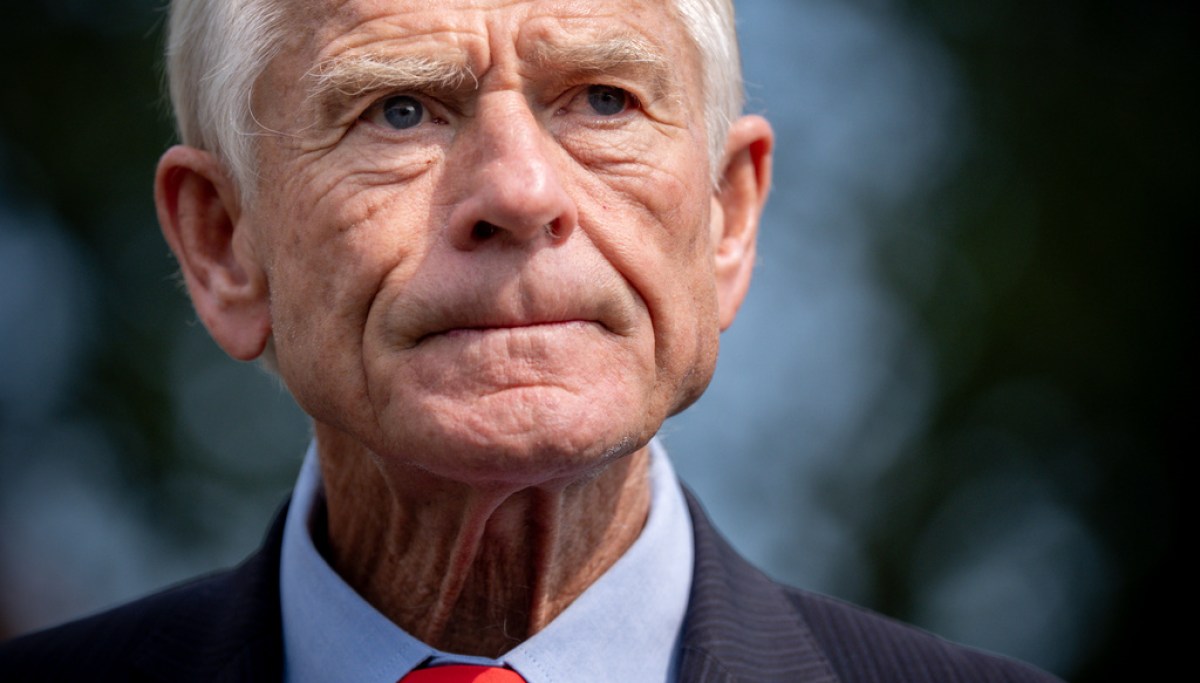
White House trade adviser Peter Navarro asked the Supreme Court on Tuesday to review his conviction for contempt of Congress in a challenge that holds the potential to strengthen the defenses available to Trump administration officials facing subpoenas if Democrats retake the House in November.
asserted
Democrats → ask → November
America First Legal and Holtzman Vogel filed a joint petition on Navarro’s behalf, asking the nine justices to require prosecutors to prove that a witness knew defying a congressional subpoena was unlawful.
asserted
defying → file → subpoena
According to a copy first obtained by the Washington Examiner, lawyers argued that he should have been allowed to present evidence that he believed executive privilege prevented him from cooperating with the House Jan. 6 committee, even if that belief was mistaken.
uncertain
belief → accord → committee
“High-ranking officials should not have to worry about going to jail for a good-faith belief that executive privilege prohibited them from complying with a congressional subpoena,” the 151-word petition reads.
asserted
petition → rank → subpoena
The request carries implications far beyond Navarro’s effort to overturn the two misdemeanor convictions for which he served four months in federal prison in 2024.
asserted
he → carry → 2024
His petition arrives as Democrats in Washington are preparing investigations for a possible return to House control in January 2027, while President Donald Trump’s allies are organizing legal defenses for officials who could be called to testify or produce records.
uncertain
who → arrive → records
A ruling adopting Navarro’s position would raise the government’s burden in criminal contempt cases and allow defendants to contest whether they knowingly broke the law.
asserted
they → adopt → law
It would leave Congress’s subpoena authority intact but could give administration officials another line of defense if disputes over executive privilege led to prosecution.
uncertain
disputes → leave → prosecution
Rep. Robert Garcia (D-CA), the House Oversight and Government Reform Committee ranking member, has identified Trump family business dealings, the administration’s handling of the Jeffrey Epstein investigation, and immigration enforcement among his investigative priorities, according to a September report by the Associated Press.
uncertain
Garcia → identify → Press
Democrats are also preparing to pursue information from businesses outside the administration.
asserted
Democrats → prepare → administration
Republican allies have begun preparing for that possibility.
asserted
allies → begin → possibility
The Washington Examiner reported last month that the Oversight Project was recruiting lawyers to defend Trump allies and administration officials.
asserted
Project → report → allies
Former Justice Department official Jeff Clark said he would lead a new law firm under the organization’s banner to challenge what he described as abuses of congressional oversight, disciplinary proceedings, and criminal prosecutions.
asserted
he → say → oversight
Navarro’s case seeks a change in the legal standard that those lawyers could invoke.
uncertain
lawyers → seek → that
The petition argues the legal dispute centers on the word “willfully” in the federal contempt statute used against Navarro.
asserted
dispute → argue → Navarro
Under the District of Columbia Circuit Court of Appeals’s interpretation, prosecutors must establish that a witness deliberately failed to comply with a subpoena.
asserted
witness → establish → subpoena
They do not have to prove the witness understood that refusal was illegal.
asserted
refusal → have → ?
“If a White House adviser can go to prison for honoring what he believed was the president’s claim of executive privilege, then no adviser will ever again give a president candid advice,” Navarro told the Washington Examiner, adding, “This petition is not just about me.
uncertain
petition → go → me
The Supreme Court should take the case to address this serious separation of powers issue.”
asserted
Court → take → issue
Navarro’s lawyers argued that a 1961 decision, Licavoli v. United States, set the wrong standard and conflicts with later Supreme Court decisions interpreting willfulness in criminal laws, including Ratzlaf v. United States (1994), Bryan v. United States (1998), and Safeco Insurance Co. of America v. Burr (2007).
asserted
decision → argue → Burr
The petition also drew a distinction between two provisions of the contempt statute.
asserted
petition → draw → statute
One provision punishes “willfully” defaulting on a subpoena, while the other addresses witnesses who appear but refuse to answer pertinent questions.
asserted
who → punish → questions
Giving both provisions the same intent requirement, they argued, deprives “willfully” of independent meaning.
asserted
they → give → meaning
Navarro’s lawyers contend that the trial judge improperly instructed the jury that his understanding of executive privilege could not provide a defense, thereby preventing jurors from considering evidence they argue was directly relevant to whether he was guilty.
uncertain
he → contend → evidence
The petition argued that Navarro was entitled to present that defense regardless of whether it would have persuaded the jury.
asserted
it → argue → jury
America First Legal President Gene Hamilton accused the Biden administration’s Justice Department of using the prosecution to punish a political opponent.
asserted
Hamilton → accuse → opponent
“The Supreme Court should take this case and reverse the conviction,” Hamilton said in a statement announcing the petition.
asserted
Hamilton → take → petition
Navarro was convicted in September 2023 after failing to provide documents or appear for a deposition before the committee investigating the Jan. 6, 2021, Capitol riot.
asserted
Navarro → convict → riot
Investigators sought information about his public descriptions of efforts to delay certification of Trump’s 2020 election defeat.
asserted
Investigators → seek → defeat
A three-judge D.C. Circuit panel unanimously upheld the convictions in July.
asserted
panel → uphold → July
The full court denied rehearing Aug. 28, with no judge requesting a vote.
asserted
judge → deny → vote
The appeals court found that Navarro had not established that Trump invoked executive privilege for the committee’s subpoena.
asserted
Trump → find → subpoena
It also emphasized that some requested information concerned Navarro’s public statements and private activities, which were not protected by the privilege.
asserted
which → emphasize → privilege
Navarro first asserted executive privilege “unilaterally without consulting with or receiving direction from President Trump,” Judge Patricia Millett wrote for the panel.
asserted
Millett → assert → panel
The petition more specifically seeks review of the separate question of whether Navarro’s belief that he was protected should have been considered by the jury, regardless of whether privilege was properly invoked.
asserted
privilege → seek → jury
Navarro’s lawyer, Abhishek Kambli, emphasized that broader objective after the appeals court denied rehearing in August.
asserted
court → emphasize → August
“The issue is bigger than Dr. Navarro,” Kambli said at the time.
asserted
Kambli → say → time
“Whether a White House adviser, Republican or Democrat, can be prosecuted and imprisoned for acting on a good-faith belief that a president invoked executive privilege, while being forbidden from presenting that belief to the jury.”
asserted
president → prosecute → jury
Democratic control of the House would not, by itself, give the party authority to bring federal criminal charges.
asserted
control → give → charges
Enforcement of the criminal contempt statute runs through the Justice Department, which has maintained that prosecutors retain discretion over congressional referrals.
asserted
prosecutors → run → referrals
…and 1 more, not listed.
 The Aporia