The Guardian
· collected 2026-10-06 · by Angelique Chrisafis in Paris
Story summary
French high school students have been protesting across the country since late September, demanding better conditions at their schools. The protests, which involve tens of thousands of demonstrators, are expected to peak on October 6 with major demonstrations in Paris and other cities like Lille, Marseille, Strasbourg, and Nantes. Students complain about missing teachers, overloaded timetables, dilapidated classrooms, and buildings unable to cope with rising temperatures.
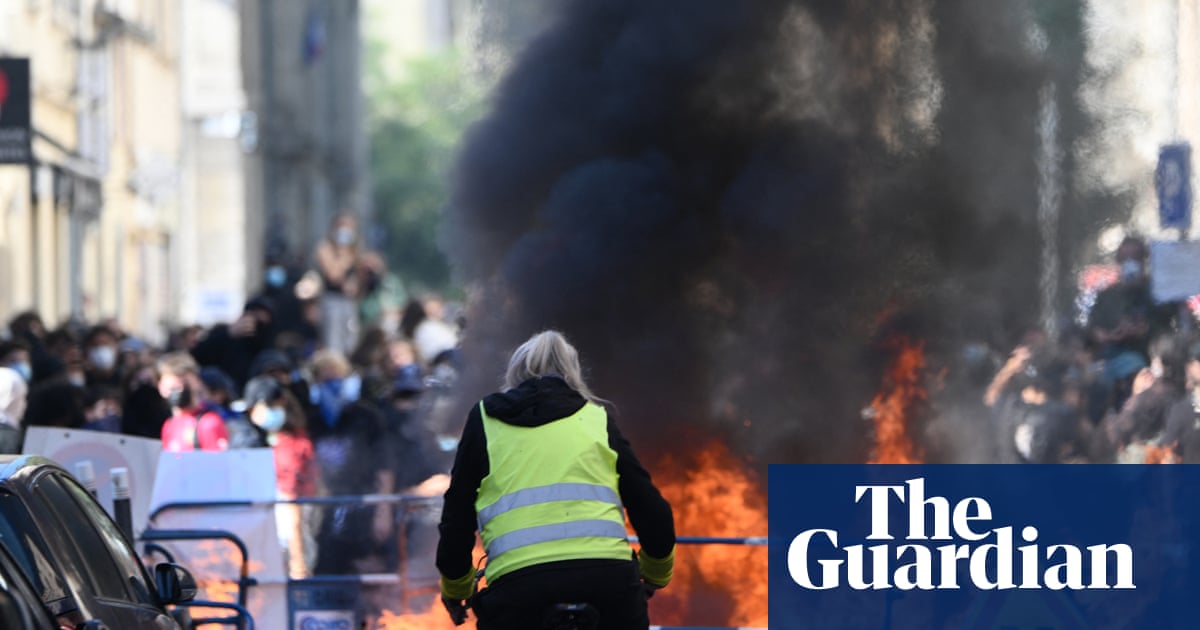
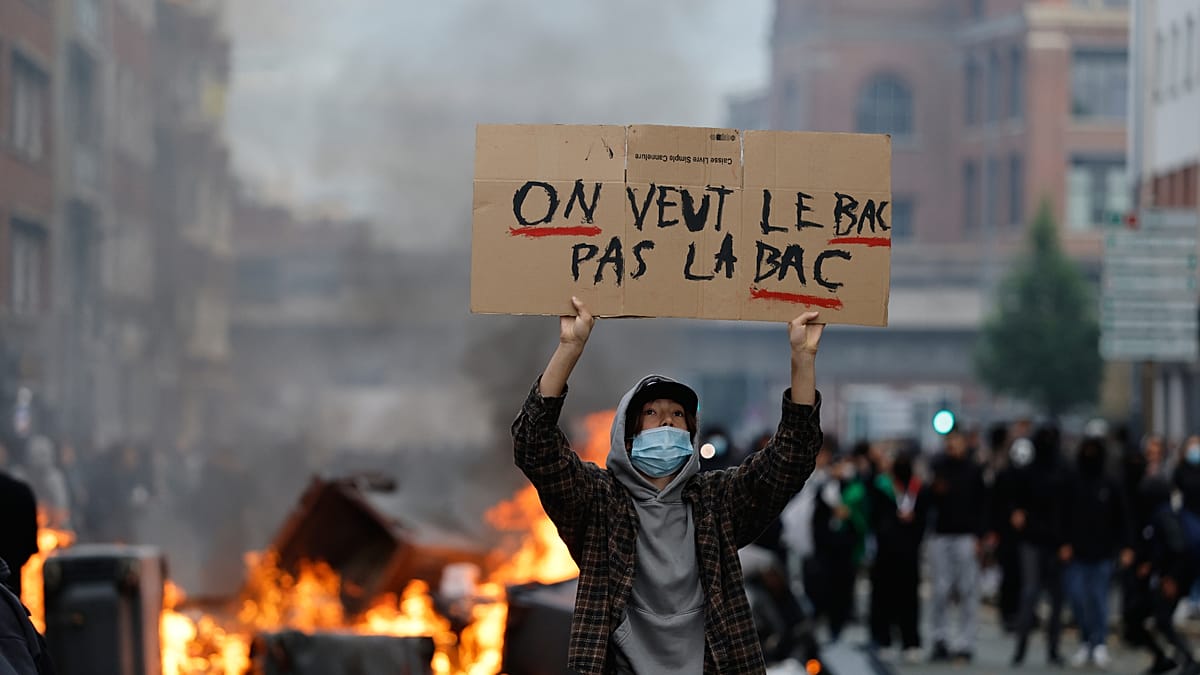
The protests have turned violent, with some students lighting dustbin fires, destroying bus shelters, and clashing with riot police who use batons, tear gas, and stun grenades in response. Over 215 students and 715 police officers have been injured since the start of the movement, including a 15-year-old student who lost his hand after picking up a stun grenade fired by police.
The unrest has raised concerns about the use of excessive force by authorities, with Amnesty International calling for an end to disproportionate policing. The French government and trade unions are divided on how to respond: while Prime Minister Sebastien Lecornu calls for peaceful protests, the powerful CGT labor union plans to protect students during demonstrations.
The protests come amid political instability ahead of the 2027 presidential election in France, where far-left and far-right parties lead opinion polls. Similar unrest is also brewing in Germany and Spain due to internal political challenges and economic pressures.
Written for “France Student Protests” on 2026-10-06,
grounded in this article and the 21 other(s) covering the same event.
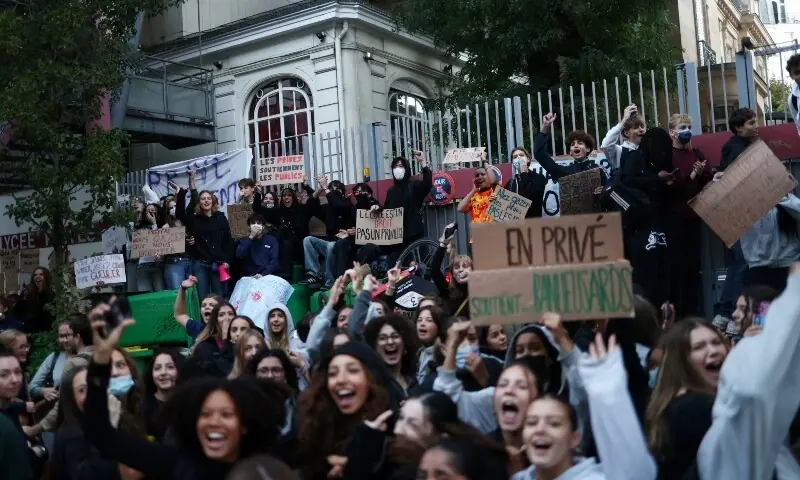
Before dawn on Tuesday outside the Lycée Sophie-Germain in central Paris, hundreds of teenagers dragged wheelie bins, metal barriers and shopping trolleys to build a barricade outside the front door of their secondary school.
asserted
hundreds → drag → school
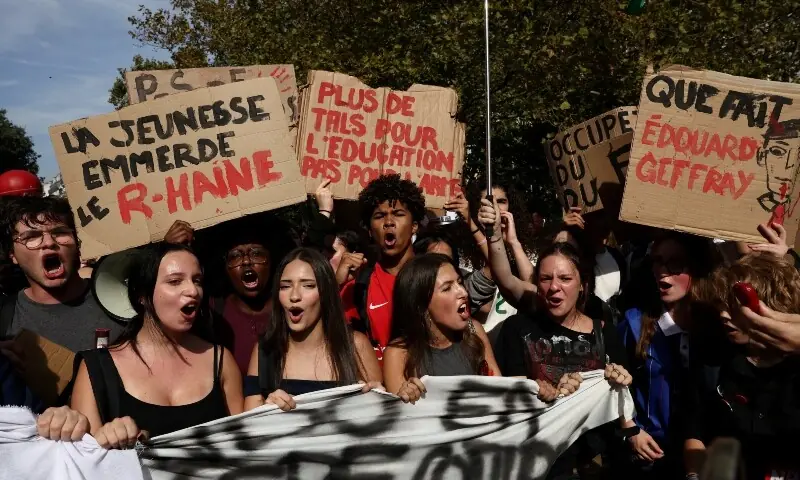
Climbing to the top of the piles of bins, pupils held banners calling for more funding and greater equality in French schools.
asserted
pupils → climb → schools
But they were also protesting against French riot police, who have been accused by human rights groups of using disproportionate force against children in what is fast becoming the biggest youth protest movement in decades.
asserted
what → protest → decades
“Everyone hates the police,” chanted a group of 15- and 16-year-olds.
asserted
group → hat → olds
At least 215 teenagers, 715 police officers and 85 teaching staff have been injured in clashes in recent days, according to the government.
uncertain
teenagers → injure → government
“We’re teenagers with wheelie bins, and the police have heavy weapons, it’s totally mismatched,” said Livia, 17, who was studying theatre at a lycée in northern Paris and did not want her real name published.
asserted
name → ’re → Paris
This is state violence and it’s horrible seeing police allowed to target children.
asserted
police → ’ → children
It’s important to remember this is institutionalised violence, it’s planned and deliberate.”
asserted
it → ’ → ?
Ten investigations into possible police brutality are under way after injuries allegedly involving the use of police weapons, including one 15-year-old who lost his hand, another who lost his eye and a boy whose jaw and teeth were shattered, leaving him, as his mother said, barely able to eat with a straw in hospital.
uncertain
mother → involve → hospital
“The policing is catastrophic, people have been mutilated by weapons – one boy has lost an eye – it’s horrible,” said Lily, 17 (not her real name), who was studying social sciences in her final year of school and demonstrating for more funding in what she called a discriminatory education system that left poorer children behind.
asserted
that → mutilate → children
“My parents support me being on the barricades and at the protests.
asserted
me → support → protests
They’re worried about the policing, but they said they’d come and get me from the police station if I was arrested.”
asserted
I → ’re → station
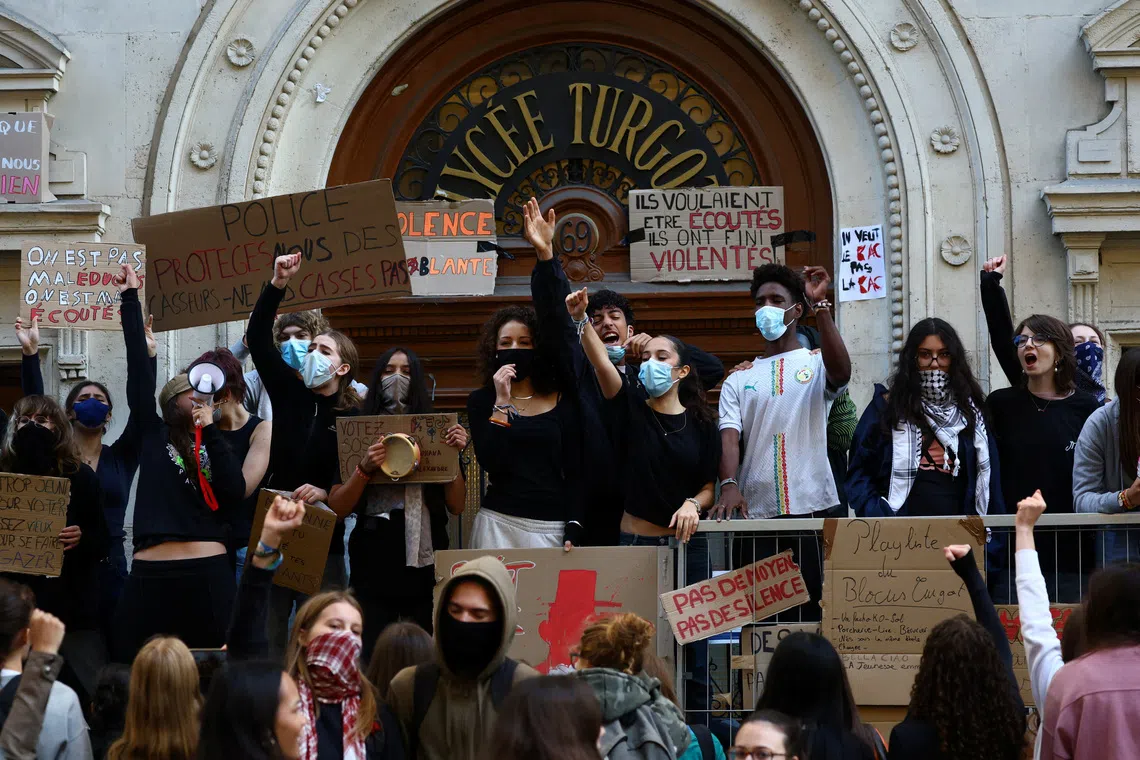
Teenagers nearby held up cardboard signs protesting against the use of teargas and riot police.
asserted
Teenagers → hold → teargas
“A state that gases high school students is a weak state,” read one banner.
asserted
banner → gas → students
“Gas rapists, not children,” said another sign in reference to calls for betters laws against sexual violence.
asserted
sign → say → violence
Another banner read: “Not here to riot.”
asserted
banner → read → ?
The unprecedented protest movement that began outside one school in a low-income Paris suburb has spread across the country, taking the government by surprise.
asserted
that → begin → surprise
Hundreds of high schools have been barricaded and forced to close as pupils protest against teacher shortages, crumbling buildings and overcrowded classes.
asserted
pupils → barricade → shortages
The justice ministry said 5,060 people had been arrested since the protests began, 87% of them being minors.
asserted
% → say → them
More than 1,800 people had been prosecuted, including 1,483 minors, the ministry said, without specifying the crimes.
asserted
ministry → prosecute → crimes
It said 790 cases had been dismissed.
asserted
cases → say → ?
The government said 24 schools had been burned or ransacked.
asserted
schools → say → ?
“In more than 20 years of teaching, I’ve never seen protests this big,” said one teacher at Sophie-Germain high school who planned to join the Paris demonstration on Tuesday afternoon.
asserted
who → see → afternoon
“The students in central Paris have shown a great sense of solidarity with those in the Paris suburbs who face much worse conditions in their schools.
asserted
who → show → schools
There’s a feeling of solidarity and generosity between teenagers that flies in the face of the notion that we live in an era of selfishness.
asserted
we → ’ → selfishness
No one knows how long this will go on for.”
asserted
this → know → long
Tens of thousands of students, trade unionists and parents are expected to march in support of the protests across France on Tuesday afternoon, including in Paris, Toulouse, Nice and Bordeaux, with riot police on alert.
asserted
police → expect → alert
Isabella, 16, said she had the backing of her parents, who work in film and music.
asserted
who → say → film
“Young people have been teargassed for doing nothing but trying to express their opinion.
asserted
people → teargasse → opinion
Everybody told us that school was the great leveller, but today that is not the case at all.
asserted
that → tell → us
A teenager in the banlieue [suburbs] of Paris is never going to have the same opportunities as a student from the city centre.
asserted
teenager → go → centre
That’s why we’re here today.”
asserted
we → ’ → ?
Lionel, 17, who was in his final year at school and hoped to study English, said: “The aim isn’t to riot or smash things up, we just want to protest peacefully.”
asserted
we → hop → things
Teenagers also chanted songs against Marine Le Pen, the far-right, anti-immigration candidate in the 2027 presidential election, who is high in the polls as Emmanuel Macron steps down after a decade in office.
asserted
Macron → chant → office
Many teenagers were worried about the election.
asserted
teenagers → worry → election
“We’re also protesting against the growth of the far right,” said Aislinn.
asserted
Aislinn → protest → right
Justine, 17, who had been at the barricade since before dawn, said she hoped the protest would continue and grow into a “massive” movement.
asserted
protest → say → movement
We need the government to listen to us and make radical change.”
asserted
government → need → change
Students’ names have been changed.
asserted
names → change → ?
 The Aporia