Estonia is moving its troops closer to the Russian border and expanding its military infrastructure due to growing fears of a potential Russian attack on NATO territory. Specifically, Estonia’s 1st Infantry Brigade will be permanently stationed in Johvi, about 50 kilometers from the Russian border, as part of an "active defence" strategy against possible future aggression. The country's military officials believe that Russia could attempt small-scale incursions to test NATO's response capabilities over the next one to four years, despite not expecting a full-scale attack within two years.
Written locally by qwen2.5:14b on 2026-10-06,
using this article's own text rather than the other coverage of the
same event (that is the story summary below).
Story summary
Estonia has moved its troops closer to the Russian border and increased its weaponry in response to growing fears of an impending attack by Russia, aimed at testing NATO's mutual defense clause under Article 5. This strategic shift towards an "active defence" follows warnings from European heads of state and NATO about potential threats. Estonia lacks its own air force, making it reliant on NATO for aerial security. Despite this, Estonian military intelligence officials believe that Moscow is preparing for a future conflict with the country, though they do not expect an attack in the next two years. They are concerned that Russian President Vladimir Putin might initiate a small-scale incursion to test NATO's resolve and deterrence capabilities, according to the Financial Times.
Written for “Russia Estonia Border Tensions” on 2026-10-06,
grounded in this article and the 0 other(s) covering the same event.
Why this leaning score
This article does not take a side on a contested political
question, so it has no leaning score. That is an
answer rather than a gap: a match report or a rescue can be warmly
or critically written without being left or right, and scoring it
anyway is how approval of a subject gets recorded as a political
position.
No political leaning scored for article 59960 · logged 2026-10-06
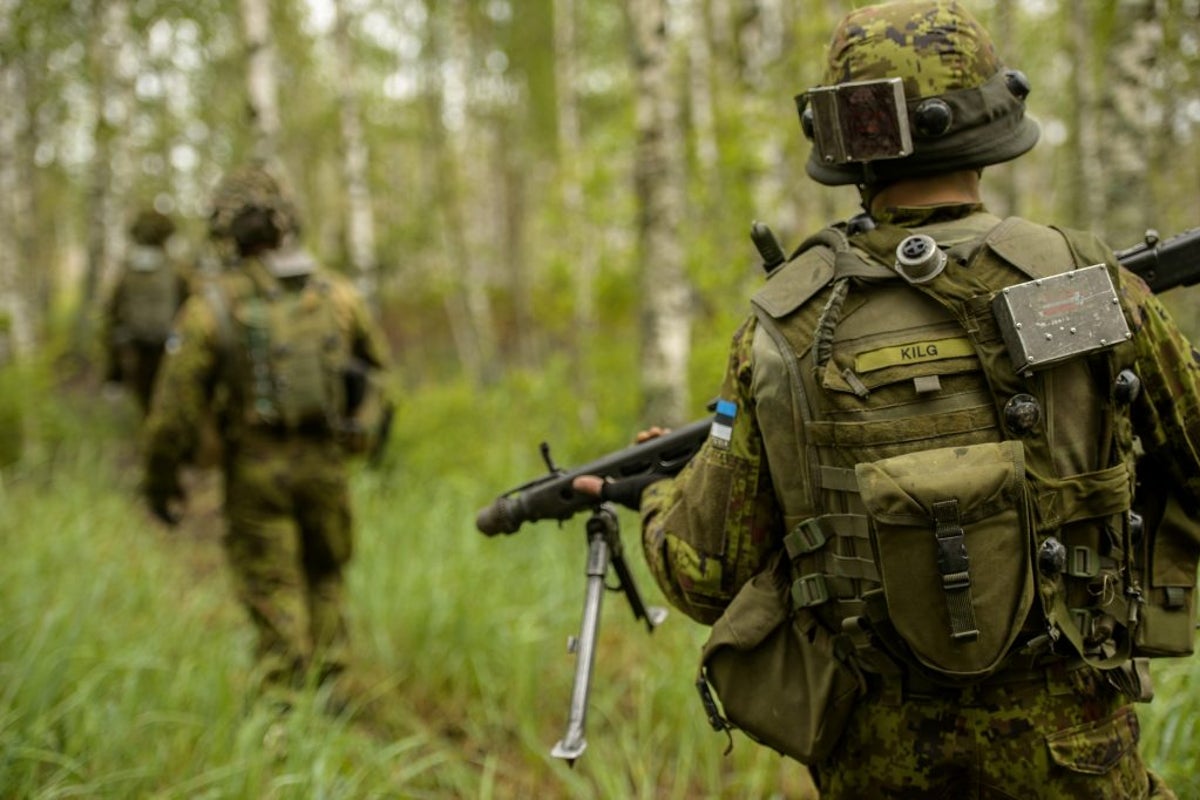
Estonia is moving troops closer to the Russian border and scaling up its weaponry over fears of future attacks on its territory, according to a report.
uncertain
Estonia → move → report
The move comes as part of a shift towards an “active defence” strategy after weeks of warnings by European heads of state and Nato leaders about an impending attack by Russian designed to test the alliance’s mutual defence clause.
asserted
move → come → clause
As the country lacks its own air force it would be entirely dependent on the Nato alliance to secure the safety of its skies.
asserted
it → lack → skies
Estonia’s military and intelligence chiefs do not think that Russia will attack in the next two years but still believe Moscow is actively preparing for a future war with the country, according to the Financial Times.
uncertain
Moscow → think → Times
They fear Vladimir Putin could initiate a small-scale incursion to test Article 5 and that neither they nor Nato are credibly deterring such a plan.
uncertain
they → fear → plan
“Deterrence is not working,” a senior Estonian military intelligence official told the publication.
asserted
official → work → publication
“The critical period to address that, for all of us in the Baltic states, is in the next one to four years.”
asserted
period → address → years
”
The main units of Estonia’s 1st Infantry Brigade, which serve as the country’s main combat force, will be permanently stationed in Johvi, approximately 50km from the Russian border.
asserted
which → serve → border
“We have to start from the border and win from the first battles,” said Colonel Tarmo Kundla, commander of the First Brigade.
asserted
Kundla → have → Brigade
New military facilities will be built to accommodate the forces.
asserted
facilities → build → forces
They were previously located further away in Tapa, which is around 130km away.
asserted
which → locate → Tapa
A new military base will also be constructed in Narva that will accommodate up to 1,000 troops.
asserted
that → construct → troops
“Credible deterrence requires us to make aggression against us unthinkable.
asserted
aggression → require → us
Our aim is clear: to keep the enemy and the destruction of war away from Estonian territory,” said Estonia’s ministry of defence said.
asserted
said → keep → defence
In July 2026, the UK government announced a new UK-Estonia defence roadmap that will deepen military co-operation and “strengthen Nato’s eastern flank”.
asserted
that → announce → flank
The move would see UK troops in Estonia to increase from 800 to 1,200 equipped with high-tech kit by April 2027.
asserted
troops → see → April
Last week, Estonia accused Russia of being behind arson attacks on defence firm Milrem Robotics.
asserted
Estonia → accuse → Robotics
The prime minster Kristen Machal said that security services had gathered evidence showing the incident aligned with broader Russian sabotage efforts across Europe.
asserted
incident → say → Europe
Nato allies France and Sweden expressed solidarity with Estonia following the outcome of the investigation.
asserted
allies → express → investigation
It comes as airspace violations across Europe have been increasing at an accelerating speed, including in Estonia.
asserted
violations → come → Estonia
In one of the starkest warnings by a western security service yet, Danish intelligence said last month that Moscow could launch an attack against Nato in months.
uncertain
Moscow → say → months
It described the threat as of a “low but growing risk”.
asserted
It → describe → risk
A report by America’s Central Intelligence Agency (CIA) released on the same day suggested that Russia is preparing to carry out drone strikes in Europe targeting France, Spain and Italy from the sea.
uncertain
Russia → release → sea
In the same week it emerged that Russia has boosted its shadow fleet by more than one third as it looks to keep oil flowing.
asserted
it → emerge → oil
 The Aporia