The Sydney Morning Herald
· collected 2026-10-06 · by Paddy Manning, Helen Pitt
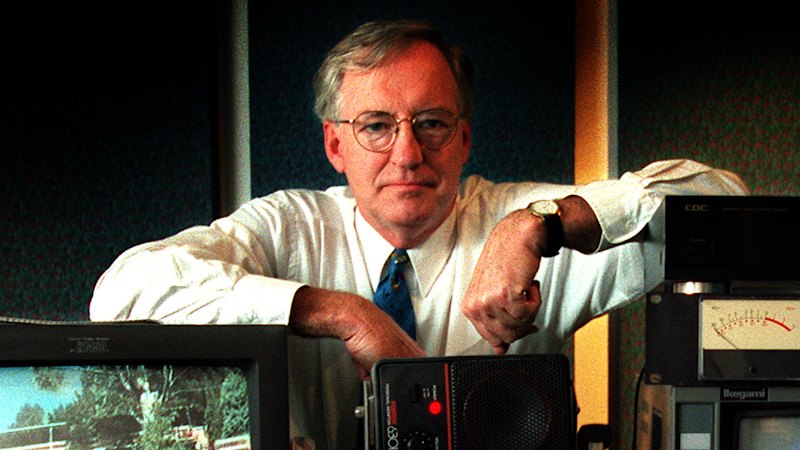
Lauded as one of the finest Australian journalists of his generation, former Four Corners executive producer and ABC news and current affairs chief Peter Manning died last month, aged 81, after a career spanning 60 years.
asserted
Manning → laud → years
Tributes have poured in to his family and online, with Manning being described by the Herald’s chief investigative reporter Kate McClymont as “a colossus of Australian investigative journalism”, and by others as a “fierce and loyal protector of journalists”, and “the best boss I ever had” for his “attention, care and infectious enthusiasm”.
asserted
I → pour → attention
Manning was born in wartime Sydney in 1945, to small businessman Michael Manning and secretary Rosemary Weston, who worked at a toy factory in the western suburbs.
asserted
who → bear → suburbs
They divorced when Peter was very young, and he grew up between Bondi, where he attended Waverley College, and Toongabbie.
asserted
he → divorce → College
An only child, he revelled in the company of his cousins – especially Jenny, Anne, Karen and Wendy.
asserted
he → revel → cousins
Brought up Catholic in a Menzies-loving household, Manning showed an early sign of his instinct for writing when, as an 11-year-old, he had a letter published in the Daily Telegraph, denouncing Russia’s invasion of Hungary in 1956.
asserted
letter → bring → 1956
After graduating from high school he did a stint as a copyboy there – his first job in journalism.
asserted
he → graduate → journalism
Embarking on an arts degree at Sydney University in 1962, the fervent anti-communist immediately tried to resurrect the Democratic Labor Party club on campus, then dormant, and started writing for the weekly student newspaper, Honi Soit.
asserted
communist → embark → newspaper
At first, he was in favour of the Vietnam War, but his politics were shifting, inspired by the liberation theology of the university’s Catholic chaplain, Ted Kennedy.
asserted
politics → shift → chaplain
Manning had at one point considered joining the priesthood, but as he told Nadia Wheatley and Meredith Burgmann in an interview for their book Radicals – Remembering the Sixties (2021), “the thing that was revolutionary for me was Ted saying, ‘Live your values of love and social justice in the world, don’t hide in a church.’ ”
asserted
Ted → consider → church
Many start out radical in their youth and grow conservative as they age.
asserted
they → start → youth
Manning went the other way.
asserted
Manning → go → ?
A radicalising influence was the horror of Vietnam.
asserted
influence → radicalise → Vietnam
“My brain was seeing the ridiculous nature of the argument that you have to bomb the hell out of Vietnam, in order to save it, for freedom,” Manning told Wheatley and Burgmann.
asserted
Manning → see → Wheatley
In 1965, his number came up in the birthday ballot, but although by now he considered himself a conscientious objector, he was lucky to be rejected for bad feet.
asserted
he → come → feet
Manning fell in love with fellow student Maria Beswick.
asserted
Manning → fall → Beswick
They married in 1966 and soon had two children, Paddy and Megan.
asserted
They → marry → children
They were together for a decade, and stayed warm friends.
asserted
They → stay → decade
After graduating with a BA majoring in government, Manning started teaching at Ashfield’s De La Salle Catholic boys’ school for a year, but then found work as a trainee reporter at The Bulletin, under editor Donald Horne, who took him under his wing but decided he needed to do a formal cadetship.
asserted
he → graduate → cadetship
In 1967, he was hired by The Sydney Morning Herald and The Sun-Herald, where one of his first tasks was writing the “Dog of the Week” column.
asserted
one → hire → column
He got his grading, and returned to the Bulletin in 1969.
asserted
He → get → 1969
In 1971 Manning was recruited by the ABC for its revolutionary new daily current affairs program This Day Tonight, joining a crop of pioneering muckrakers who went on to become some of journalism’s biggest names, including Bill Peach, Caroline Jones, Mike Willesee, Andrew Olle, Kerry O’Brien and Mike Carlton.
asserted
who → recruit → Peach
Through the mid-1970s he went back to print, serving as senior writer at The Bulletin, co-founder and editor of a short-lived campaigning community newspaper The Leichhardt Local, part-time editor of New Journalist, and managing editor of Nation Review.
asserted
he → go → Review
In 1975, he published his first book, Green Bans: The Story of an Australian Phenomenon.
asserted
he → publish → Phenomenon
Manning returned to the ABC in 1979, first as a news reporter at radio station 2JJ and then as a senior producer with TDT’s replacement program, Nationwide.
asserted
Manning → return → program
At the ABC, in 1981, he met and fell in love with reporter Jenny Brockie, and they would soon marry and have a daughter, Thea.
asserted
they → meet → daughter
In 1982, Manning joined Four Corners as a producer to rejuvenate the program, which was then facing the axe.
asserted
which → join → axe
Then-executive producer Jonathan Holmes paired him with a newly hired reporter, Chris Masters, and he recalled last week that “the program they came up with months later, The Big League, put Four Corners on the map for the rest of the 1980s”.
asserted
they → pair → 1980s
The Big League led to the Street royal commission into allegations that Premier Neville Wran had conspired to pervert the course of justice.
asserted
Wran → lead → justice
Under his leadership, Four Corners enjoyed a golden age from 1985 to 1989.
asserted
Corners → enjoy → 1989
While he was executive producer, he commissioned high-impact investigations that won a slew of awards.
asserted
that → commission → awards
These include the Gold Walkley in 1985, when Chris Masters and Bruce Belsham won for French Connections, which identified the French intelligence agents behind the sinking of the Greenpeace protest ship Rainbow Warrior.
asserted
which → include → ship
With Manning at the helm, Four Corners won the Logie for most outstanding achievement in public affairs in both 1988 and 1989, and Paul Barry’s program Blue Death, which exposed the dangers of blue asbestos mining in Wittenoom, won the Human Rights Award for television documentary in 1988.
asserted
which → win → 1988
Jonathan Holmes, as head of ABC TV documentaries for some of those years, wrote for ABC Alumni that he watched Four Corners each week with amazement.
asserted
he → write → amazement
I still remember The Dead Heart, a story Chris Masters told about two young jackeroos who died in the Western Australian outback, and the thoughtless negligence of the bosses who allowed it to happen,” he wrote.
asserted
he → remember → bosses
“Peter led a team that loved him.
asserted
that → lead → him
He could be stern, but he laughed a lot more often.
uncertain
he → laugh → ?
As head of ABC news and current affairs from 1989 until 1993, Manning created new programs, such as Lateline (which ran for 28 years), Foreign Correspondent (now 34 years strong) and Landline (now 35 years old).
asserted
which → create → years
As head of Radio National, he launched news program Radio National Breakfast, which is still going strong 30 years later.
asserted
which → launch → Breakfast
He launched the ABC’s multimedia unit in 1995, overseeing its first online output.
asserted
He → launch → output
…and 26 more, not listed.
 The Aporia