Letters from an American
· collected 2026-10-06 · by Heather Cox Richardson
commentary
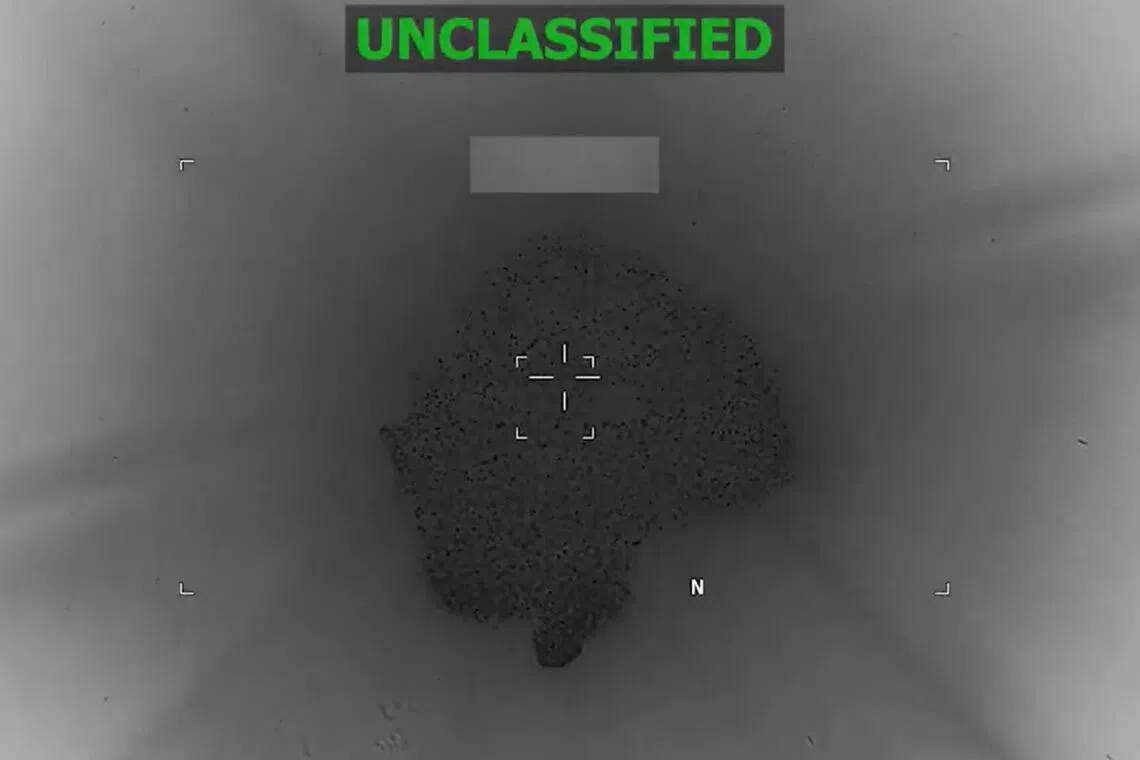
Last night, on October 4, U.S. Southern Command posted that it had struck another small boat in the Caribbean, killing another four people it called “narco-terrorists.”
asserted
it → post → people
This brings the number of strikes to more than 70, and the number of people killed in the strikes that began a year ago to more than 230 people.
The administration’s justification for the strikes has not been made public.
asserted
justification → bring → strikes
It has claimed—without evidence—that the men on the boats were trafficking drugs, but such a charge would normally be handled by the legal system.
asserted
charge → claim → system
The Office of Legal Counsel in the Department of Justice produced an opinion providing legal cover for the strikes, and some of the members of Congress who have seen it are alarmed.
asserted
who → produce → it
Senator Adam Schiff (D-CA) saw the memo in November and said: “If that opinion were to be adopted, it would not constrain any use of force anywhere in the world.
asserted
it → see → world
I mean, it is broad enough to authorize just about anything.”
asserted
it → mean → anything
In December the American Civil Liberties Union and the Center for Constitutional Rights sued to gain access to the memo after the government denied their requests to see it under the Freedom of Information Act (FOIA).
asserted
government → sue → Act
On September 21 a report from the United Nations concluded that the extrajudicial killings broke international law and may be crimes against humanity.
uncertain
killings → conclude → humanity
Last Wednesday, U.S. District Judge Paul Engelmayer of the U.S. District Court for the Southern District of New York ordered the Department of Defense and the Department of Justice to show him the memo and let him know who else has seen it, in order to evaluate whether to release it to the public.
asserted
who → order → public
On October 1, John Hudson of the Washington Post reported that the Trump administration has taken $52 million Congress appropriated for countries impacted by Russia’s war on Ukraine and rerouted it to right-wing governments in Colombia, Ecuador, Panama, and Peru.
asserted
Congress → report → Colombia
On Saturday, Defense Secretary Pete Hegseth told reporters the U.S. could move U.S. military personnel from Europe to the Western Hemisphere, saying: “Well, we’re definitely expanding our presence and our footprint in Central and South America with partners, and because of the bold move the president made in Venezuela,” referring to the U.S. capture of Venezuelan president Nicolás Maduro and his wife in a nighttime raid in early January.
uncertain
president → tell → January
“We have a whole new suite of options economically and militarily with partnerships.”
asserted
We → have → partnerships
While the administration is billing its intervention in Latin America as a battle against drugs, the comparison to Venezuela, where Trump has claimed control over the country’s oil fields and says he has taken billions of dollars out, although there is no public acknowledgement of where that money has gone, is instructive.
asserted
money → bill → dollars
On Sunday, Jan Crawford of CBS News published an interview with Supreme Court Justice Samuel Alito, in which Alito said one of his first thoughts after he learned that a draft of his Dobbs v. Jackson Women’s Health decision overturning the 1973 Roe v. Wade decision had been leaked was that “this would endanger” the people on the court.
asserted
this → publish → court
Alito went on to say that he does not anticipate that the court will overturn the 2015 Obergefell v. Hodges decision recognizing the right to same-sex marriage.
asserted
court → go → marriage
That case is different from Roe v. Wade, he said, because people have come to rely on Obergefell as they organize their lives.
asserted
they → say → lives
“One of the important factors we take into account in deciding whether we should reexamine a past decision is the degree to which there has been reliance on the decision,” Alito said.
asserted
Alito → take → decision
“Obviously a great deal had changed in the country as a result of Obergefell.
asserted
deal → change → Obergefell
In fact, all but one of the justices who overturned Roe—Thomas declined to answer—said in their confirmation hearings that they considered Roe settled law.
asserted
Roe → overturn → law
Crawford pointed out that people thought Roe was settled law and had organized their lives around it, just as people had organized their lives around Obergefell.
asserted
people → point → Obergefell
“After Obergefell, people of the same sex got married and entered into contracts…it was much more concrete,” Alito told Crawford.
asserted
Alito → marry → Crawford
“Whereas with Roe, the argument was made that it had an effect on people’s ideas, women’s ideas about the kind of society that they were going to live in, that this would have an effect on the society.
asserted
this → make → society
It was much more abstract than what would’ve been involved had we been asked to overrule Obergefell.”
asserted
we → involve → Obergefell
These are the same story: the deliberate destruction of the post–World War II order those who had lived through the horrors of World Wars I and II put in place to prevent another world war.
asserted
who → live → war
Even before the U.S. entered World War II, U.S. president Franklin Delano Roosevelt and British prime minister Winston Churchill and their advisors laid out principles for an international system that could prevent future world wars.
uncertain
that → enter → wars
In the 1941 Atlantic Charter, they declared that countries must not invade each other.
asserted
countries → declare → other
In April 1945, 850 delegates and their staff and advisors met in San Francisco, California, where they wrote, and adopted unanimously, the United Nations charter prohibiting “the threat or use of force against the territorial integrity or political independence of any state.”
asserted
they → meet → state
Trump and his loyalists reject this framework in favor of one favored by those like Russia’s president Vladimir Putin, one that looks much like the world did before 193 nations signed onto the United Nations charter.
asserted
nations → reject → charter
In their worldview, strong nations exercise spheres of influence, taking political and economic control of neighboring nations.
asserted
nations → exercise → nations
Part of the post–World War II attempt to prevent future wars was an insistence that all human beings had certain rights and must be treated equally before the law.
asserted
beings → prevent → law
In 1948 the United Nations General Assembly announced the Universal Declaration of Human Rights (UDHR), which provided a common standard of fundamental rights for all human beings.
asserted
which → announce → beings
Eleanor Roosevelt, widow of former president Franklin Delano Roosevelt and much beloved defender of human rights in the United States, led the commission that wrote the UDHR, figuring out how to define the violation of human rights not only internationally but also within a nation, and how to protect “the rights of man all over the world.”
asserted
that → lead → world
Drafted over the next two years, the final document established that “[a]ll human beings are born free and equal in dignity and rights…without distinction of any kind, such as race, colour, sex, language, religion, political or other opinion, national or social origin, property, birth or other status” and regardless “of the political, jurisdictional or international status of the country or territory to which a person belongs.”
asserted
person → draft → which
Those rights included freedom from slavery, torture, degrading punishment, arbitrary arrest, exile, and “arbitrary interference with…privacy, family, home or correspondence, [and] attacks upon…honour and reputation.”
asserted
rights → include → honour
They included the right to equality before the law and to a fair trial, the right to participate in government, either “directly or through freely chosen representatives,” the right of equal access to public service.
asserted
They → include → service
After all, the UDHR noted, the authority of government rests on the will of the people, “expressed in periodic and genuine elections which shall be by universal and equal suffrage.”
asserted
which → note → suffrage
Under Trump and Defense Secretary Pete Hegseth, the U.S. has abandoned the U.N. prohibition on violating the territorial integrity or political independence of any state, as well as the human rights of the people in the small boats, not to mention migrants.
asserted
U.S. → abandon → boats
As Alito’s statement that the right of women to have control over their healthcare was simply an abstract idea that didn’t have to be protected suggested, undermining the post–World War II order has been a long-term project.
uncertain
undermining → have → order
In its place, Trump and his allies propose a dictatorship.
asserted
Trump → propose → dictatorship
Binance founder Changpeng Zhao, who was jailed in the U.S. for money laundering but pardoned by Trump, worked with the Trump family to establish the crypto start-up World Liberty Financial, which put $799 million in Trump’s pocket last year.
asserted
which → jail → pocket
…and 14 more, not listed.
 The Aporia