Toronto Star
· collected 2026-10-06 · by Desmond Tiro And Jack Denton The Associated Press
In Kenya’s Maranjau Prison, inmates like 27-year-old Brian Gatonye are using chess as part of their rehabilitation program. Gatonye, serving an assault sentence, credits the game with teaching him to be calm and thoughtful before acting. Superintendent Humphrey Young notes that chess encourages patience and problem-solving skills, helping prisoners prepare for life after release. The initiative, supported by organizations like FIDE and The Gift of Chess, is now available in all 134 Kenyan prisons and includes competitions between inmates and guards.
Written locally by qwen2.5:14b on 2026-10-06,
using this article's own text rather than the other coverage of the
same event (that is the story summary below).
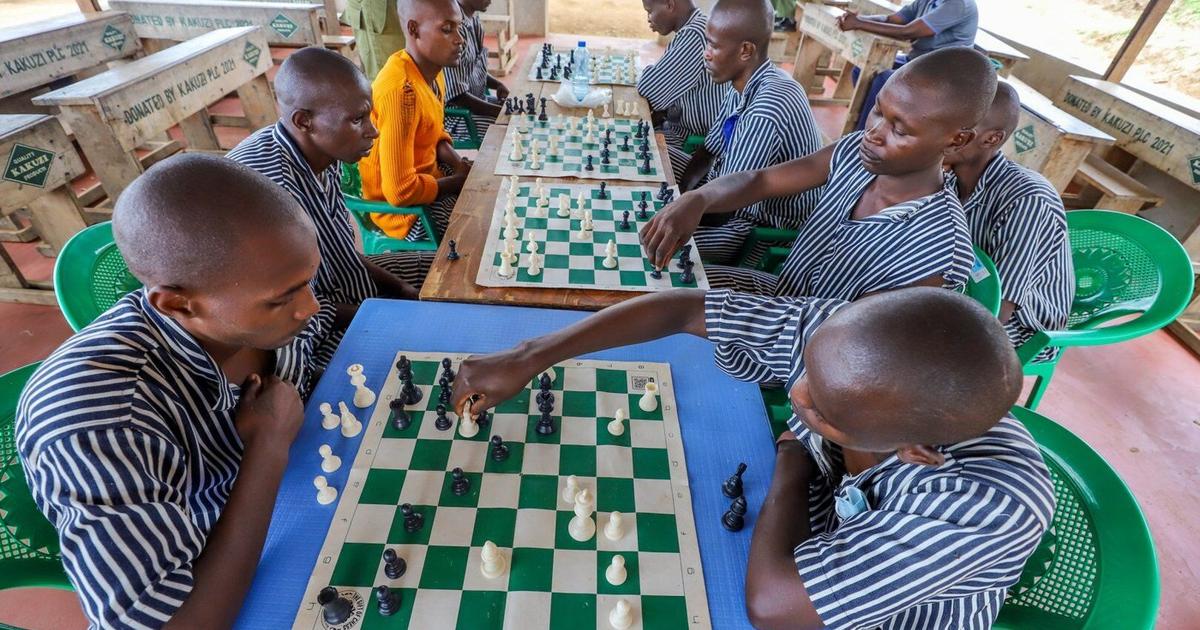
The black-and-white stripes of Brian Gatonye’s prison uniform match the pieces staring back at him from the chessboard at Kenya’s Maranjau Prison.
asserted
stripes → match → Prison
The 27-year-old has served about 18 months of a three-year sentence for assault and is due to be released in November 2027.
asserted
old → serve → November
During a break in the prison yard, he considers his next move: a pawn, perhaps, or a knight.
asserted
he → consider → move
The break isn’t long, but if he finishes the game quickly he may have time to face one of the skilled guards.
uncertain
he → finish → guards
But it is unwise to rush or act impulsively — in chess as in life, he has learned.
asserted
he → rush → life
“Chess has taught me a lot,” Gatonye said.
asserted
Gatonye → teach → lot
“It has taught me (about) being calm, choosing my decisions wisely.
asserted
It → teach → decisions
Before doing an act, I have to think first of what the repercussions are — and then I move.”
asserted
I → do → act
Gatonye is among a growing number of Kenyan prisoners who have taken up chess in recent years.
asserted
who → grow → years
The game has become part of rehabilitation programs in the country’s prisons, where officials and participants say it encourages patience, problem-solving and interaction between prisoners and guards.
asserted
it → become → prisoners
At Maranjau, which holds about 450 prisoners according to Superintendent Humphrey Young, some choose chess over resting or playing soccer during their free time.
uncertain
some → hold → time
They are drawn by the competition and what they say the game does for their state of mind.
asserted
game → draw → mind
“Chess has become one of our integral programs,” Young said.
asserted
Young → become → programs
“Some of the skills chess teaches our offenders as they reintegrate back to society is how they can improve their problem-solving processes, and how they can think around issues that affect them once they’re out.”
asserted
they → teach → them
Chess programs have operated in some Kenyan prisons since at least 2022.
asserted
programs → operate → 2022
The government has supported the initiative alongside the International Chess Federation, known as FIDE, Chess Kenya and The Gift of Chess, a nonprofit organization that distributes chess sets.
asserted
that → support → sets
The game is now played in all 134 prisons in Kenya, according to Phylis Ngigi, global outreach director for The Gift of Chess.
uncertain
game → play → Chess
Kenya participated for the first time in FIDE’s Intercontinental Online Chess Championship for Prisoners in 2024.
asserted
Kenya → participate → 2024
Competitions are also held between Kenyan prisons, while some guards have been trained as chess coaches and play alongside prisoners.
asserted
guards → hold → prisoners
At Maranjau, Young said the games create opportunities for prisoners and guards to interact in a less formal setting.
asserted
prisoners → say → setting
Supporters say chess offers more than recreation.
asserted
chess → say → recreation
Responsibility and the ability to work with others are important elements of prison rehabilitation, said Monica Njoroge, a project officer at Resources Oriented Development Initiatives.
asserted
Njoroge → work → Initiatives
The Kenyan nonprofit runs farming programs in prisons, where participants tend communal gardens while learning agricultural skills that could help them find work after their release.
uncertain
them → run → release
Njoroge is not involved in the chess program, but she frequently visits Maranjau and has watched prisoners play.
asserted
prisoners → involve → Maranjau
“It is a game that trains patience and also having a clear mind in making decisions, being keen on what your next move is and the consequences that will come,” she said.
asserted
she → train → decisions
Kenya’s prison chess program has not been independently studied, and its long-term effects on behavior or reoffending are unknown.
asserted
effects → study → behavior
For the prisoners gathered around the boards at Maranjau, there is a simpler attraction: They enjoy the game.
asserted
They → gather → game
“It is a social game,” said Edwin Raj Walukaya, a 31-year-old prisoner.
asserted
Walukaya → say → ?
“It gives us friends and occupies our minds.”
asserted
It → give → minds
For Gatonye, chess has become something he hopes to carry with him beyond prison.
asserted
he → become → prison
“After being released, I hope to continue playing chess,” he said.
asserted
he → release → chess
“It brings peace inside my mind and heart.”
asserted
It → bring → mind
 The Aporia