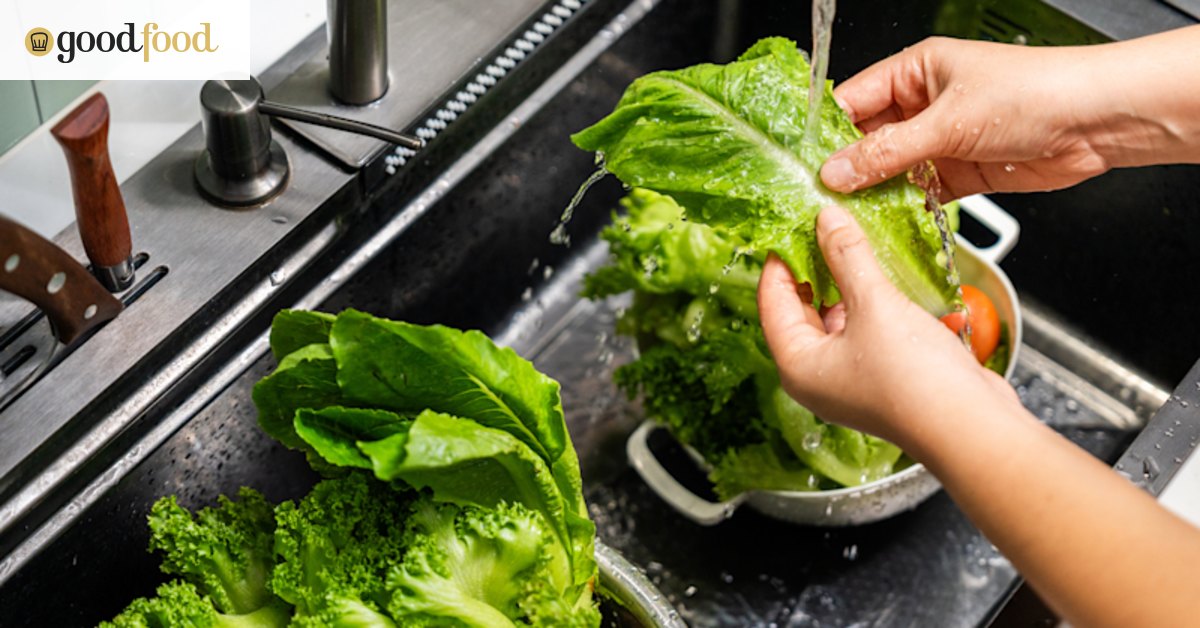
The article emphasizes the importance of properly washing fruits and vegetables to prevent food-borne illnesses, highlighting recent outbreaks linked to produce like romaine lettuce and cucumbers. It advises using cold running water rather than soap or commercial washes, as recommended by the FDA and backed by scientific research from Purdue University and the University of Maine. The piece also provides specific tips for washing different types of produce, such as white mushrooms being safe to rinse while gill-heavy varieties like oysters should be wiped clean. For berries, it suggests washing them immediately before consumption to preserve texture and flavor.
Written locally by qwen2.5:14b on 2026-10-06,
using this article's own text rather than the other coverage of the
same event (that is the story summary below).
I get it.
asserted
I → get → it
But if you’re tempted to skip washing your produce or give it only a cursory splash, you’re doing it wrong.
asserted
you → tempt → it
Food-borne illness is so often thought of as a scourge of meat and seafood, but if you look at some of the most recent outbreaks across the world, many of them - romaine lettuce, cucumbers, melons – have been tied to produce.
asserted
many → bear → produce
So let’s be smart about this.
asserted
’s → let → this
First, it’s best to wash produce right before you use it, because dampness encourages bacteria growth and therefore spoilage, food research scientist Amanda Deering of Purdue University in Indiana says.
asserted
Deering → ’ → Indiana
The Food and Drug Administration recommends washing produce under cold running water - go ahead and wash your hands before and after you do the food, too.
asserted
you → recommend → food
(If your bag of salad or other greens says it’s pre-washed
asserted
it → say → salad
, no further work is needed.)
Scrub with a brush and/or gently rub the produce with your hands, depending on what you’re cleaning.
asserted
you → need → what
Water is sufficient, so don’t use soap or bleach or even commercially made produce washes.
asserted
Water → use → soap
In fact, the Department of Food Science and Human Nutrition at the University of Maine tested three commercial wash treatments and found that distilled water was just as effective or more effective at removing microbes and pesticides (you can use clean cold tap water instead of distilled).
asserted
you → test → water
Drying with a clean paper towel or dish towel can remove even more bacteria.
asserted
Drying → dry → bacteria
And, yes, even if you don’t plan to eat the exterior of the fruit or vegetable, you should still clean the outside to avoid transferring contaminants from the surface to the inside.
asserted
you → plan → inside
Here are some more tips for washing specific types of produce.
asserted
tips → wash → produce
The conventional wisdom is that simply wiping mushrooms clean with a damp cloth or paper towel, or even a pastry brush, is preferable to rinsing them in water.
asserted
wiping → wipe → water
That’s never a bad move, but know that you can safely rinse or dunk at least some varieties.
asserted
you → ’ → varieties
The good folks at Cook’s Illustrated, who test these kinds of things, found that 450g of white mushrooms only absorbed 1 tablespoon of water after being submerged in water for 1 minute.
asserted
g → test → minute
Oyster mushrooms, on the other hand, absorbed quarter of a cup.
asserted
mushrooms → absorb → cup
Oysters, as well as varieties such as portobello and shiitake, have lots of gills, which can trap lots of water.
asserted
which → have → water
Especially if you plan to roast gill-heavy mushrooms and need to ensure the water is driven off, you should stick with wiping them clean.
asserted
you → plan → them
In fact, Deborah Madison, in The New Vegetarian Cooking for Everyone, says she often finds that oyster, as well as enoki, mushrooms usually come out clean enough to not even need a wipe-down.
asserted
mushrooms → say → down
They’re expensive enough as it is, so to preserve their texture and flavour, berries are best washed right before you eat them.
asserted
you → ’re → them
Sturdier strawberries can stand up to being rinsed in a colander under running water, but Better Homes & Gardens suggests that more delicate berries (blackberries, raspberries and blueberries) be set in a colander and then dipped in a bowl of water.
uncertain
berries → stand → water
After you’ve washed and drained your berries, you can dry them on a paper-towel lined baking sheet or in a paper-towel lined salad spinner.
asserted
you → wash → spinner
You’ll find some advocates for washing berries in advance in a vinegar-water solution to extend their shelf life and keep away the dreaded mould you often find when popping open a container.
asserted
you → find → container
Root vegetables and others close to the dirt
Give root vegetables and tubers a good rinse and scrub with a stiff brush.
asserted
vegetables → give → brush
(No, you don’t necessarily have to peel them.)
asserted
you → have → them
Certain types of produce grow in layers which trap grit.
asserted
which → grow → grit
I like my colleague Bonnie Benwick’s method, which involves trimming the top and bottom of the leeks and then cutting them vertically in half.
asserted
which → like → half
Stand them up in a container of ice water and let them soak for 15 minutes.
asserted
them → stand → minutes
You should see the grit drop to the bottom.
asserted
grit → see → bottom
A water bath does wonders here, too.
asserted
bath → do → wonders
For salad greens (discard the outer leaves of lettuce or cabbage), Madison recommends swishing them in a large basin of cold water, with an additional five-minute soak if they’re especially dirty.
asserted
they → discard → soak
Then, just lift the greens out and let the debris stay on the bottom.
asserted
debris → lift → bottom
This method works well for herbs, too.
asserted
method → work → herbs
Because greens (chard, bok choy, spinach, collards, kale, etc) tend to grow in sandy soil, Madison says you should take care to get all the gritty deposit off them.
asserted
you → tend → them
 The Aporia