That is 0 articles you have read today.
The Aporia is free and carries no advertising, so readers are the only
thing paying for it. If you are getting this much out of it, a small
donation is what keeps it independent.
Daily limit reached
You have read 0 articles today.
That is more than the 15 a day The Aporia gives away,
and well past what it can carry on nothing. Your allowance resets at
midnight.
There is no advertising here and nothing about you is sold, so readers
are the only thing paying for it. If the site is worth this much of
your day, it is worth a few dollars.
Everything else stays open: the
maps, the
directory and
search do
not count against this, and neither does re-opening something you have
already read today.
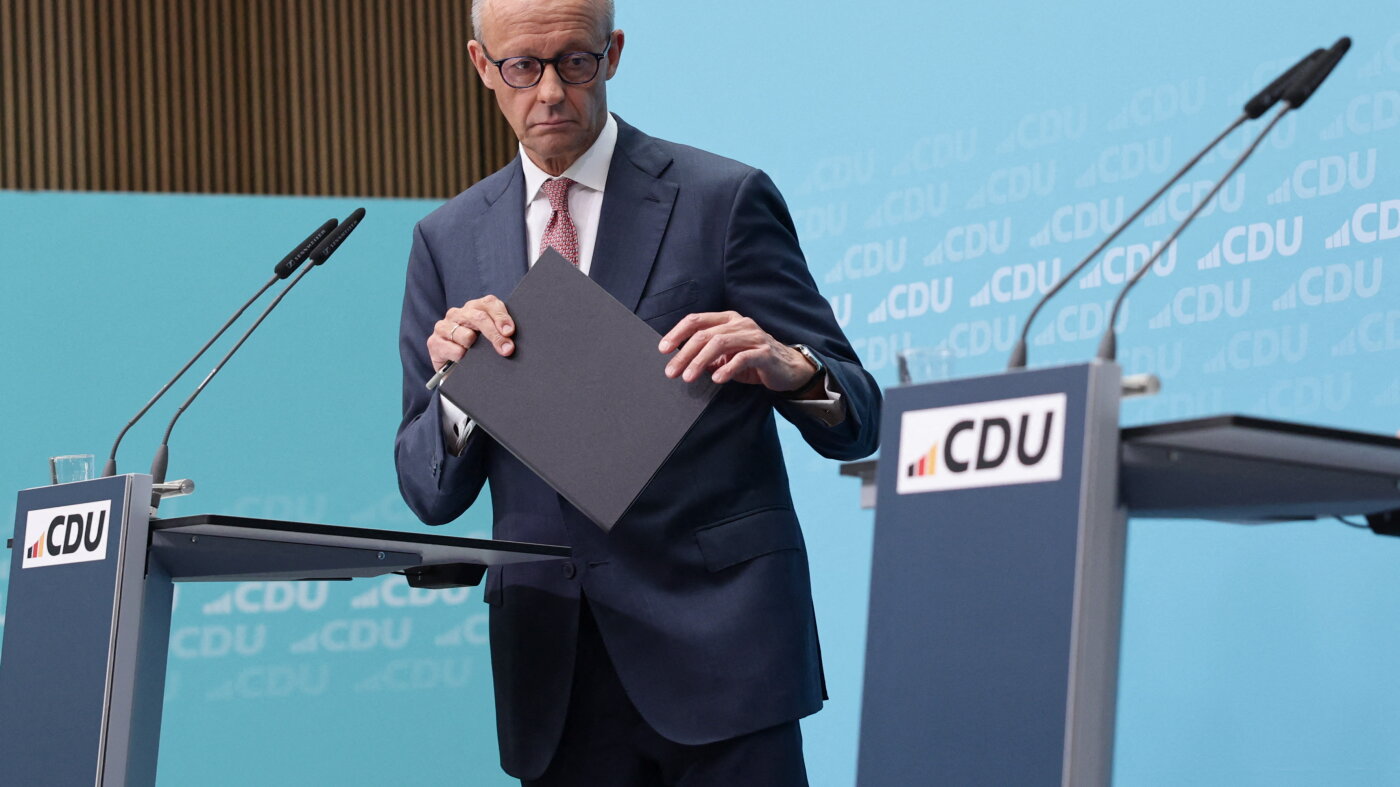
Right-wing parties are gaining momentum in Europe, with the Alternative for Germany (AfD) recently winning elections in Saxony-Anhalt and Mecklenburg-Vorpommern, securing 44% and 38% of the vote respectively. The AfD now leads polls in North Rhine-Westphalia with a national support rate of 28%, surpassing Chancellor Friedrich Merz's Christian Democratic Union. Similarly, in the UK, Nigel Farage’s Reform party topped national opinion polls for 15 months before Labour replaced its prime minister. These movements are challenging traditional political landscapes but are not necessarily indicative of a resurgence of fascism.
Written locally by qwen2.5:14b on 2026-10-06,
using this article's own text rather than the other coverage of the
same event (that is the story summary below).
Story summary
The Alternative for Germany (AfD) has recently seen significant electoral success, winning 44% of votes in Saxony-Anhalt and 38% in Mecklenburg-Vorpommern, both former East German states. Initially dismissed as a reaction to deindustrialization post-reunification, the AfD's recent polling at 28% nationally and leading in populous North Rhine-Westphalia suggests its influence is expanding beyond eastern Germany. This shift raises concerns about the party's potential for national power and challenges simplistic views of right-wing movements as mere historical grievances or fascist revivals.
Written for “European Politics Extremism” on 2026-10-06,
grounded in this article and the 0 other(s) covering the same event.
Why this leaning score
The article's own words the score was based on. Each is quoted
verbatim and was checked against the article text before being
stored, so you can find it in the original.
Leaning: leans left for article 58999 (high confidence, 2 verified quotes) · logged 2026-10-06
Claims extracted
10
claim-shaped sentences
Uncertain
0%
0 of 10 hedged
Leaning
Leans left
of the writing, not the subject · beta estimate
Correction & hedging signals
96.4
corrections and hedging in what we collected;
not a measure of accuracy
Outlets on this story
1
Politics
Narrative spread
1
articles carrying this framing
Right-wing parties are ascending across Europe, with some already playing a role in governing the continent’s most powerful countries, and others poised to do so soon.
asserted
parties → ascend → countries
It would be a grave mistake to condemn these movements as betokening the return of fascism.
asserted
It → condemn → fascism
It would also be a mistake to cheer them on.
asserted
It → cheer → them
It’s worthwhile to examine the rise of these parties in thorough detail.
asserted
It → ’ → detail
Recent victories by the Alternative for Germany (AfD) in two recent provincial elections have focused attention on the right-wing party and its designs for national power.
asserted
victories → focus → power
Last month, the AfD won 44 percent of the vote in the eastern state of Saxony-Anhalt, and captured 38 percent in coastal Mecklenburg-Vorpommern two weeks later.
asserted
AfD → win → Vorpommern
While it was once easy to write off the AfD as the political manifestation of the anger and frustration that many in the heavily deindustrialized region continue to feel over 35 years since reunification, current polls placing the AfD ahead in North Rhine-Westphalia, Germany’s most populous state, indicate that the party can no longer be dismissed as a mere eastern phenomenon.
asserted
party → write → phenomenon
Nationwide, the AfD stands at 28 percent, 8 points ahead of its closest rival, the Christian Democratic Union of Chancellor Friedrich Merz and Germany’s main governing party since the republic was refounded in 1949.
asserted
republic → stand → 1949
The success of the AfD as a party that political scientists classify as “far right” is being mirrored across the continent.
asserted
scientists → classify → continent
In the United Kingdom, Nigel Farage’s Reform, an outgrowth of the United Kingdom Independence Party that helped push the country to leave the European Union, led national opinion polls for 15 months until the ruling Labour Party replaced its unpopular prime minister this past July.
asserted
Party → push → minister
 The Aporia