That is 0 articles you have read today.
The Aporia is free and carries no advertising, so readers are the only
thing paying for it. If you are getting this much out of it, a small
donation is what keeps it independent.
Daily limit reached
You have read 0 articles today.
That is more than the 15 a day The Aporia gives away,
and well past what it can carry on nothing. Your allowance resets at
midnight.
There is no advertising here and nothing about you is sold, so readers
are the only thing paying for it. If the site is worth this much of
your day, it is worth a few dollars.
Everything else stays open: the
maps, the
directory and
search do
not count against this, and neither does re-opening something you have
already read today.
The article discusses how China's gold trade dynamics have shifted since 2013 when Hong Kong was the world’s largest hub for traded gold, with imports totaling 1,158 tonnes that year. However, as China relaxed its own import restrictions in 2014, the volume of gold passing through Hong Kong dropped significantly to just 67 tonnes by 2020. This shift reflects Beijing's strategy to internationalize the yuan by creating a more direct route for gold transactions and reducing reliance on Hong Kong as an intermediary.
Written locally by qwen2.5:14b on 2026-10-06,
using this article's own text rather than the other coverage of the
same event (that is the story summary below).
Story summary
In 2013, one-third of the world’s traded gold passed through Hong Kong, which imported 1,158 tonnes that year, surpassing traditional top buyer India. However, most of this gold was immediately shipped to mainland China due to strict import controls there. In 2014, Beijing relaxed these restrictions, enabling more Chinese banks to purchase foreign gold directly rather than through Hong Kong. As a result, the net gold flow from Hong Kong to mainland China decreased dramatically: from 863 tonnes in 2015 down to just 67 tonnes by 2020, according to a report by the Hong Kong Legislative Council. This shift underscores China’s ambition to internationalize its currency using gold as a backing mechanism.
Written for “China Yuan Ambition” on 2026-10-06,
grounded in this article and the 0 other(s) covering the same event.
Why this leaning score
This article does not take a side on a contested political
question, so it has no leaning score. That is an
answer rather than a gap: a match report or a rescue can be warmly
or critically written without being left or right, and scoring it
anyway is how approval of a subject gets recorded as a political
position.
No political leaning scored for article 58956 · logged 2026-10-06
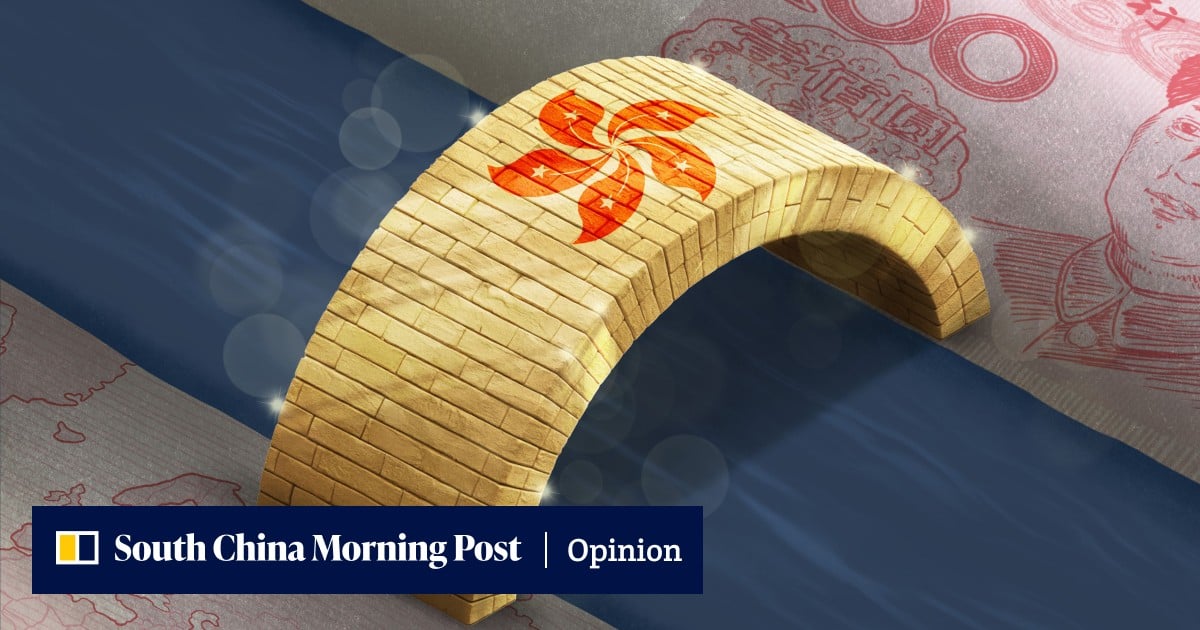
Hong Kong’s bridge of gold completes China’s yuan ambition
asserted
bridge → complete → ambition
With Shanghai pricing the contracts and Hong Kong handling offshore vaulting, Beijing is building a gold-backed route to currency internationalisation
In 2013, one-third of the world’s traded gold passed through Hong Kong.
asserted
third → price → Kong
That year, the city imported 1,158 tonnes of bullion, overtaking India, the traditional top buyer.
asserted
city → import → India
For all our love of the glittering metal, little of it stayed in our vaults.
asserted
little → glitter → vaults
It mostly went straight to mainland China, where strict controls meant the bulk of its gold imports had to transit through here.
asserted
bulk → go → imports
Little did we know that things would soon be turned upside down.
asserted
things → know → ?
In 2014, China relaxed restrictions, allowing more mainland banks to buy foreign gold without routing it through Hong Kong.
asserted
banks → relax → Kong
Net gold flows to the mainland via the city fell to 863 in 2015, then to 245 tonnes in 2019, before reaching a nadir of 67 tonnes in 2020, according to a Hong Kong Legislative Council report.
uncertain
flows → fall → report
 The Aporia