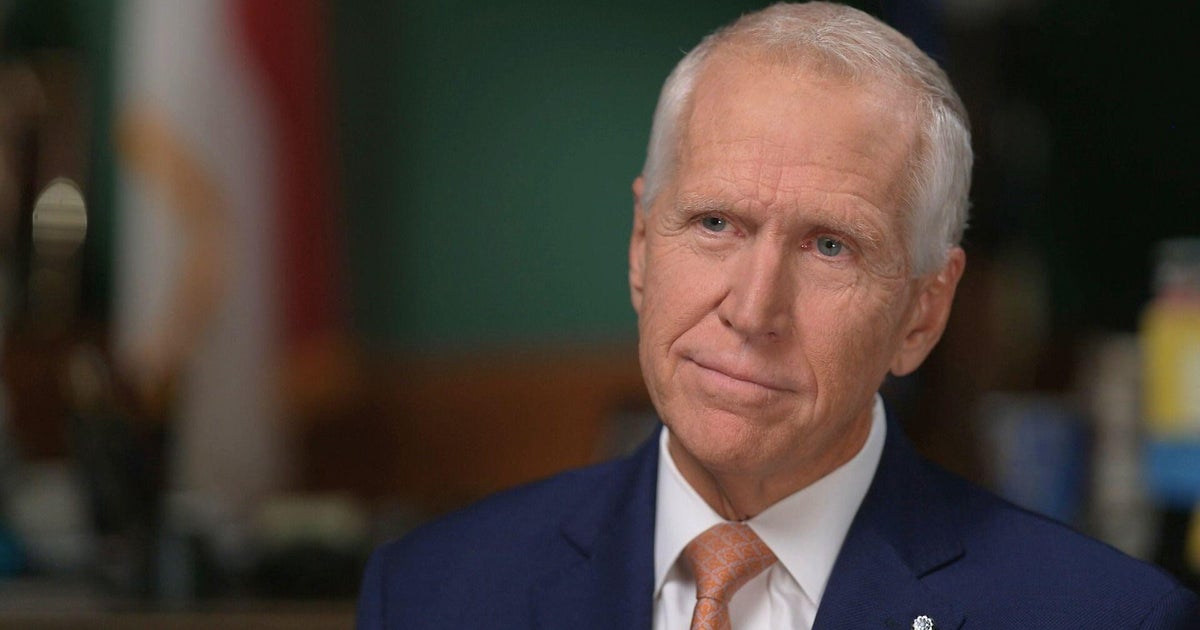
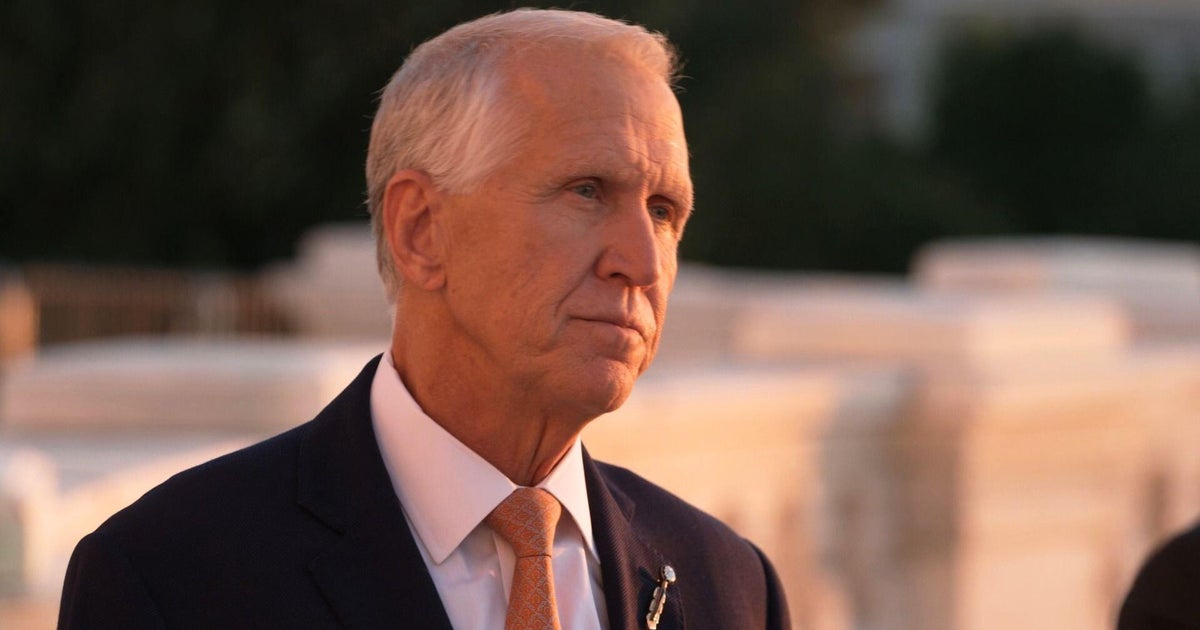
In his upcoming book "How to Lose Friends and Antagonize Presidents," Senator Thom Tillis (R-NC) reveals that voting to confirm War Secretary Pete Hegseth is the "biggest regret of my career." He details his internal conflict before casting the deciding vote for Hegseth, who was accused of heavy drinking and domestic abuse. Two years later, as he prepares to leave office after almost 12 years in the Senate, Tillis reflects on this decision and others like it during President Trump's tenure, acknowledging that his "gut" told him these nominees were problematic from the start.
Written locally by qwen2.5:14b on 2026-10-06,
using this article's own text rather than the other coverage of the
same event (that is the story summary below).
Sen. Thom Tillis (R-NC) is finishing his final months in the Senate on an introspective note, revealing in a new book that the “biggest regret of my career” was his vote to confirm War Secretary Pete Hegseth.
asserted
regret → finish → Hegseth
In How to Lose Friends and Antagonize Presidents, Tillis describes the extent of his early reservations about President Donald Trump’s Cabinet, naming Hegseth but also Robert F. Kennedy Jr. and Tulsi Gabbard — his health secretary and ex-intelligence chief — as nominees he wished he opposed.
asserted
he → lose → nominees
Tillis unpacks the drama and internal conflict that made those votes difficult, acknowledging that he spent the hours before Hegseth’s confirmation searching for a “smoking gun that would pry more votes away from him.”
asserted
that → unpack → him
At the time, Hegseth had been accused of heavy drinking and domestic abuse, and Tillis was trying to corroborate those allegations.
asserted
Tillis → accuse → allegations
In the case of Kennedy, a notorious vaccine skeptic, Tillis recounted telling colleagues on the Senate’s health panel that he would vote “no” if they “came out and gave me a reason to do so.”
asserted
they → recount → reason
Ultimately, Tillis said he did not want to be the “lone voice in the wilderness” after a critical mass of GOP opposition failed to materialize, and he voted for all of Trump’s Cabinet nominees.
asserted
he → say → nominees
(He was the deciding vote on Hegseth.)
asserted
He → decide → Hegseth
Almost two years later, and with his retirement a handful of weeks away, Tillis says the conduct of those Cabinet officials has proven his “gut” correct and that he should have helped torpedo their nominations.
“I know for a fact that there are others like me: Republicans who agreed to go along with the early demands of the Trump team no matter how ridiculous they were, believing that failing to do so would mean the end of their political career, and who now see that things have gone way too far,” Tillis says in the book, set to be released on Tuesday.
asserted
Tillis → say → Tuesday
He’s spent the most time scrutinizing Hegseth and called for the president to remove him in September over his personnel decisions, but the book marks the first time Tillis has described his vote as a mistake.
asserted
Tillis → spend → mistake
His admissions are part of a long-running and fraught relationship with Trump that has oscillated between support and outright criticism of the White House.
asserted
that → run → House
As he wavered on Hegseth, Tillis faced an intense pressure campaign that included a call from the president’s son, Donald Trump Jr., and culminated in a last-minute visit to the White House.
asserted
that → waver → House
Vice President JD Vance asked that he vote for Hegseth as a “personal favor,” Tillis said, and tried to win him over with a Situation Room briefing and cordial phone call with Trump.
asserted
Tillis → ask → Trump
Tillis, who is retiring after almost 12 years in the Senate, rarely takes a direct shot at the president in his book, choosing instead to fault advisers for the tumult of his second term.
asserted
who → retire → term
He calls Kristi Noem, Trump’s first homeland security chief, a “psychopathic” dog-killer and her deputy, Greg Bovino, a “thug” — both on Page 1.
asserted
He → call → Page
He says “MAGA extremists” like Laura Loomer and Steve Bannon can “go to hell” and paints in menacing terms the “dark, twisted figure” of top Trump adviser Stephen Miller.
asserted
extremists → say → Miller
Tillis does, however, offer new insight into his most heated moments with the president, including a May text message bristling at Trump’s social media post calling him a nitpiker.
uncertain
Tillis → offer → him
“I still want to help but I don’t take this bulls*** from anyone, including you Mr. President,” he wrote.
asserted
he → want → you
“Save that s*** for the cowards who don’t care if you fail.
asserted
you → save → cowards
I care if you fail and right now we are failing.”
asserted
we → care → ?
Earlier in the book, Tillis includes the text he sent Trump relaying that he would be retiring.
asserted
he → include → Trump
The message came after Trump excoriated him for voting against his signature tax law last summer.
asserted
Trump → come → law
“Mr. President, now would be a good time to start looking for my replacement,” Tillis wrote, to which Trump responded, “I am!”
asserted
I → start → which
Tillis lamented that his obituary would likely one day focus heavily on those moments of disagreement and others like them.
asserted
obituary → lament → them
The senator has used his final months to force the Justice Department to back off its investigation into then-Fed Chairman Jerome Powell and kill a payout fund for Jan. 6 defendants.
asserted
senator → use → defendants
He’s also leaned into his reputation for being frank.
asserted
He → lean → reputation
“Now that I wasn’t as concerned about having to answer for my every statement during the next election cycle, I’ll admit the number of f**** I had to give did diminish pretty quickly,” Tillis says at one point.
asserted
Tillis → concern → point
Thematically, Tillis spends much of the book weaving together his own career in politics, which stretches back two decades and began in the North Carolina legislature, with the tumult of the Trump administration.
asserted
which → spend → administration
He predicts Republicans will suffer electoral defeat in November, comparing this election cycle to the red wave that helped him become speaker of the North Carolina statehouse in 2010.
asserted
him → predict → 2010
The through line, he says, is presidential overreach — first by President Barack Obama and now by Trump.
asserted
he → say → Trump
“We could have stood firm on opposing the nominations on some of the president’s less-than-stellar cabinet appointees, saving the nation a great deal of turmoil,” Tillis says.
uncertain
Tillis → stand → turmoil
“Instead, we have chosen the proverbial chainsaw shed time and time again, kowtowing to the White House’s every demand even when we know the end result is going to be a bloodbath.”
asserted
result → choose → demand
 The Aporia