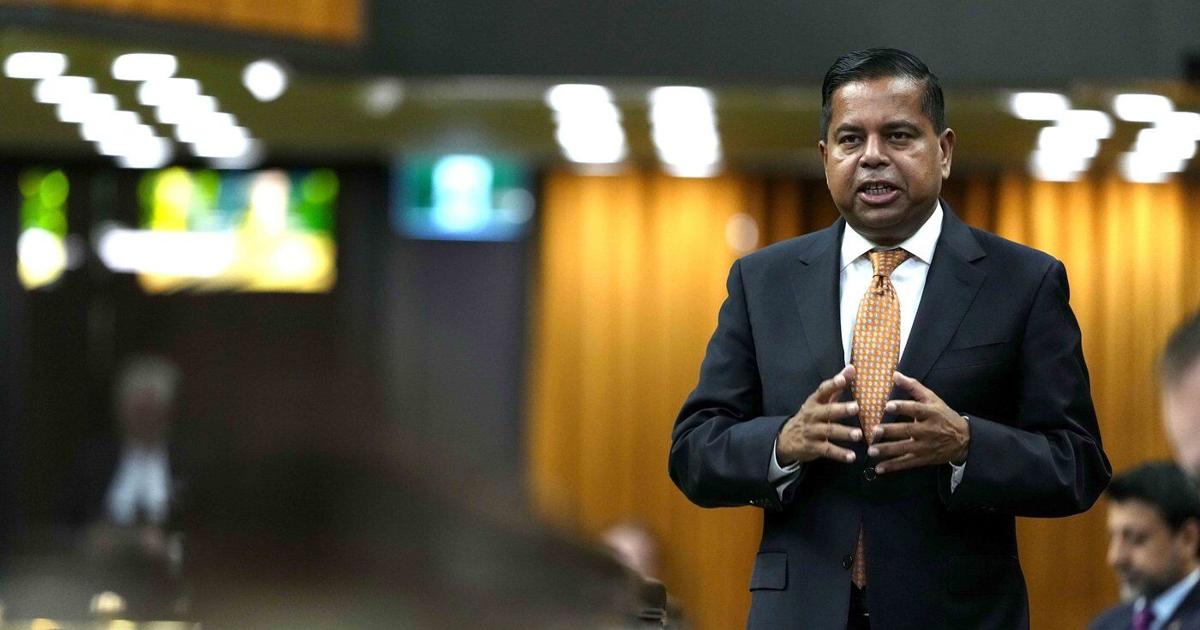
OTTAWA—Canada could be on a path to deploying undercover spies to collect intelligence in foreign countries in what would be a transformative expansion of its national security apparatus, Public Safety Minister Gary Anandasangaree suggested Monday.
uncertain
Anandasangaree → deploy → apparatus
While no decision has yet been made, the minister made the comments to reporters in Ottawa following questions from the Star as the Carney government prepares a long-awaited national security strategy and Canada’s intelligence community is engulfed in debate over the country’s ability to collect foreign intelligence.
asserted
community → make → intelligence
Ottawa is “looking for ways to enhance and improve our security apparatus,” Anandasangaree said when asked whether Canada was considering expanding its foreign intelligence capabilities.
asserted
Canada → look → capabilities
“At this point, there’s no particular leaning,” he said.
asserted
he → ’ → point
“I think we’re going to be looking at all of our options.”
asserted
we → think → options
Debate over whether Canada should start its own foreign spy service has persisted for years, but ramped up in recent months against the backdrop of the Carney government’s efforts to become less reliant on the United States and as global security threats ramp up.
asserted
threats → start → States
Anandasangaree’s comments are the first public acknowledgment that the government is actively weighing its options.
asserted
government → weigh → options
A 2025 Canadian Security Intelligence Service briefing note, made public through the access to information system, laid out the rationale for the change with several options while offering insights on why the long-debated issue has split experts.
“Canada can only learn and act so much through its current collection and authorities, and has historically relied on allied partnerships for certain foreign intelligence reporting,” said the internal note prepared for director Dan Rogers ahead of a roundtable with experts at the University of Ottawa.
asserted
note → make → Ottawa
“Implementing such a foreign human intelligence abroad capability for Canada would position the government to further advance Canada’s geopolitical, security, economic and other interests globally.”
But while a dedicated new spy agency would have a “clear mandate,” it would take years to set up, be “highly disruptive” to current security work and be “very costly,” the note said.
asserted
note → implement → work
Ottawa could also overhaul CSIS’s mandate to give it that power, capitalizing on the agency’s abilities but risking concerns about privacy, “mandate overlap,” potential targeting of Canadians or “over-securitization,” the note said.
uncertain
note → overhaul → Canadians
The government could also temporarily give CSIS those powers as a new agency is developed.
uncertain
agency → give → powers
Canadian law allows some foreign intelligence collection, but there is no dedicated spy agency like the American Central Intelligence Agency or the British Secret Intelligence Service (also known as MI6).
asserted
law → allow → MI6
Canada has the Communications Security Establishment, which can collect cyber intelligence abroad, a diplomatic reporting program at Global Affairs Canada, and national defence-specific intelligence gathering from the military.
asserted
which → have → military
CSIS is legally allowed to collect information about foreigners or other state actors, but only within Canada or from open sources.
asserted
CSIS → allow → sources
National security expert Wesley Wark said the minister’s comments signal that “the government realizes that its foreign intelligence capabilities may not be sufficient,” especially with Canada at odds with the Trump administration and “there may be declining trust in intelligence sharing with the United States.”
But it’s only likely that Canada would create a new foreign intelligence service if internal studies suggest the simpler option of extending current capacities is not enough, he added.
uncertain
he → say → capacities
The National Security and Intelligence Committee of Parliamentarians, a cross-partisan House of Commons committee, is set to study the issue.
asserted
Committee → set → issue
A report to be published this month by the Policy Insights Forum urges Canadian elected officials to look at the issue “with their eyes wide open” and ditch any notion the endeavour could resemble the fictional James Bond
uncertain
endeavour → publish → Bond
, The Canadian Press reported.
asserted
Press → report → ?
“Ninety-nine per cent of all espionage fiction is pure junk,” write report co-authors Alan Barnes and Geoff St. John, two former Canadian intelligence officials.
asserted
Barnes → write → fiction
On top of high costs, Canada would face recruiting challenges, and any spies sent overseas would face great danger as they break domestic laws, said Yves Goulet, who worked in intelligence for CSIS, the Department of National Defence, and Fisheries and Oceans Canada.
asserted
who → face → Defence
If the Canadian government wants to send spies abroad, it should be clear why, he said.
asserted
he → want → spies
“You’re going to play with the life of other people,” Goulet said.
asserted
Goulet → go → people
“If you work in China, if you work in Russia, which would be possible target countries, then you know they take espionage seriously, and the consequences are extremely serious.”
asserted
consequences → work → espionage
Another risk is that such a change could spark turf wars between national security agencies, said Kent Roach, a University of Toronto Law professor and the author of “Red Alert: The Future of the RCMP.”
uncertain
Roach → spark → RCMP
History shows that can lead to disastrous consequences, like the deadly Air India Flight 182 bombing, said Roach, who worked on the inquiry into the attack.
asserted
who → show → attack
“We already have one new security agency, the Canadian Financial Crimes Agency, coming down the pike, and I think the system can only absorb so much change,” Roach told the Star.
asserted
Roach → have → Star
“I think the Air India fiasco shows that there are potential security costs to radical institutional change.”
asserted
fiasco → think → change
 The Aporia