That is 0 articles you have read today.
The Aporia is free and carries no advertising, so readers are the only
thing paying for it. If you are getting this much out of it, a small
donation is what keeps it independent.
Daily limit reached
You have read 0 articles today.
That is more than the 15 a day The Aporia gives away,
and well past what it can carry on nothing. Your allowance resets at
midnight.
There is no advertising here and nothing about you is sold, so readers
are the only thing paying for it. If the site is worth this much of
your day, it is worth a few dollars.
Everything else stays open: the
maps, the
directory and
search do
not count against this, and neither does re-opening something you have
already read today.
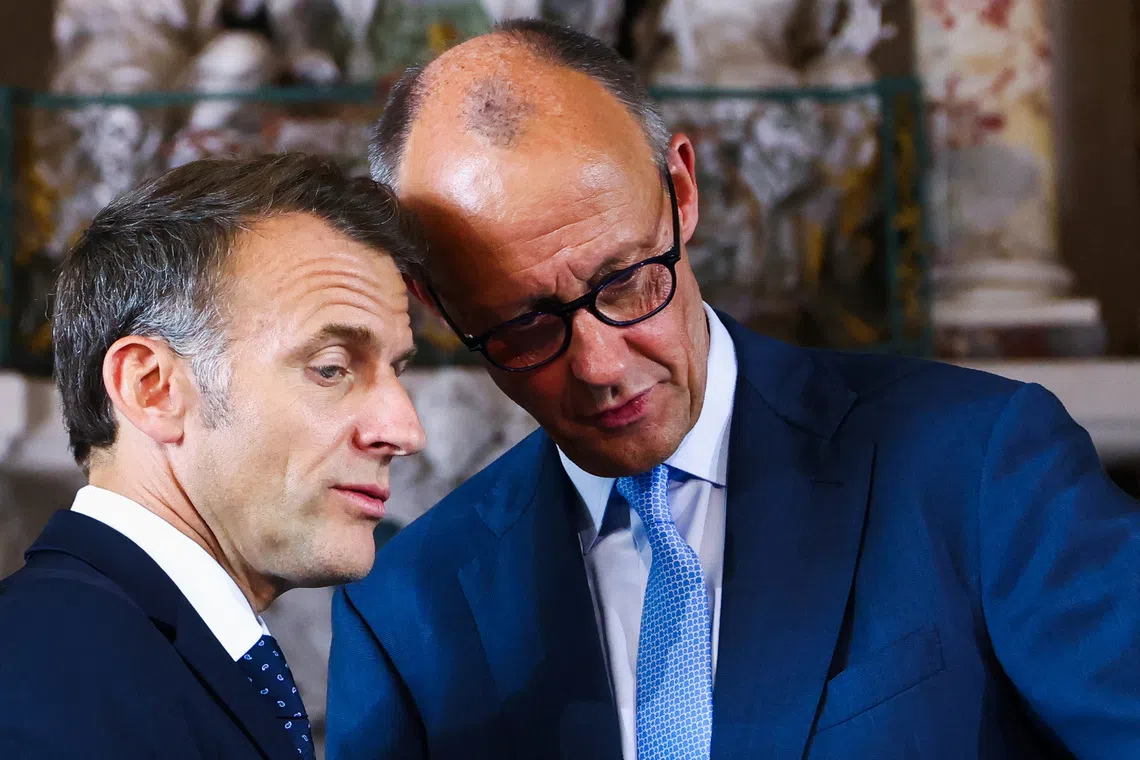
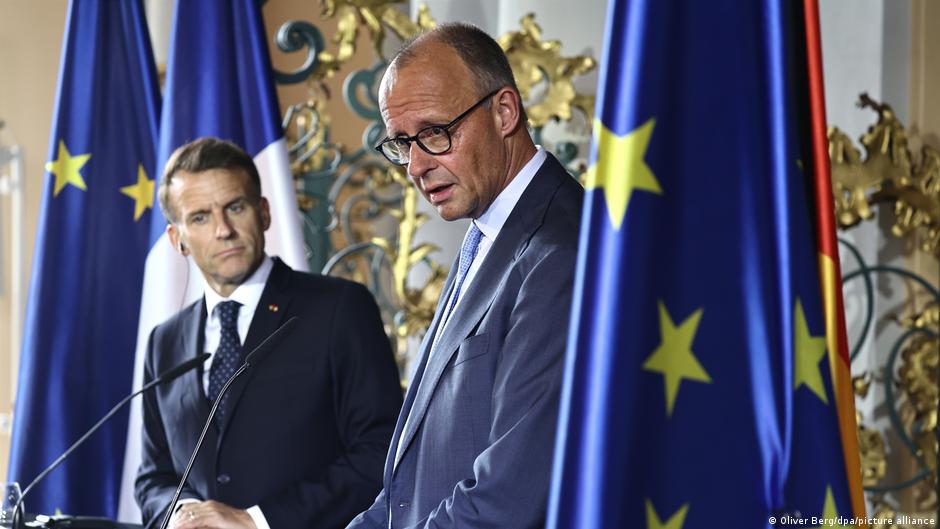
France and Germany are proposing a rapid-response trade tool for the European Union to counter market-distorting practices, particularly targeting China’s economic behaviors. In a letter dated October 5th to EU Commission President Ursula von der Leyen, French President Emmanuel Macron and German Chancellor Friedrich Merz detailed measures aimed at swiftly investigating and addressing unfair trade practices such as dumping, subsidies, and currency manipulation. The proposed actions include enabling the EU to impose countermeasures more quickly unless vetoed by a qualified majority of member states, aligning with Von der Leyen’s priorities on competitiveness and dealing with global imbalances.
Written locally by qwen2.5:14b on 2026-10-05,
using this article's own text rather than the other coverage of the
same event (that is the story summary below).
Story summary
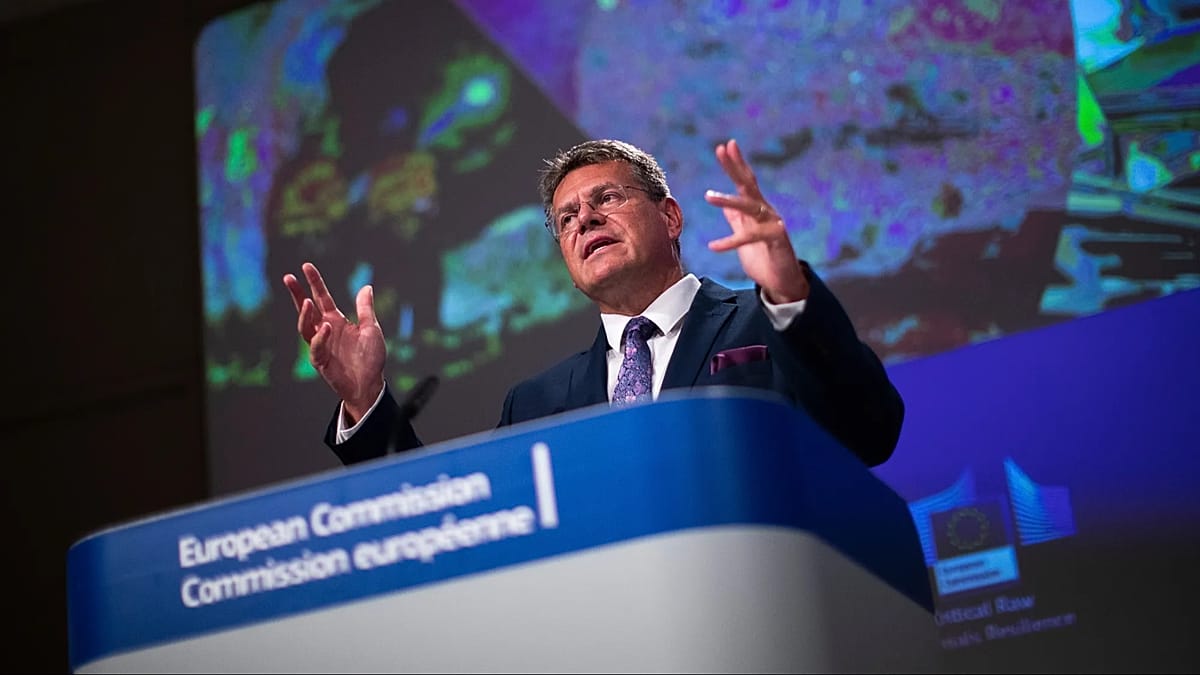
German Chancellor Friedrich Merz and French President Emmanuel Macron jointly called on the European Commission, led by Ursula von der Leyen, to implement stricter trade measures against unfair practices, likely targeting China. The pair emphasized the need for diversification in supply chains and rapid exclusion of a country from the European single market under exceptional circumstances. Their appeal highlights concerns over global imbalances, dumping, widespread subsidies, and currency restrictions, which they argue are harming EU economic competitiveness and industrial stability. This push comes days before Maros Sefcovic, the EU's trade commissioner, is scheduled to visit Beijing, and just ahead of a Brussels summit where EU leaders will discuss Chinese trade issues on October 15th. The initiative aims to address unsustainable trade imbalances and systemic market distortions that are weakening Europe’s global standing.
Written for “EU Trade Measures Against China” on 2026-10-05,
grounded in this article and the 1 other(s) covering the same event.
Why this leaning score
The article's own words the score was based on. Each is quoted
verbatim and was checked against the article text before being
stored, so you can find it in the original.
Leaning: leans right for article 58171 (high confidence, 1 verified quote) · logged 2026-10-05
France, Germany push for EU rapid-response trade tool with likely focus on China
BRUSSELS/BERLIN -
asserted
France → push → China
France and Germany have proposed that the European Union reinforce its economy by enacting a new rapid-action measure to strike back against countries that harm it, with China the most likely focus of their proposal.
asserted
China → propose → proposal
French President Emmanuel Macron and German Chancellor Friedrich Merz wrote to European Commission President Ursula von der Leyen on Oct 5, 10 days before EU leaders are to discuss Chinese trade imbalances at a Brussels summit.
asserted
leaders → write → summit
They said “systemic market-distorting practices” jeopardise the bloc’s economy and industrial base, requiring urgent action.
asserted
practices → say → action
The commission said it welcomed the letter that accompanied a document setting out Franco-German proposals, saying it was a valuable contribution to the debate on geoeconomic risks and global imbalances.
asserted
it → say → risks
It aligned with Von der Leyen’s stance on competitiveness and her approach to trading partners, including China, it added.
asserted
it → align → China
The new measure would not target any specific country, but highlights dumping, widespread subsidies and restriction of currency convertibility – market distortions that many EU leaders say China is engaged in.
asserted
China → target → that
German officials said the EU needed a tool as powerful as the Section 301 tariffs imposed by the United States or China’s restrictions on exports of critical minerals in a new world where trade is increasingly used as a weapon.
asserted
trade → say → weapon
The bloc, said the document, needs to deploy its trade defence tools more swiftly and efficiently, with more investigations and a broader approach to cover whole sectors.
asserted
document → say → sectors
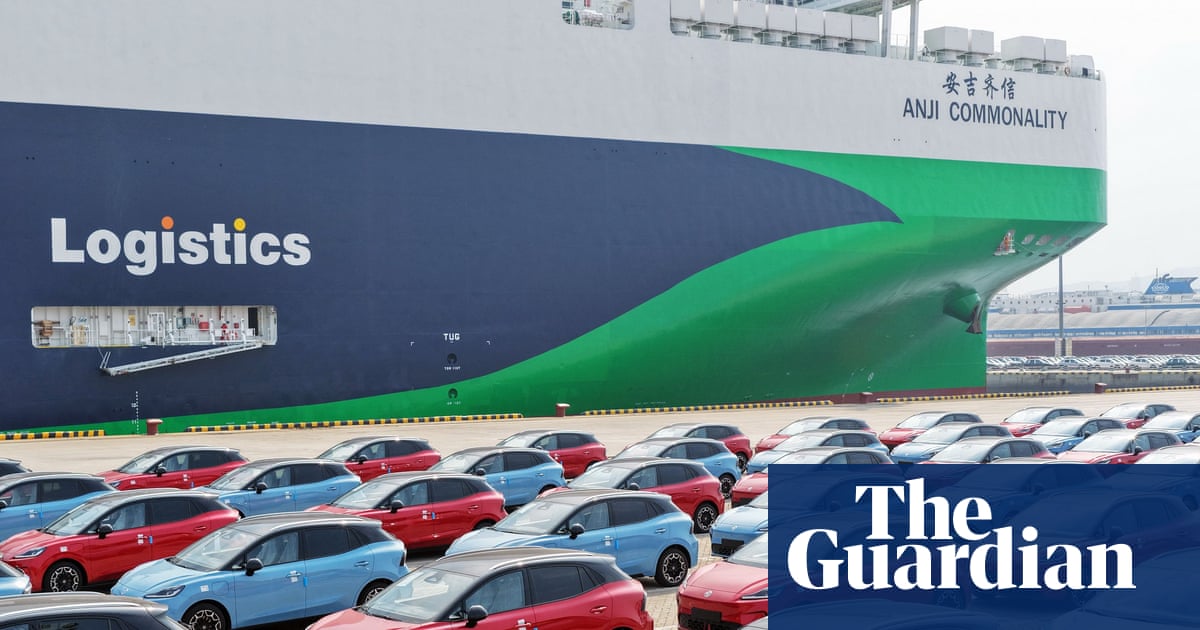
The document added that there was an urgent need for measures to deal with imports of chemicals, PET and hybrid vehicles.
asserted
document → add → chemicals
France, Germany push for two new trade tools
France and Germany also said the European Commission should propose two new instruments as soon as possible to focus EU efforts on diversification and securing economic security.
asserted
Commission → push → security
The first, which the Commission has already mentioned, would seek to limit companies’ reliance on single sources for certain critical supplies.
asserted
Commission → mention → supplies
The second would limit access to the EU single market for countries that undermine fair market conditions through political or economic means, without specifying what the trigger for EU reaction would be or what action the EU should take.
asserted
EU → limit → action
The paper said that any proposal by the Commission to activate counter-measures against another country should be adopted unless a qualified majority of EU members opposed – a lower hurdle than for some trade measures.
asserted
majority → say → measures
The paper also said the Commission should be able to activate such new measures swiftly, which German government officials said could mean a matter of days.
uncertain
officials → say → days
Legislation to enact a new instrument would still need approval by EU governments and the European Parliament.
asserted
Legislation → enact → governments
A French presidential adviser said it was urgent for the EU to take action, that the imbalances with some trade partners had become unsustainable, and that France and Germany were keen for the bloc to deploy existing anti-dumping measures as soon as possible.
“France and Germany are very keen to put an end to the naivete on trade,” the adviser told reporters.
asserted
adviser → say → reporters
 The Aporia