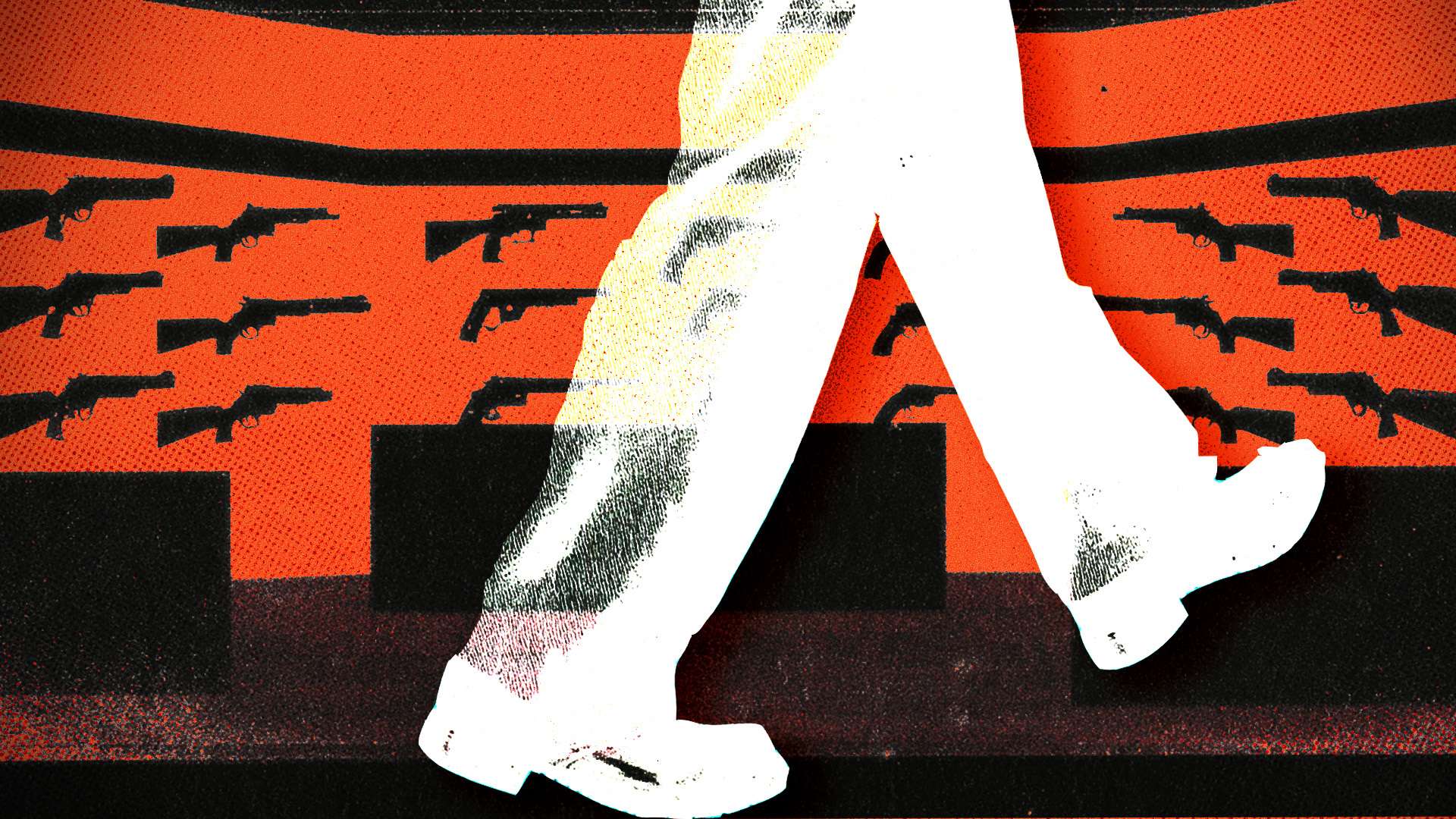
When Eagle Sports Range in Cudahy, Wisconsin, removed its three Flock Safety cameras in August, general manager Saad Jaber cited broader customer privacy concerns, not misuse at the range.
asserted
Jaber → remove → range
In Cleveland, Georgia, Gun Commanders owner Michael Carter covered his privately owned Flock camera with a trash bag and is having it permanently removed, telling Now Georgia his customers' trust matters more than "any piece of technology."
asserted
trust → cover → technology
Police misuse of plate-reader data has sparked a nationwide backlash against those cameras.
asserted
misuse → spark → cameras
Gun owners have an additional worry: A lawful trip to a gun store or range could put them on a government list.
uncertain
trip → have → list
At a Senate hearing on Flock last month, Sen. Josh Hawley (R–Mo.) noted the cameras outside gun shows, stores, and ranges and pointed out that Second Amendment supporters have "long feared national databases of any kind."
asserted
supporters → note → kind
A week later, he announced he would soon introduce the Stop Flock Abuse Act, which would require written approval and audit logs for searches and deletion of most plate data after 10 days.
asserted
which → announce → days
"Law-abiding Americans should not be treated like criminals," he said.
asserted
he → abide → criminals
He's right about that, but he should add another rule.
asserted
he → add → rule
None of Hawley's announced safeguards specifically mention gun stores, gun shows, or ranges, and a search that is approved and logged can still return every car that pulled into one of those places.
asserted
that → announce → places
Producers of automated license plate readers (ALPRs) such as Flock claim their vehicle-related intelligence tools can link sightings across multiple locations and cases and surface repeated appearances across time.
uncertain
tools → automate → time
If an ALPR records vehicles entering and exiting a gun store parking lot, querying those records could produce a list of every vehicle that came and went, while collecting no actual data on firearms transactions that occurred.
uncertain
that → record → transactions
An ALPR identifies a vehicle, not necessarily its driver, and existing roadside cameras may just record passing traffic and not customers.
uncertain
cameras → identify → traffic
Even a confirmed visit to a gun store does not establish a firearm purchase or gun ownership.
asserted
visit → confirm → purchase
Someone could be taking a safety class, or could be shopping with a friend, or might just be window shopping.
uncertain
Someone → take → friend
A mistaken inference, by a human investigator or by an AI, could subject that person to scrutiny as a presumed gun owner.
uncertain
inference → subject → owner
Federal anti-registry laws do not settle whether gun store or range visitor lists are allowed.
asserted
lists → settle → ?
Under U.S. code, federal firearms regulations may not require any system to register firearms or their owners.
uncertain
regulations → require → firearms
The Brady Act generally bars federal officials from using the National Instant Criminal Background Check System to build firearms registries.
asserted
Act → bar → registries
Neither provision addresses the issue of whether local police can compile gun store visitor lists from plate-reader data.
asserted
police → address → data
State laws raise a similar question.
asserted
laws → raise → question
Alabama prohibits government entities from "knowingly" keeping lists of privately owned firearms or "the owners of firearms," with exceptions for criminal investigations, prosecutions, and other legally required records.
asserted
Alabama → prohibit → investigations
This is the exact law that gun activists in the state have cited when calling for Alabama to ban Flock cameras.
asserted
Alabama → cite → cameras
Whether a list of vehicles seen at a gun store counts as a list of "the owners of firearms" is precisely the ambiguity lawmakers should eliminate.
asserted
lawmakers → see → firearms
Federal agencies have pursued this type of record in the past.
asserted
agencies → pursue → past
An April 2009 Drug Enforcement Administration email discussed plate-reader operations at gun shows.
asserted
email → discuss → shows
When this came to light in 2015, the agency clarified that the effort was a proposal and was never implemented.
asserted
effort → come → 2015
But The Wall Street Journal reported in 2016 that Immigration and Customs Enforcement (ICE) worked with local police to scan plates at a California gun show in 2010 and compare them against border-crossing records.
asserted
Immigration → report → records
ICE later confirmed the operation took place but declined to comment on specific methods.
asserted
operation → confirm → methods
Protecting visitors' privacy does not prevent or obstruct legitimate investigations.
asserted
Protecting → protect → investigations
Jaber, of Eagle Sports, said the range's Flock cameras helped investigate a firearm stolen from a vehicle in its parking lot.
asserted
cameras → say → lot
A reported theft provides a legitimate reason to seek the camera's evidence.
asserted
theft → report → evidence
A lawful visit alone does not.
asserted
visit → do → ?
In response to recent concerns about privacy, Flock announced a series of reforms, including mandatory case codes and Audit Assistance for law-enforcement customers by the end of 2026.
asserted
Flock → announce → 2026
It also now allows agencies to restrict other departments' searches by offense type.
asserted
agencies → allow → type
If implemented properly, those reforms could document searches, flag potential abnormal activity, and restrict access.
uncertain
reforms → implement → access
They are no substitute for a legal prohibition on government lists built solely on lawful visits, and Flock's CEO told Hawley in a letter that Congress should create a federal framework.
asserted
Congress → build → framework
Washington state provides a good starting point for what a national framework could look like.
uncertain
framework → provide → what
Its plate-reader law, effective as of March 30, 2026, limits collection around specific, named facilities, including schools, places of worship, and protected healthcare facilities.
asserted
law → limit → worship
It also restricts tracking activity protected by Washington's constitution or the First Amendment, and it requires warrants before police can access privately held ALPR data.
asserted
police → restrict → data
Gun stores, gun shows, and ranges are not specifically listed with the other protected locations.
asserted
stores → list → locations
…and 15 more, not listed.
 The Aporia