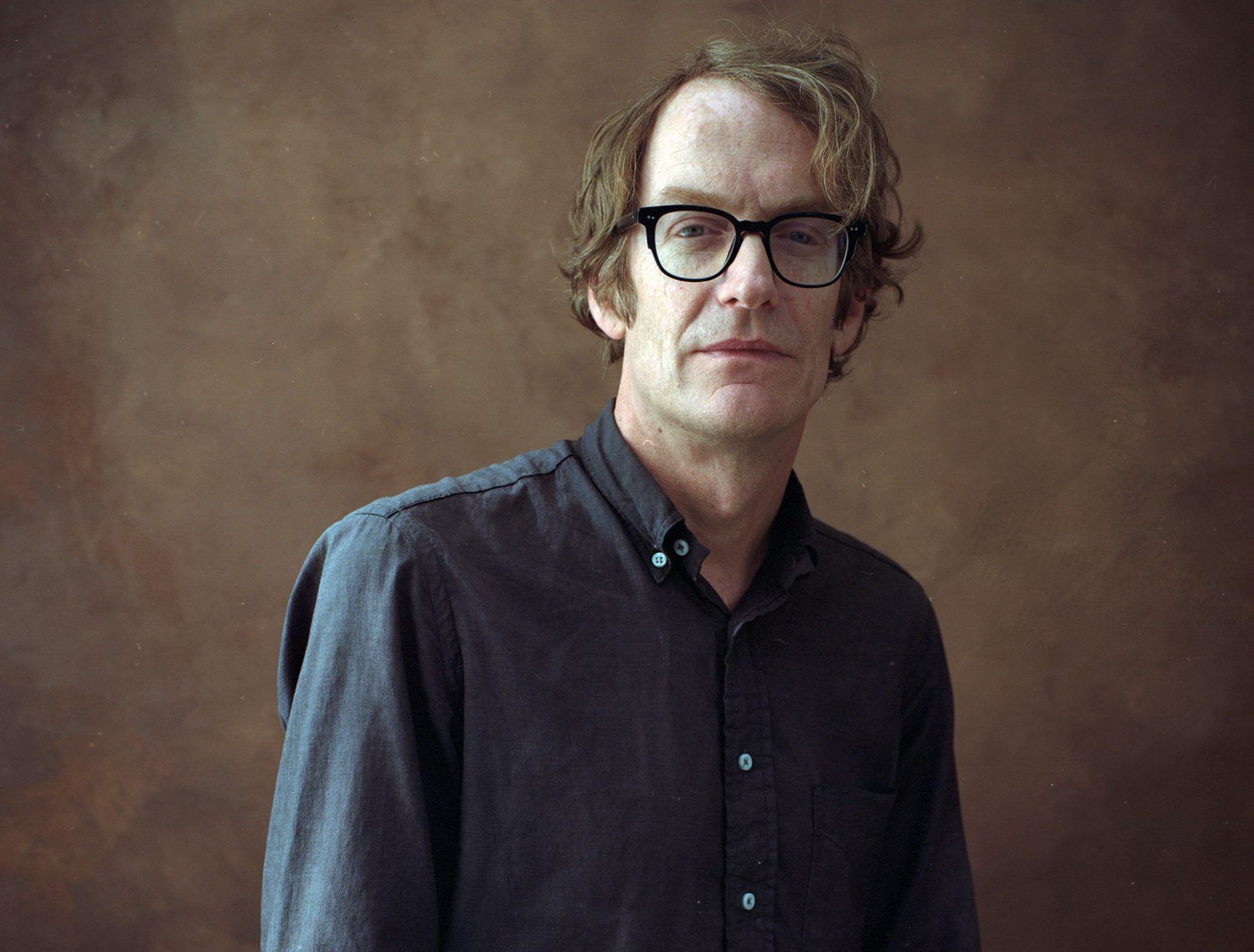
Slate magazine has called Patrick deWitt “the great chronicler of American weirdos.”
asserted
magazine → call → weirdos
It’s an intriguing label to apply to a writer born on Vancouver Island who loyally retains his Canadian citizenship.
asserted
who → ’ → citizenship
But you can understand the reason.
asserted
you → understand → reason
After all, deWitt’s breakout novel, the 2011 Booker-nominated The Sisters Brothers, turned the conventions of the western on their ear with its subversively funny account of two neurotic hitmen on the loose during the 1846 California gold rush.
asserted
novel → nominate → rush
If you ask the 51-year-old author now about this weirdo thing, you get an unruffled, low-key response.
asserted
you → ask → response
“I can’t imagine writing about a character who had no issues and no problems,” he says.
asserted
he → imagine → issues
“I like characters who are maybe struggling a little bit more than normal.
asserted
who → like → characters
People do suffer from weirdness, you know, and I have an actual affection for them.”
asserted
I → suffer → them
For example, we don’t feel that we’re entering fantasyland when we arrive at an oddball portrait of an aging dogcatcher who resorts to highly unorthodox methods to keep his job.
asserted
who → feel → job
Such scenes are laced with deWitt’s trademark humour — but they’re accompanied by a tenderness and warmth that’s characteristic of deWitt’s zest for pulling off tricky balancing acts in his fiction.
asserted
that → lace → fiction
He can be a breeze to read: to write about him is more complicated.
asserted
write → read → him
When it comes to his literary credentials, a thoroughly contemporary sensibility finds nurture in the past.
asserted
sensibility → come → past
DeWitt’s originality and sheer pleasurability as a writer have won him a devoted following, and Dodge City, his sixth novel, again shows why.
asserted
City → win → following
Set in the late 1960s, an era when America was tearing itself apart over the Vietnam War, it chronicles the fortunes and misfortunes of a draft-dodging university dropout named Lee Clarke as he embarks on an emotionally precarious journey from California to the East Coast and the eventual safety of the Canadian border.
asserted
he → Set → border
It’s indicative of deWitt’s mischievous liking for incongruity that he puts Lee, not behind the wheel of some rattletrap vehicle, but improbably in a spanking new Jaguar — and the reason is a story in itself.
“I have a weakness for road novels,” deWitt says on the phone from his home in Oregon.
asserted
deWitt → ’ → Oregon
“I just started thinking about the mindset of the road traveller driving across these great expanses.
asserted
I → start → expanses
My father was a draft dodger, born in Ontario but living in California when he got his draft notice — so he drove back to Canada.
asserted
he → bear → Canada
Also, I had never written about the Sixties, and it’s a decade I find fascinating.”
asserted
I → write → Sixties
Initially, he didn’t expect to be writing a novel with relevance to today’s chaos south of the border.
asserted
he → expect → border
“I think there’s a through line to our contemporary moment — it’s something I became aware of midway through writing the book.
asserted
I → think → book
But the players now are perhaps more degraded, more covertly sinister and dangerous — that’s how it feels.”
asserted
it → ’ → ?
So is his readiness to temper absurdity with poignancy: the draft-dodging Lee is no idealized protagonist, not when he’s still in emotional knots over the girlfriend he has left behind and fuelling his odyssey with amphetamines instead of food.
asserted
he → temper → amphetamines
On his way to Canada, Lee needs to visit members of his fractured family and say goodbye.
asserted
Lee → need → family
The result is a set of variations — roaringly funny, wrenchingly sad in examining the ties that bind us — as Lee, definitely a mess himself, drops in on his hyper mum, the dodgy brother from whom he’s been estranged for years, his glorious dingbat of a twin sister, and the forlorn dogcatcher who also happens to be Lee’s disintegrating dad.
asserted
who → examine → sister
“I like characters who are maybe struggling a little bit more than normal.
asserted
who → like → characters
“The comedy comes about naturally and sometimes I overdo it and have to pull back,” says deWitt, a two-time winner of Canada’s Leacock Medal for Humour.
asserted
deWitt → come → Humour
“It comes so easily to me — the impulse for humour — so the way it goes has me pulling back on it until the book is finished.
asserted
book → come → it
It has to be more than a gag — it’s not just there to make somebody laugh or smile but to serve some other purpose.”
asserted
somebody → have → purpose
DeWitt has been bailed as a refreshing new presence on the literary scene.
asserted
DeWitt → bail → scene
But he’s also entirely comfortable to be identified with a form that has distinctly old-fashioned vibes — the comedy of manners.
asserted
that → ’ → manners
“It’s absolutely a part of the mix.
asserted
It → ’ → mix
It’s one of the many influences that’s part of the writer I am.”
asserted
I → ’ → writer
Early in Dodge City, Lee’s frantic effort to avoid the draft leads him to an encounter with government officialdom that reads like a nightmarish blend of Franz Kafka and Monty Python, both of whom deWitt acknowledges as creative influences, along with such other startling examples from the past as legendary satirists Nancy Mitford and Evelyn Waugh, playwright Noel Coward, Barbara Pym, revered for her middle-class social comedy, and perhaps most significantly — Ivy Compton-Burnett.
asserted
deWitt → avoid → comedy
Compton-Burnett’s fiercely uncompromising eviscerations of Britain’s Edwardian and late Victorian middle class were written almost entirely in character-defining dialogue, and in her deWitt finds a kindred spirit.
asserted
deWitt → write → spirit
He has his own exhilarating way with conversations, and is capable of riffs worthy of Quentin Tarantino — yet he finds inspiration for this gift in the writings of an eccentric spinster born in 1885.
asserted
he → have → 1885
Compton-Burnett avoided descriptive passages almost entirely, but deWitt doesn’t think he could manage this feat himself.
uncertain
he → avoid → feat
“I admire her for being able to pull it off over and over, but it would be too strict an exercise for me.
asserted
it → admire → me
She’s a much more severe artist than I am.
asserted
I → ’ → ?
But I do love writing conversation very much.
asserted
I → love → conversation
Everything comes to life.”
asserted
Everything → come → life
…and 5 more, not listed.
 The Aporia