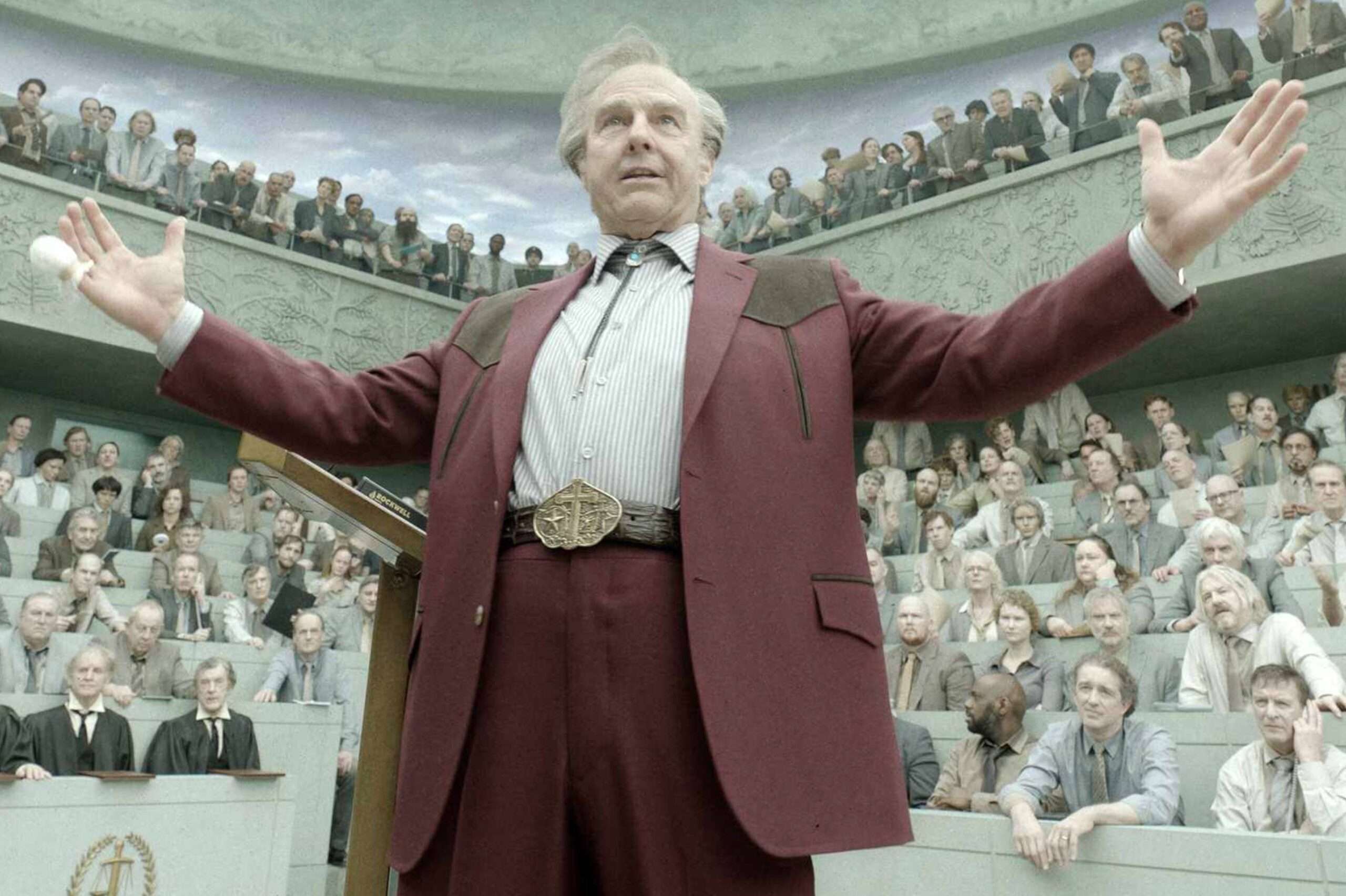
For the first time in years, Cruise is playing a character who doesn’t do any running, jumping, or flying to speak of in Digger, the new film from Alejandro González Iñárritu.
asserted
who → play → Iñárritu
In it, Cruise plays Digger Rockwell, a wealthy-beyond-reason oilman who accidentally (though not exactly unconsciously) incites a global environmental catastrophe.
asserted
who → play → catastrophe
The movie is, in part, about fruitless efforts to stop and/or contain that disaster, and the fallout from Digger’s obstinate plundering of our planet for oil.
asserted
movie → stop → oil
I personally described the film as sometimes confounding, sometimes inventive, but generally worth seeing, if only for its discussion-starting audacity.
asserted
I → describe → audacity
It’s not necessarily a discussion most audience seem excited to have, though.
asserted
audience → ’ → ?
The movie bombed in its opening weekend — and those who did go have responded with seeming puzzlement, and not just at the idea of Cruise parade around in bulky prosthetics and old-age makeup.
asserted
Cruise → bomb → prosthetics
Some of this doubtless has to do with an element of Digger that was almost entirely concealed in its marketing campaign — a rarity in today’s American cinema, where trailers are often instructed to give as much away as possible in order to hook people’s attention.
asserted
trailers → have → attention
In fact, this movie has multiple turns that many reviews have understandably avoided talking about directly.
asserted
reviews → have → that
Now that it’s out in the world, let’s get into it.
asserted
’s → ’ → it
Spoilers will abound.
asserted
Spoilers → abound → ?
**Spoilers for Digger, now in theaters**
Digger’s First Twist: Who Is Tom Cruise Playing in Digger?
First, let’s talk about the movie’s first big twist, which comes well before its ending.
asserted
which → play → ending
After introducing Digger at his vast mansion and introducing the disaster that his oil rig in Greenland causes, about 40 minutes into the film there is a break in its reality.
asserted
rig → introduce → reality
A prop fails, and the film reveals that the reason the look of Digger’s mansion, and everything else we’ve seen, has been so stylized is that we are actually watching in-depth tech rehearsals for a play called Fossil Fools.
asserted
we → fail → play
Cruise is playing Curtis Markson, the famous actor who is playing Digger Rockwell in the play.
asserted
who → play → play
He feels uncertain about the level of over-the-top caricature in his performance, and distracted by the news that his daughter’s recent flight hit some kind of weather-related delay and she can’t currently be located.
asserted
she → feel → delay
After a break, the actors return to their rehearsal, and the movie continues to watch the events of the play, which we now see is an almost impossibly detailed and immersive mega-production.
asserted
we → return → play
In the world of the play, the Greenland disaster results in many European cities flooding with horrific loss of life, Digger admits to his role in the disaster while also abdicating any real blame, giving a lengthy speech where he claims that international thirst for oil and the conveniences it provides that justified his business in the first place — essentially that the whole world is to blame.
uncertain
world → result → place
Shortly thereafter, another ice-shelf breaks off of a Russian glacier and heads toward Alaska, which could cause further catastrophe.
uncertain
which → break → catastrophe
The U.S. makes and carries through with plans to nuke the glacier, but as predicted by one of Digger’s scientists, this does not stop the disaster.
asserted
this → make → disaster
Digger Ending Explained:
asserted
Ending → explain → ?
Does Tom Cruise Save the Day?
asserted
Cruise → save → Day
Through the periodic interruptions of the play, we learn more about what Fossil Fools is, and why it’s being produced.
asserted
it → learn → more
Though it’s not immediately made clear during the first break, the events depicted in the play did happen; the film is set following a major environmental collapse that has left major cities flooded and air quality severely compromised.
asserted
quality → make → cities
The play, originally a small production when it was first written as a cathartic satire of those responsible for the disaster, is being mounted inside an enormous and costly-looking facility with numerous and vast sets and an enormous cast (including “extras,” which, as someone in the film explains, are not usually part of a theatrical production; they also increase the illusion in the play-within-the-film).
asserted
they → write → film
The play’s rightsholder and benefactor is revealed to be Digger’s nephew Kenny (Jesse Plemons), who hopes a mega-production of this sort will help the public process their sense of rage and grief over what has been done to the world.
asserted
what → reveal → world
Kenny also uses some of his rich-guy contacts to track down Curtis’s daughter, who is safe and sound.
asserted
who → use → daughter
The play ends with Digger killing himself, to riotous applause from a packed house, and Curtis quiets his own repeated objections that the play is a bunch of cartoonish distortions of the real events.
asserted
play → end → events
The bottom line is, ice shelves really did break off due to oil-drilling and causes widespread destruction.
asserted
shelves → break → destruction
We see evidence of this as the audience files out of the theater at the end of the film, placing elaborate gas masks on their faces as they make their way through flooded and waste-strewn streets that look post-apocalyptic.
asserted
that → see → streets
So no, neither of Cruise’s characters are able to affect any change to the situation, beyond causing it in the first place.
asserted
neither → affect → place
This is a fascinating rebuke to the very logline provided by the studio, which characterized Digger as a movie about Cruise’s character racing to stop a disaster he inadvertently caused.
asserted
he → provide → disaster
Digger does no such thing; he simply goes along as the U.S. President (John Goodman) cycles through a number of grotesquely ineffective possible plans.
asserted
President → do → plans
It seems like there’s a parallel ineffectiveness to Curtis Markson’s inability (albeit one far more actively frustrated) to change any horrific outcomes of the world he’s living in — or even “rescue” his daughter, not that he’s in any particular position to do that as an actor.
asserted
he → seem → actor
Cruise himself, of course, has been play-acting saving the world for years, especially in his signature and increasingly high-stakes Mission: Impossible series.
asserted
Cruise → save → series
So while the initial Digger log line sounded like the movie might play on that image, the movie turns out to be even more dismissive, casting him as both the cause of a disaster, and the actor who can only recreate and exaggerate those moments, not actually stop them.
uncertain
who → sound → them
That leads to the question of what Digger means to convey to its audience with its bleak, fait-accompli ending, where a natural disaster is in the recent past and still aggravating unhealed wounds (as well as genuine global complications, like the seemingly routine nature of Markson’s daughter’s flight going missing because of a hurricane).
asserted
disaster → lead → hurricane
It has echoes of COVID, a global disaster of a different sort whose reverberations are still felt today, but of course it’s not as if the real world is lacking for environmental disaster, either; Digger is the first big-studio climate change movie to admit that the damage to the Earth is largely already done.
asserted
damage → have → Earth
The last apocalyptic, big-star climate-change movie with notes of despair and dark comedy was, of course, Adam McKay’s Don’t Look Up
asserted
movie → look → course
it’s difficult to tell whether Digger is on the same page as that hectoring and largely unfunny screed.
asserted
Digger → ’ → screed
At times, Iñárritu seems to be on the verge of scolding the audience for not heeding that film’s warning; other times, he appears to be questioning whether precisely that kind of would-be outlandish satire has any function stronger than a temporary respite from the outside world — escapism masquerading as speaking truth to power.
asserted
kind → seem → power
…and 6 more, not listed.
 The Aporia