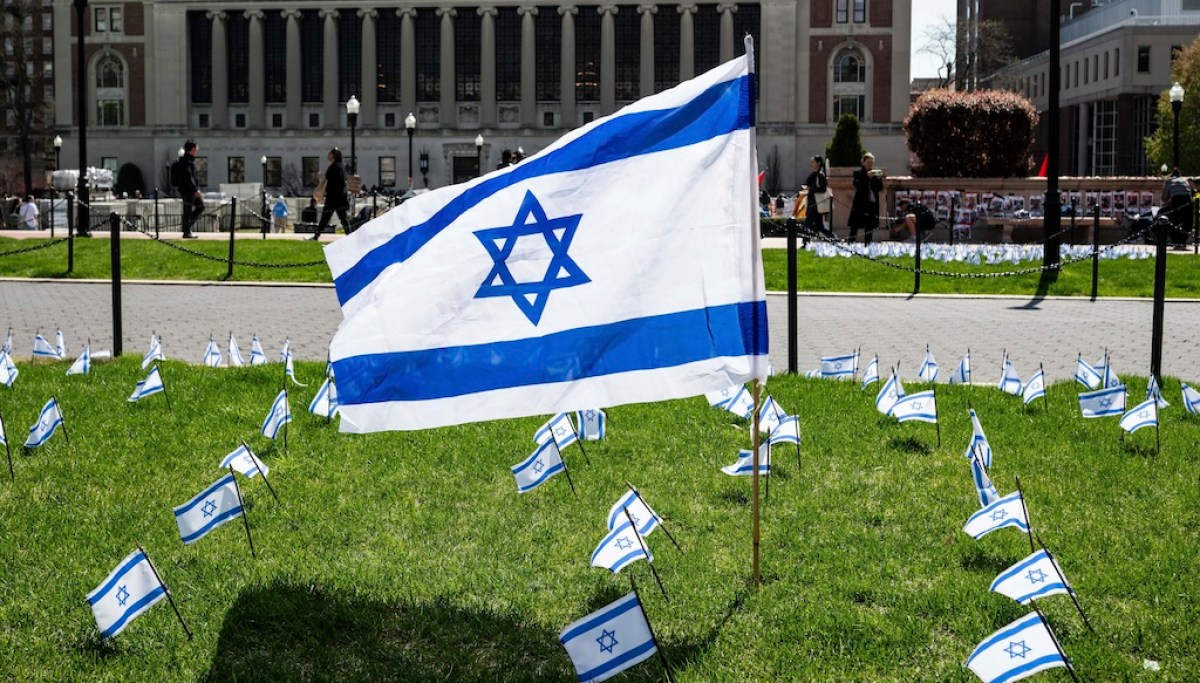
A campaign called Flags of Fellowship aims to foster unity between Christians and Jews through gatherings on October 7th across a region. The initiative includes a luncheon and interfaith service at Impact, promoting remembrance, prayer, solidarity, and relationship-building. The article emphasizes the importance of practical unity over mere expressions of love, advocating for active engagement and support in times of need rather than just during crises.
Written locally by qwen2.5:14b on 2026-10-05,
using this article's own text rather than the other coverage of the
same event (that is the story summary below).
There are moments when our communities are called to do more than talk about unity.
asserted
communities → be → unity
We are called to practice it.
asserted
We → call → it
That is what Flags of Fellowship represents to me.
asserted
Flags → represent → me
On Oct. 7, people across our region will gather for Flags of Fellowship, a campaign hosted by the International Fellowship of Christians and Jews.
asserted
people → gather → Christians
At Impact, that will include a unity luncheon bringing together clergy, rabbis, and community leaders, followed by an interfaith unity service where people from different backgrounds will worship, reflect, and stand together.
asserted
people → include → backgrounds
These gatherings matter because we live in a time when it is increasingly easy to retreat to our separate corners.
asserted
it → matter → corners
We can live in the same community, drive the same streets, and send our children to the same schools, yet never really know one another.
asserted
We → live → one
I have become convinced that healing happens when we choose proximity.
asserted
we → become → proximity
I had an experience that changed the way I understood that truth.
asserted
I → have → truth
I traveled to Selma, Alabama, and crossed the Edmund Pettus Bridge alongside my friend and brother Rabbi Aaron Krupnick and other Jewish and Christian leaders.
asserted
I → travel → friend
You cannot walk across that bridge without feeling the weight of history.
asserted
You → walk → history
On March 7, 1965, a day that became known as Bloody Sunday, men and women marched across that bridge demanding something as fundamental as the right to vote.
asserted
men → know → right
They were met with brutal violence.
asserted
They → meet → violence
But there is another moment from Selma that has always stayed with me.
asserted
that → be → me
Two days later, Martin Luther King Jr. returned to that same bridge with thousands of people.
asserted
Jr. → return → people
They walked to the place where violence had occurred.
asserted
violence → walk → place
They stopped.
asserted
They → stop → ?
They prayed.
asserted
They → pray → ?
Then, King turned the marchers around.
asserted
King → turn → marchers
Some questioned that decision.
asserted
Some → question → decision
But history reminds us that courage is not always demonstrated by charging forward.
asserted
courage → remind → us
Sometimes courage requires wisdom, patience, and the discipline to keep people together long enough to reach the destination.
asserted
courage → require → destination
Walking that bridge with others taught me something else: Bridges don’t erase pain.
asserted
Bridges → walk → pain
They create a path through it.
asserted
They → create → it
Our communities carry different histories.
asserted
communities → carry → histories
We have experienced different wounds.
asserted
We → experience → wounds
We practice different traditions and sometimes understand the world very differently.
asserted
We → practice → world
Unity does not require us to pretend those differences do not exist.
asserted
differences → require → us
The question isn’t whether we have differences.
asserted
we → have → differences
The question is: Will we cross them together?
asserted
we → cross → them
That is especially important today as Jewish communities continue to confront antisemitism and fear.
asserted
communities → continue → antisemitism
Christians cannot simply say that we love our Jewish neighbors.
asserted
we → say → neighbors
There are moments when love requires presence.
asserted
love → be → presence
It means showing up, listening, learning, and standing beside one another.
asserted
It → mean → one
And that relationship must extend beyond moments of crisis.
asserted
relationship → extend → crisis
One of the greatest lessons I have learned through my friendship with Krupnick is that we have more in common than what separates us.
asserted
what → learn → us
Friendship does not mean we agree on every theological, political, or social question.
asserted
we → mean → question
It means our differences do not have to prevent relationships.
asserted
differences → mean → relationships
I often say it this way: Unity isn’t agreeing on everything.
asserted
Unity → say → everything
It’s refusing to abandon each other in anything.
asserted
It → refuse → anything
…and 11 more, not listed.
 The Aporia